Last updated October 30, 2026
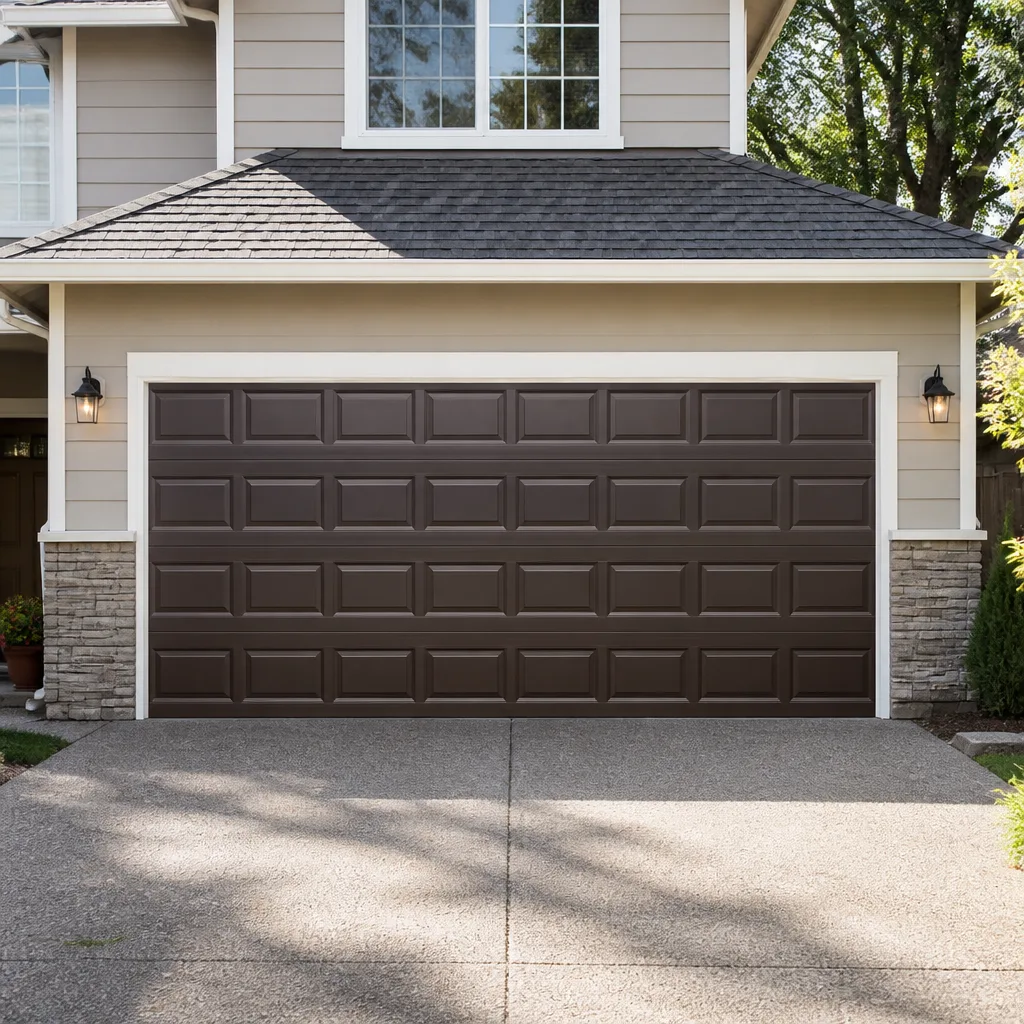 Raised-panel steel
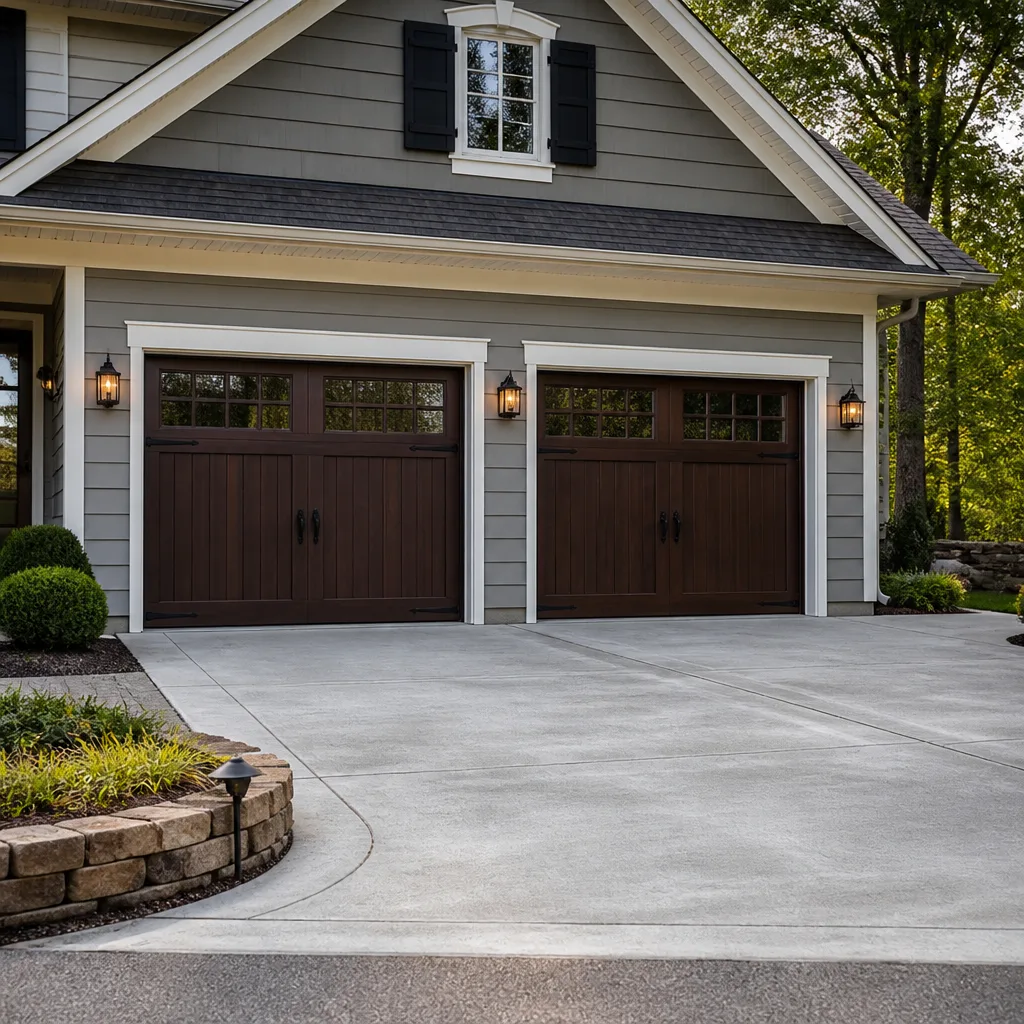 Carriage house
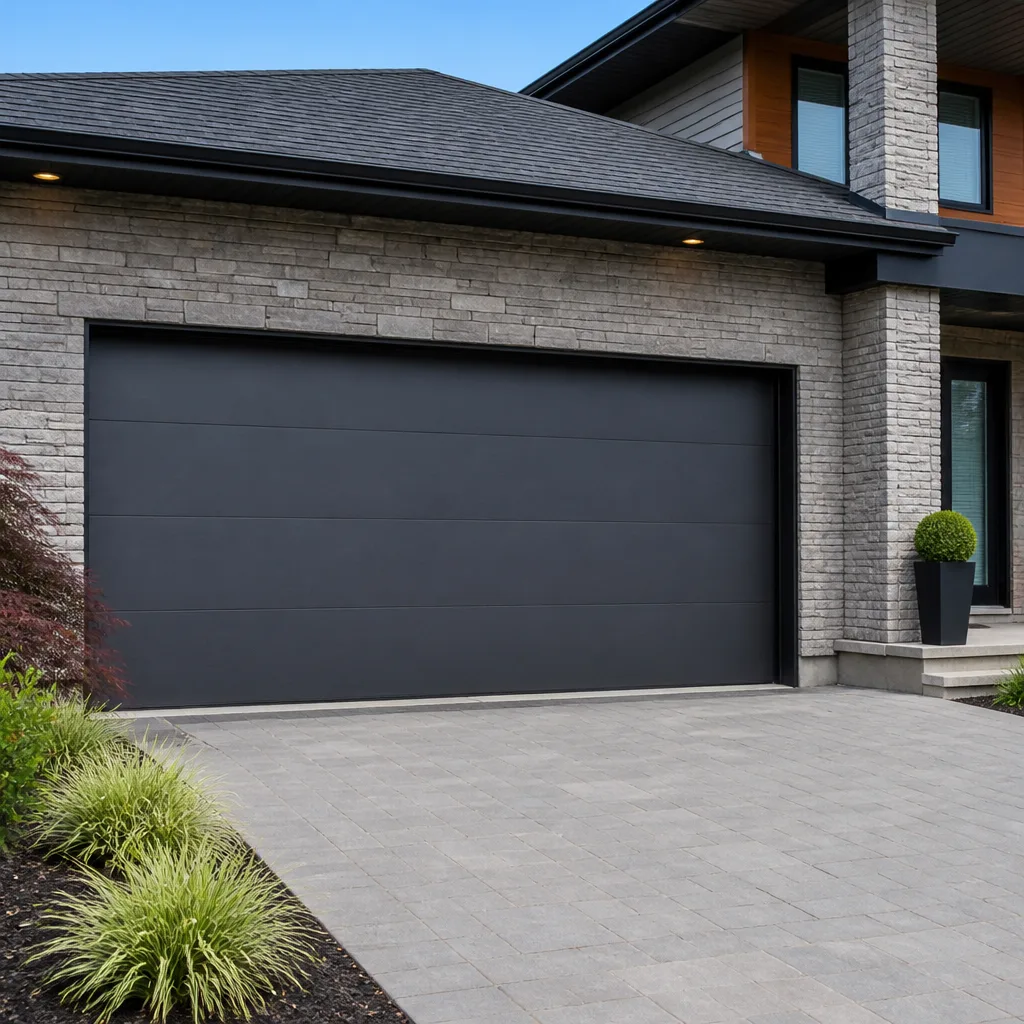 Modern flush
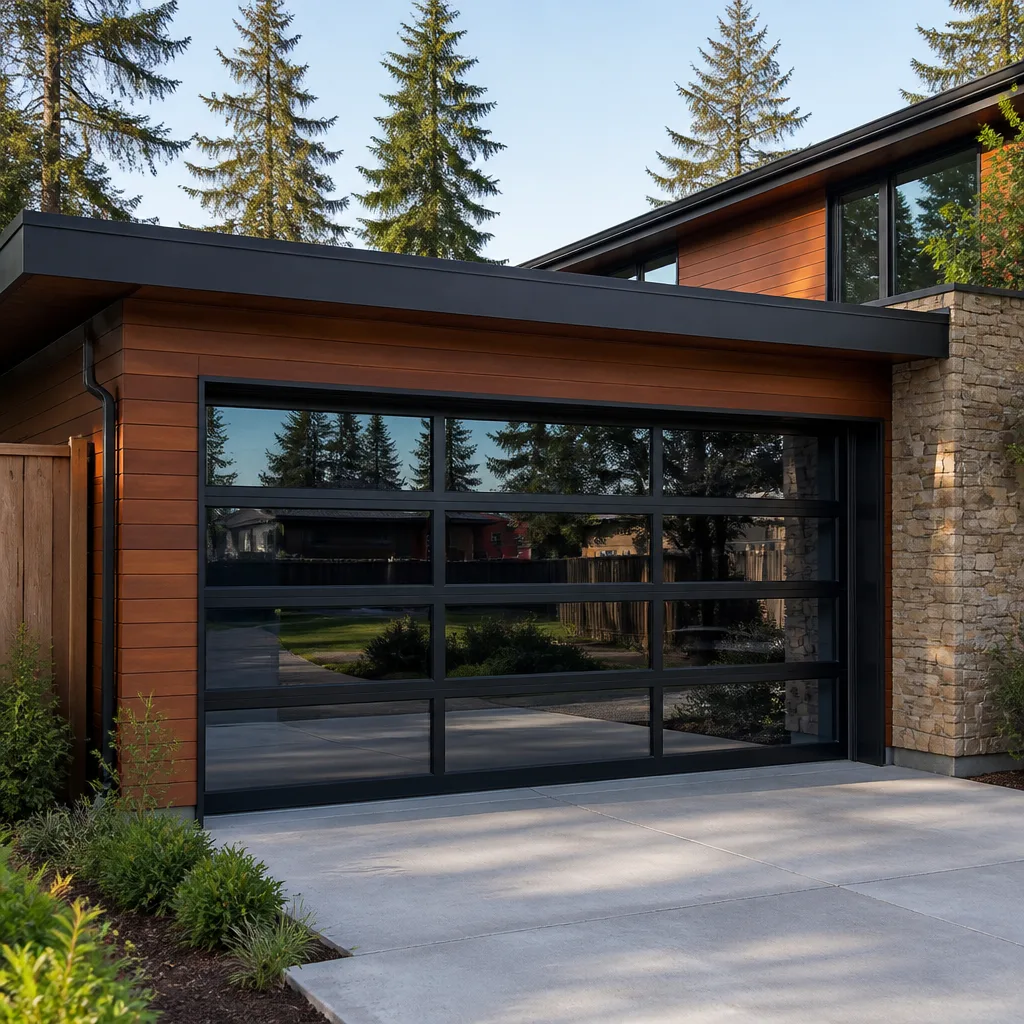 Full-view glass
 LiftMaster openers
 Chamberlain openers
Full 25-point door and opener safety check with every visit - springs, cables, rollers, tracks, and your LiftMaster or Chamberlain opener included
You get a price before we start. It does not change when the truck arrives.
Get your free estimateDIY vs Professional Garage Door: The Fort Lauderdale Homeowner’s Decision Guide
Garage door springs hold between 150 and 200 pounds of stored tension per spring. When one snaps during an amateur repair, the release of that energy has killed people. That’s not fear-mongering; it’s the physics of a wound steel coil. Yet the same garage door system has plenty of tasks a competent homeowner in Fort Lauderdale can handle with a screwdriver, a level, and twenty minutes. The real question isn’t whether you’re handy. It’s whether the specific task in front of you carries physical danger, legal consequence, or warranty risk in Florida. This guide separates the two categories with the clarity most online tutorials skip, because most tutorials weren’t written for coastal South Florida garages. For more guides & resources tailored to local conditions, see our full library.
Quick Answer
DIY garage door work in Fort Lauderdale is safe for low-risk tasks like sensor realignment, weather stripping replacement, lubrication, and remote reprogramming. Professional service is non-negotiable for anything involving torsion springs, extension springs, cables, or track repair, because those components are under lethal tension and improper handling also voids most manufacturer warranties. The smart play is knowing which column your repair falls into before you touch anything.
Styles & brands we work with
Table of Contents
- What You Can Safely Do Yourself
- What Requires a Professional, and Why
- Florida-Specific DIY Limitations: Warranties, Permits, and Insurance
- The Cost of DIY Gone Wrong in Fort Lauderdale
- How to Vet Online Garage Door Tutorials for Florida Homes
- The Middle Path: Preparing and Diagnosing to Reduce Billable Time
- Fort Lauderdale Climate and Your Door: What Changes the Math
- Brand-Specific DIY Considerations: What Your Opener Manual Won’t Tell You
What You Can Safely Do Yourself
There’s a real list here, and it’s not short. These are tasks where the worst realistic outcome is that the door still doesn’t work and you call a professional anyway. You won’t be injured, you won’t damage the door beyond a cosmetic scratch, and you won’t void a warranty. In our experience across Fort Lauderdale service calls, homeowners who handle these tasks themselves save between $80 and $180 per incident.
Photo-Eye Sensor Realignment and Cleaning
If your door starts closing and immediately reverses, or refuses to close at all, the photo-eye sensors at the bottom of the door tracks are the first suspect. A misaligned sensor is the single most common cause of a door that won’t close, and it rarely requires a service call. Here’s the proper sequence:
- Locate both sensors, one on each side of the door, about four to six inches off the ground.
- Check the small LED indicator light on each. On LiftMaster, Chamberlain, and Genie openers, a solid light means the sensor has power and alignment. A blinking or dark light signals a problem.
- Wipe the lens of each sensor with a dry cloth. Fort Lauderdale’s humidity encourages a film of salt and dust buildup that blocks the beam.
- Loosen the wing nut holding each sensor bracket. Gently pivot the sensor until the indicator light turns solid.
- Retighten the wing nut. Test the door with the wall button, not the remote, to confirm it closes smoothly.
If the lights won’t go solid after adjustment, check for a broken wire at the sensor or a kinked wire along the track. That’s where DIY ends and a garage door opener repair in Fort Lauderdale call begins.
Weather Stripping and Threshold Replacement
The rubber strip along the bottom of your door, called the astragal, wears out in South Florida’s heat faster than in most climates. Two to three years of direct sun and salt air leaves it cracked and ineffective. Replacing it is a slide-out, slide-in job that requires a utility knife and about thirty minutes. Same goes for the vinyl weather stripping on the door’s side jambs. A properly sealed door reduces your garage’s interior temperature by five to ten degrees in August, which matters when your garage sits at 95 degrees without it.
Lubrication of Moving Parts
Twice a year, a homeowner can apply white lithium grease to the hinges and a silicone-based lubricant to the rollers. Use only silicone spray on nylon rollers, which are standard on Clopay and Amarr doors installed in Fort Lauderdale. Petroleum-based lubricants degrade nylon over time. Keep grease off the tracks themselves; tracks are meant to be clean and dry, not lubricated. A lubricated track collects sand and grit that wears the rollers faster.
Remote and Keypad Reprogramming
When a remote stops working and the wall button still operates the door, the issue is programming, not mechanics. Every major manufacturer has a straightforward reset procedure. Chamberlain and LiftMaster units use a learn button on the back of the motor housing, typically yellow or purple. Genie uses a slightly different sequence involving the code button. Your opener’s manual has the exact steps, and none of them involve touching the door itself. This is a ten-minute job with zero physical risk.
Visual Inspection and Photo Documentation
Walk the door once a month. Look at the springs, cables, rollers, and hinges. Take a photo of anything that looks worn, rusted, or out of place. You’re not fixing anything; you’re building a record that helps a technician understand what’s happening before they arrive. A homeowner who can describe and show a frayed cable or a rusted spring saves a diagnostic visit and gets more accurate phone estimates.
What Requires a Professional, and Why
This is the list that draws the line where it actually belongs. Every item here carries one of three consequences if handled wrong: serious bodily injury, door system damage, or voided warranty coverage. The task categories below are non-negotiable.
Torsion Spring Repair and Replacement
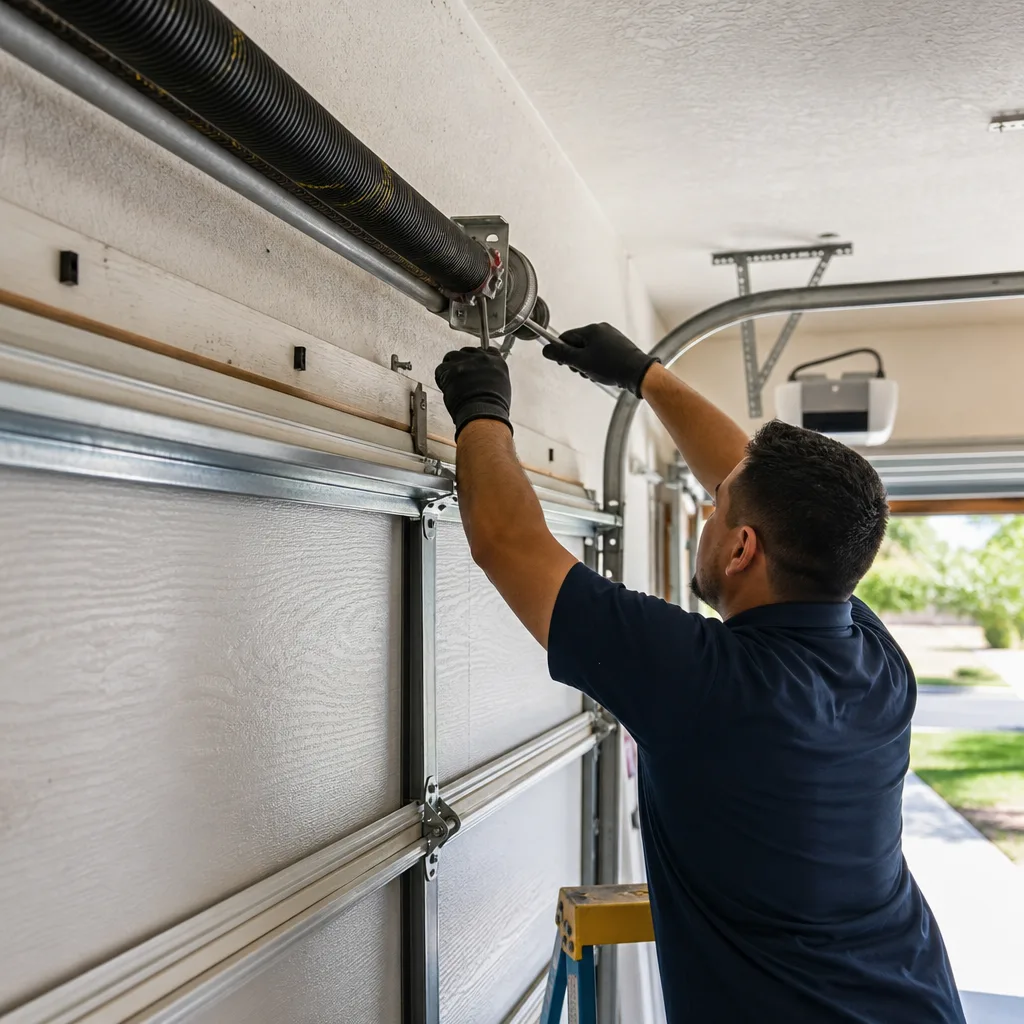
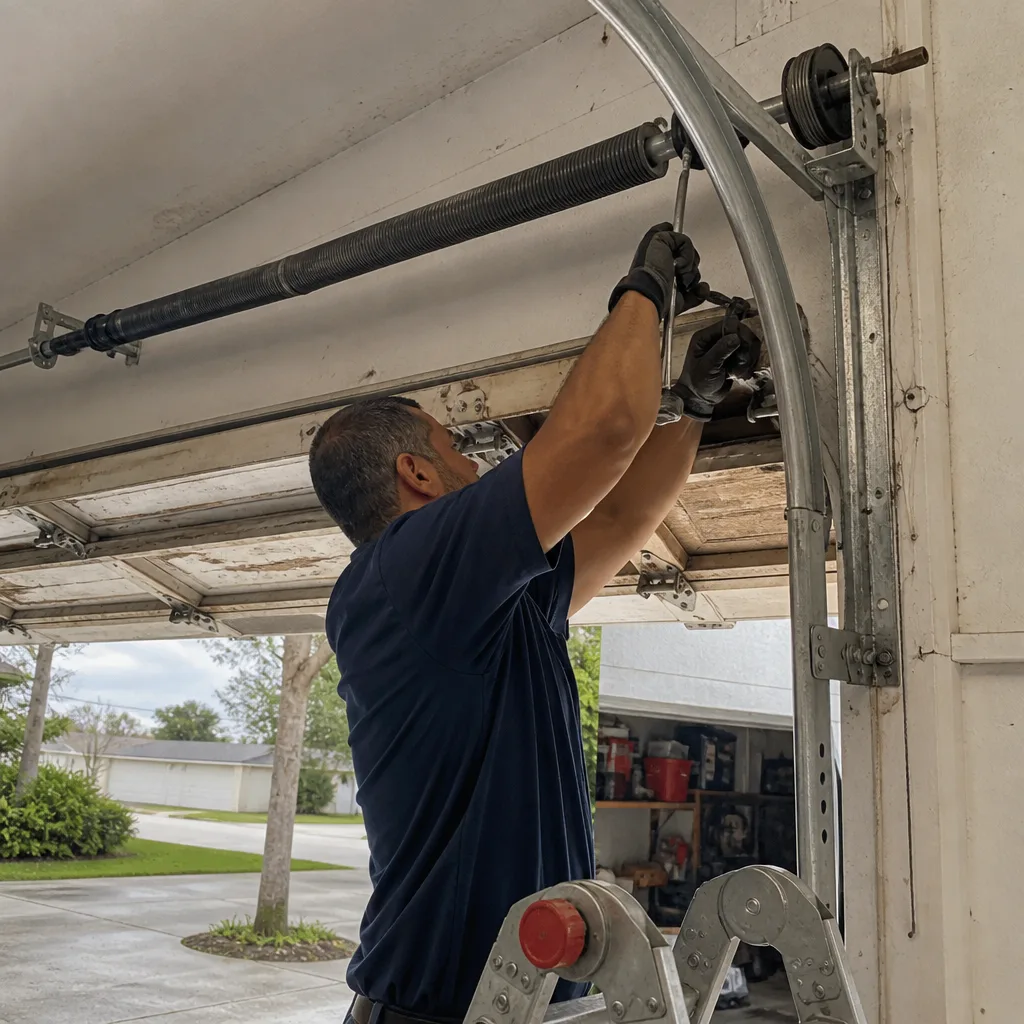
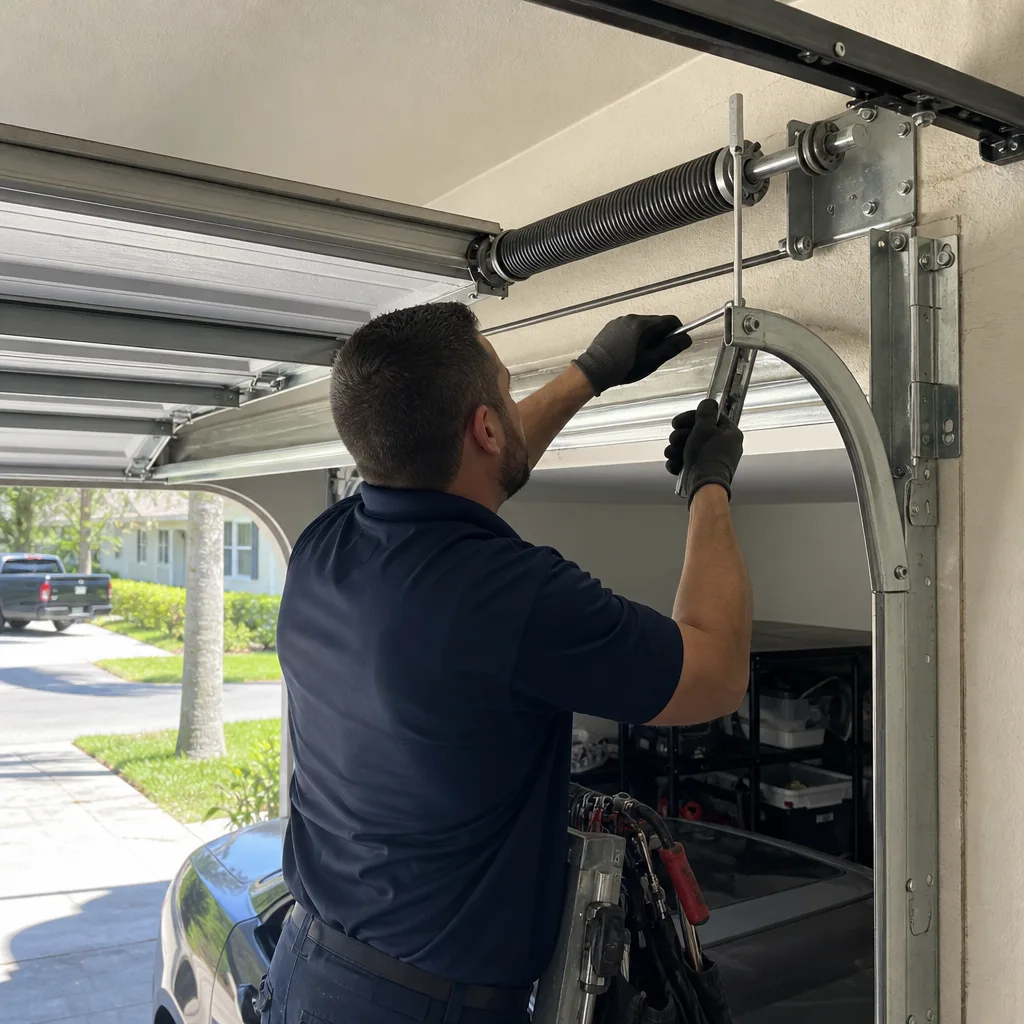
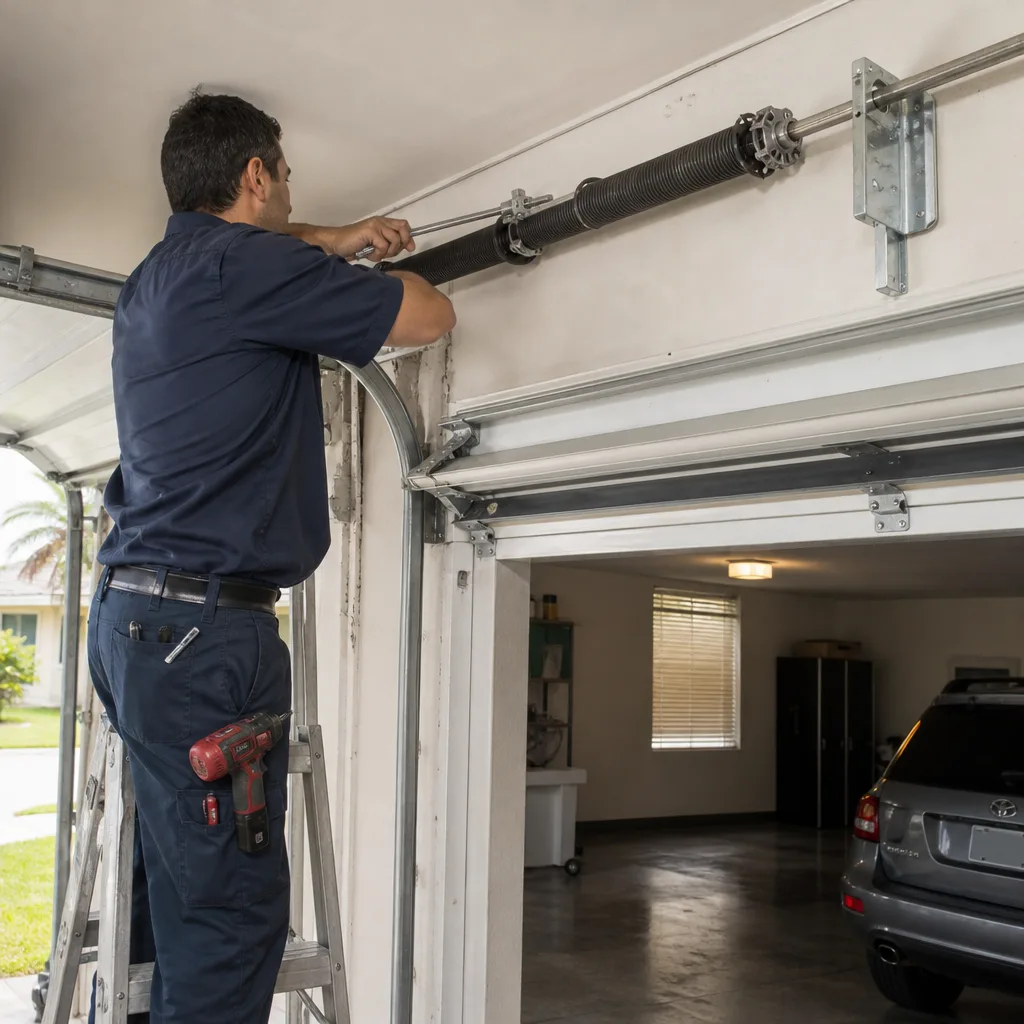
Torsion springs sit on a steel shaft above the closed door. Each spring balances the door’s full weight, which for a typical 16-foot steel door in Fort Lauderdale can exceed 300 pounds total. The springs are wound with 7 to 8 full turns to hold the torque needed to lift that weight. When a spring fails, the release of that torque can throw tools, snap the winding bar, or strike a person standing in the wrong position. Fatal injuries have been documented. Professional technicians use the correct winding bar diameter, count quarter-turns precisely, and know how to secure the door before any spring work begins. A mismatched spring, one wound to the wrong spec, will cause the opener to work harder and fail prematurely. This is the number one task where DIY is never worth the risk, and it’s the most common reason homeowners in neighborhoods like Victoria Park and Rio Vista call us mid-morning after a spring snaps at 7 a.m.
Extension Spring and Cable Work
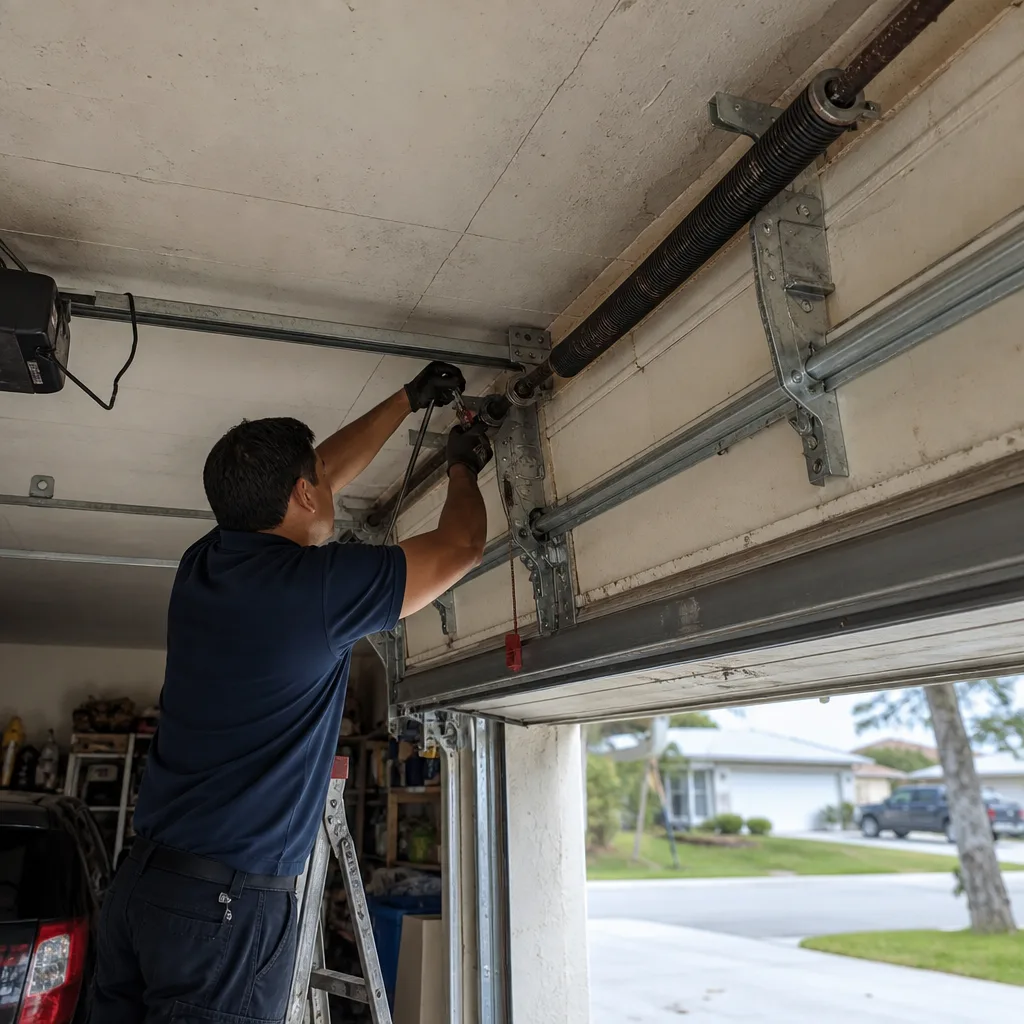
Older and lighter Ft. Lauderdale doors sometimes use extension springs, mounted on each side track, that stretch when the door moves. They are equally dangerous when a cable slips, because the spring can become a projectile. A safety cable inside the spring, required by modern code, is the only thing preventing that spring from sailing across the garage in a cable failure. If your safety cables are missing, the garage is unsafe until they’re installed, and that’s a professional job. Any cable work, whether it’s a frayed lift cable on the side of the door or a snapped cable that sent the door off-level, requires taking the weight off the entire system. Doing that without the right tools and sequence drops a heavy door faster than a person can react.
Track Repair and Structural Alignment
A door that came off its track, or has a track that is bolted loosely to a wall that’s shifted after years of South Florida soil movement, is a structural fix. The door must be re-squared to the opening, the tracks re-shimmed, and the rollers re-seated under tension. A door that operates out of alignment grinds its hinges, bends its vertical tracks, and eventually seizes. The fix involves adjusting the door’s balance, not just the bolt locations. If you attempt this as a homeowner and get it wrong by half an inch, the door runs rough for months until the damage compounds into a more expensive repair.
Opener Gear and Motor Failure
When a garage door opener’s motor runs but the door won’t move, the plastic drive gear inside the opener housing has likely stripped. Replacing that gear requires opening the motor unit, which contains capacitors that hold a charge even when the unit is unplugged. While the risk is lower than spring work, the electrical component and the need to reset the opener’s travel limits make this a job for someone who has done it before. Modern smart openers from Chamberlain and LiftMaster add a circuit board sensitivity that makes DIY gear swaps riskier than they were twenty years ago. A wrong reassembly burns out a $200 motor over a $50 part. We regularly replace openers that could have been repaired if the internal work had been done correctly the first time.
Florida-Specific DIY Limitations: Warranties, Permits, and Insurance
Florida introduces legal and financial layers to the DIY question that most generic garage door guides, written for national audiences, ignore entirely. Here’s what applies specifically to Fort Lauderdale homeowners.
Manufacturer Warranty Language
Every major garage door and opener manufacturer writes its warranty to exclude damage caused by improper installation or unauthorized repair. Clopay and Amarr, two of the most common door brands in Broward County, both void door spring and hardware warranty coverage if springs are replaced with aftermarket parts that don’t match the door’s weight and cycle rating. Raynor’s warranty terms are similarly explicit. For openers, LiftMaster and Chamberlain void coverage when the unit is opened by anyone other than a factory-authorized technician in the warranty period. That’s not a threat; it’s the line in the purchase agreement. A homeowner who replaces a spring and then has a later hardware failure may find the warrantied repair denied because the unauthorized spring work changed the door’s balance characteristics.
Homeowner’s Insurance Considerations
Florida homeowner’s insurance policies generally cover garage door damage from named storms, fires, and vehicles. But damage caused by improper maintenance or repair is routinely excluded. If a homeowner temporarily fixes a spring, the door later fails, and the falling door damages a car or injures a person, the insurance carrier’s adjuster will ask who worked on the door. If the answer is anyone other than a licensed contractor, coverage can be denied. Fort Lauderdale’s dense neighborhoods, where garage doors sit feet from property lines, make this more than a theoretical risk. One failed door can damage a neighbor’s fence or vehicle.
Permit Triggers for Door Replacement
Florida building code changed how garage doors are treated in wind-borne debris regions. Fort Lauderdale sits in the High Velocity Hurricane Zone, often called the HVHZ, the strictest wind-load standard in the state. Any new garage door in Fort Lauderdale must meet HVHZ product approval requirements, which specify wind-load ratings, impact-resistance, and specific installation methods. Most municipalities in Broward County require a permit for a full garage door replacement, and that permit requires a product approval number the installer provides. A homeowner installing a new door without the proper wind-load documentation can be cited, and if the home is later sold, an unpermitted door shows up in the title search. The city can require retroactive permitting, which means paying double fees and potentially having the installation inspected. For garage door installation in Fort Lauderdale, dealing with the permit and the product approval is part of doing the job correctly.
Wind-Load Hardware and Coastal Corrosion Standards
A garage door in Fort Lauderdale is not just a door; it’s a structural component designed to resist hurricane-force wind pressure. The tracks, hinges, and mounting brackets on an HVHZ-rated door are heavier than on an inland door. The springs are sized differently. When a homeowner orders a replacement spring online and installs it, that spring may be calibrated for a generic door weight and cycle life, not for the wind-load hardware attached to a South Florida door. The door may balance, but under stress, it may fail in ways that put the entire garage opening at risk. This is a Florida-specific concern that a national YouTube tutorial will not mention.
The Cost of DIY Gone Wrong in Fort Lauderdale
This section is built from real service call patterns. These are the scenarios we see repeatedly in Fort Lauderdale, from Sailboat Bend to Coral Ridge. Each one started as a homeowner with good intentions and a YouTube video.
The $250 Spring That Became a $900 Job
A homeowner in the Middle River Terrace area ordered a pair of torsion springs online for about $80. The spring broke after installation, the door slammed unevenly, and the force of the door dropping bent the vertical track. The final repair required two new springs, two new tracks, and an hour of realignment. The initial spring job, done by a professional, would have cost about $250 including parts. The corrected job cost just over $900. The original springs were sized for a different door weight, a detail the online listing mentioned in a footnote the homeowner didn’t read.
The Opener that Burned Out Twice
A Dorsey-Riverbend homeowner replaced a stripped drive gear inside his opener following a video tutorial. The repair worked for three weeks, then the motor burned out entirely. The issue: during reassembly, he misaligned the travel limit switch, which caused the opener to pull the door too far and run the motor against resistance on every cycle. The motor failed, and the opener needed full replacement. The gear repair would have been a service call under $200. The replacement was over $600, and it could have been avoided if the opener had been recalibrated after the gear swap.
The Cable Job That Dented the Car
A homeowner in Tarpon River attempted to replace a frayed lift cable on one side of his door. He disconnected the opener and released the emergency pull, but the door was not clamped or blocked. The door slid down the remaining cable and into the corner of his car’s rear bumper. The door stayed intact, but the car repair was $1,100, and the door still needed its cable replaced. A professional cable replacement is typically under $200. The specific mistake was not securing the door in a fully open position before touching the cable.
The Sensor That Was Never the Problem
This one goes the other direction. A homeowner in Progresso Village replaced his photo-eye sensors twice, convinced they were the reason his door wouldn’t close. Each replacement involved ordering a new sensor pair online and drilling new mounting holes into the track. The actual issue was a failing logic board in the opener that would intermittently ignore the sensor signal. A professional diagnostic would have identified the board on the first visit. By the time we arrived, his opener had new sensors, new wiring spliced in, and holes in the track from two sets of mounting. The correct repair was a board replacement. The DIY path cost an extra $180 in parts and made the final diagnosis harder.
The pattern in all of these is not that the homeowner lacked intelligence or skill. It’s that the specific failure mode of the part wasn’t what the tutorial assumed. In Fort Lauderdale’s humidity, corrosion, and wind-load hardware, those failure modes diverge from the generic cases faster than elsewhere.
How to Vet Online Garage Door Tutorials for Florida Homes
Most garage door repair tutorials are produced in Texas, Arizona, or states with no hurricane-code requirements. They can be excellent at showing a technique, but they often miss Florida-specific conditions. Before following any garage door tutorial on a Fort Lauderdale door, run it through these checks.
- Does the video mention wind-load or coastal hardware? If not, the door in the video is probably an inland door. The spring tension, track gauge, and mounting brackets on an HVHZ-rated Fort Lauderdale door are different. A spring winding count that works in Dallas may not be correct for a door with heavier wind-load reinforcement.
- Does the video show the brand of the equipment in your garage? A Chamberlain opener tutorial is not a direct match for a Genie opener. The disassembly, part numbers, and reprogramming sequences differ. If the video does not name the brand, or covers a different brand, find one that matches what’s in your garage.
- Does the video mention the manufacturer’s torque specs? Professional spring replacement involves specific torque and cycle ratings. A tutorial that says “wind it until it feels right” is dangerous and wrong. The correct tutorial references the door’s weight, the door’s height, and the wire diameter of the spring.
- Does the video address safety cables? For extension spring doors, a tutorial that does not mention safety cables is incomplete. These cables are required by code in Fort Lauderdale, and any spring work on an extension system without them creates a projectile hazard.
- Was the video published in the last three years? Door technology has shifted. Modern Chamberlain and LiftMaster openers with smart-home integration have different circuit boards and self-diagnostic features than models from 2015. A tutorial from 2017 may not apply to a 2022 opener, even if the outer casing looks similar.
- Does the video show the same type of spring system? Torsion and extension spring systems are repaired completely differently. If the video is working on an extension spring and your Fort Lauderdale door has a torsion system, stop the video. It does not apply to your door.
If a tutorial passes all six checks and the task is on the safe DIY list above, proceed. If a tutorial fails any check and the task involves springs, cables, or tracks, that’s where the professional line is drawn.
The Middle Path: Preparing and Diagnosing to Reduce Billable Time
There’s a way to be involved in your garage door’s repair without exposing yourself to physical risk. This is the approach that saves money without crossing the safety line, and it’s what we tell Fort Lauderdale homeowners who want to understand their door before calling us.
What You Can Check Before Calling
- Note the exact symptom. Write down what the door does and doesn’t do. Does it open but not close? Close but not open? Make a grinding sound at a specific point? The more specific your description, the more accurate the phone estimate.
- Identify the brand and model. The model sticker is on the door frame or the opener motor casing. Knowing you have a Raynor door with a Genie opener tells the technician what parts to bring, which reduces or eliminates a second trip.
- Check the emergency release. If the door won’t open and the opener is running, try the red emergency release cord. If the door manually opens after releasing, the door itself is functional and the problem is in the opener. If the door is heavy or won’t move, the springs are involved. That single test narrows the diagnosis before anyone arrives.
- Inspect for visible damage. A frayed cable, a rusted spring, or a bent track is visible from the garage floor. Take a photo with your phone and have it ready when you call.
- Test the wall button versus the remote. If the wall button works but the remote doesn’t, you’ve identified a remote or receiver issue, not a door issue. That changes the estimate significantly.
What This Does for Your Service Call
When you can describe the symptom precisely and identify the brand on the door, the technician arrives with the correct parts on the truck. That means one visit, not two. It means the quote you receive over the phone is closer to the final price. And it means the diagnostic time, which is billable, is shorter because the technician starts from your accurate description rather than starting from zero. In a market like Fort Lauderdale, where service calls across the city mean driving through variable traffic, reducing return trips is real money. We’ve found that calls where the homeowner has done the middle-path checks resolve faster and with better outcomes on both sides of the invoice. Understanding Garage Door Cost Breakdown: The Fort Lauderdale Homeowner’s Reference for 2026 helps set realistic expectations before calling.
The middle path also applies to the quote itself. When you call for garage door repair in Fort Lauderdale, the person answering can often narrow the likely cause from your description. A door that’s stuck halfway up with a visible spring gap is a spring call. A door that reverses on the way down with a blinking sensor light is a sensor call. The more information you provide, the more precise the estimate.
Fort Lauderdale Climate and Your Door: What Changes the Math
Fort Lauderdale’s environment isn’t a footnote in the DIY decision. It’s the primary factor that makes generic advice unreliable here. Salt air, sustained humidity, and hurricane-cycle wind loads change which parts wear fastest and which repairs are most common.
Corrosion Accelerates Hardware Wear
Steel garage door components in Fort Lauderdale rust faster than inland equivalents. The hardware on a ten-year-old door near the Intracoastal or within a mile of the ocean shows visible corrosion on hinges, brackets, and spring coils. Rusted springs lose their designed cycle life faster. Rusted rollers grind against tracks. A door in inland Broward County may need spring replacement every seven to ten years. The same door in a coastal neighborhood like Harbor Beach or Las Olas Isles may need springs every five to seven. When a DIY homeowner orders a generic replacement part online, the part may not have the corrosion-resistant coating used on components sold through Florida suppliers. It works fine for a year, then rusts and fails early.
Humidity Affects the Opener and Sensors
Fort Lauderdale garages run hot and humid for most of the year. That humidity accelerates corrosion on the opener’s internal frame, but more commonly, it creates conductive conditions that make sensors flaky. The photo-eye sensors on any brand, whether LiftMaster or Genie, accumulate a film of salt and dust faster in Fort Lauderdale than in dry climates. A sensor that works at 9 a.m. may fail at 7 p.m. after a full day of humid air. This is why the sensor-cleaning DIY task described above is more important in Fort Lauderdale than in most of the country; local conditions make sensors fail here more often.
Wind-Load Doors Are Heavier
An HVHZ-rated garage door in Fort Lauderdale carries more steel in its frame, more reinforcement in its sections, and heavier hardware throughout. That additional weight changes the spring calculation. A replacement spring ordered from a national retailer, sized by the standard tables for a standard 16-foot door, may be undersized for an impact-rated door with wind-load reinforcement. An undersized spring breaks early, often catastrophically. This is a Florida-specific failure mode that the DIY guides written in other states do not account for, and it’s one of the reasons we recommend professional garage door installation in Fort Lauderdale when a door is being replaced, not just repaired.
Brand-Specific DIY Considerations: What Your Opener Manual Won’t Tell You
Not all garage door systems are created equal, and the DIY task list shifts depending on which brand is on your door. We work on your brand, whichever it is, and the brand-specific quirks below come from seeing thousands of these units in Fort Lauderdale garages.
LiftMaster and Chamberlain: Smart Features Add Complexity
LiftMaster and its consumer line Chamberlain dominate the smart-opener market with myQ connectivity. These openers integrate with smartphone apps and home automation systems. The DIY tasks that stay simple are remote reprogramming and sensor cleaning. But the smart connectivity adds a failure point: the Wi-Fi board inside the unit. When a LiftMaster opener loses app connectivity or reports a “door open” status when the door is closed, the issue may be the logic board, not the door itself. Diagnosing that requires understanding the opener’s self-diagnostic codes and replacement board compatibility. This is not a generic DIY job. If the wall button works and the app doesn’t, the issue is in the myQ module, and the fix is brand-specific.
Genie: Older Units Use Different Programming Sequences
Genie openers, particularly the older screw-drive and chain-drive models still installed in Fort Lauderdale homes from the 1990s and 2000s, use a different programming sequence than current-generation units. The code button interacts with the remote differently, and the travel limit settings are adjusted mechanically on some models, not digitally. A homeowner following a Chamberlain tutorial on a Genie unit will stall quickly. The Genie Aladdin Connect smart platform has its own setup requirements. These are serviceable with the right manual, but the margin for error in the reprogramming steps is smaller than on newer openers.
Raynor Doors: A Smaller Brand with Specific Hardware
Raynor residential doors, while less common in Fort Lauderdale than Clopay or Amarr, have a dedicated following. Their hardware systems, particularly the spring and track assemblies, are built to Raynor specs and don’t always accept generic aftermarket parts. A homeowner who orders a generic bottom bracket or spring cone for a Raynor door may find the part doesn’t fit, or fits but wears incorrectly. Raynor’s warranty terms are also specific about authorized replacement parts. If a Raynor door needs spring work, the correct replacement part comes from Raynor’s supply chain, and knowing how to source it correctly is a professional’s job.
Common Mistakes to Avoid
- Following a spring tutorial written for an inland door. Wind-load hardware on Fort Lauderdale doors changes the spring torque math. A generic winding count is wrong for an HVHZ-rated door and causes early spring failure.
- Using petroleum-based lubricant on nylon rollers. This is the most common mistake we see on Clopay and Amarr doors in Broward County. Petroleum degrades nylon and shortens roller life, and the rollers are not cheap to replace.
- Ordering a replacement spring before confirming the door’s actual weight. The spring spec is
See the difference
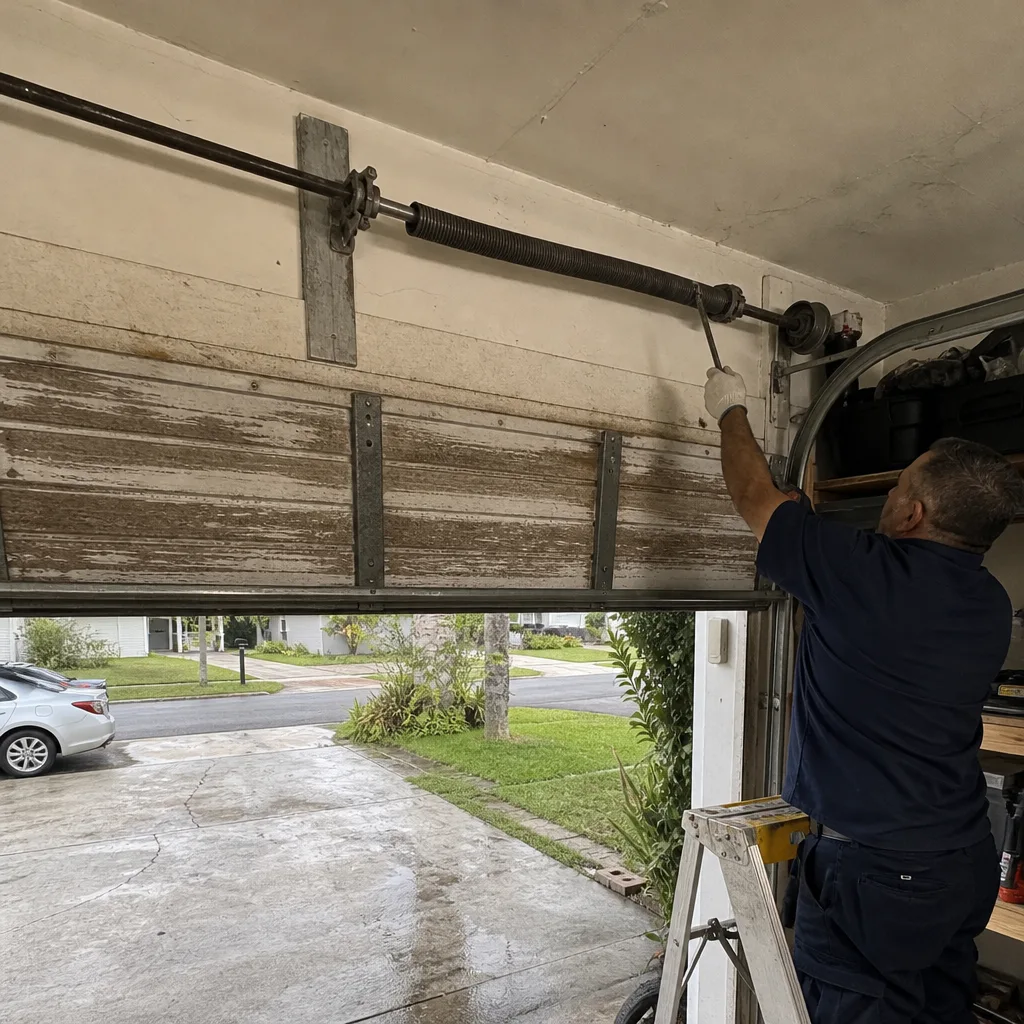 Before
 After
 Before
 After
 Before
 After