Last updated October 30, 2026
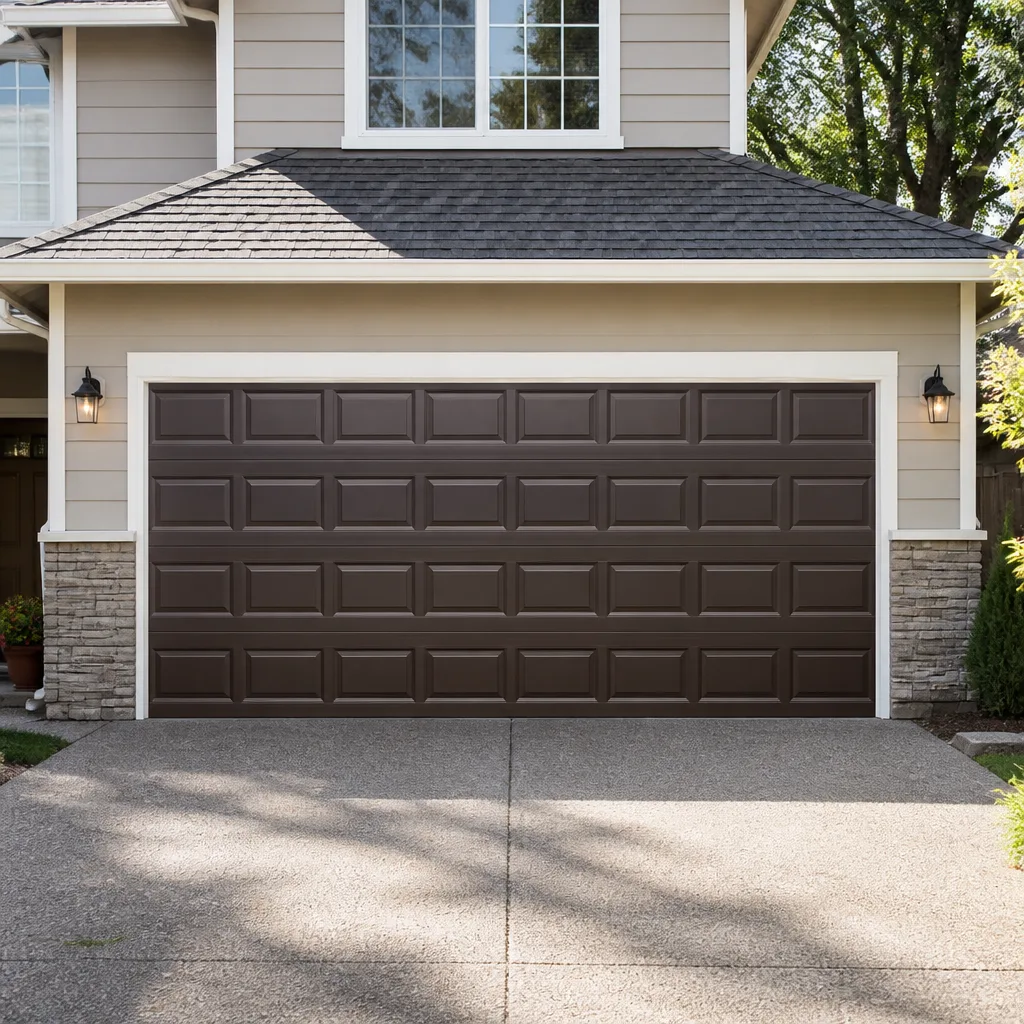 Raised-panel steel
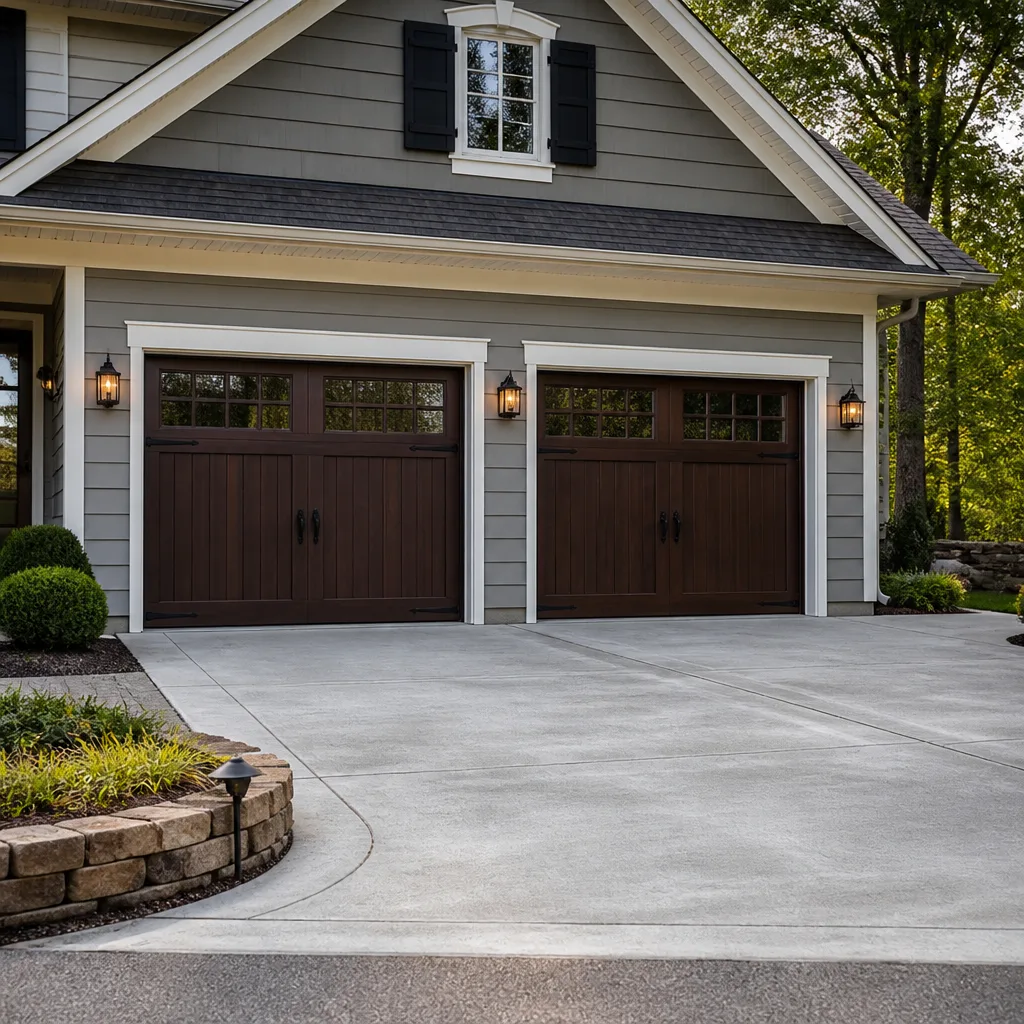 Carriage house
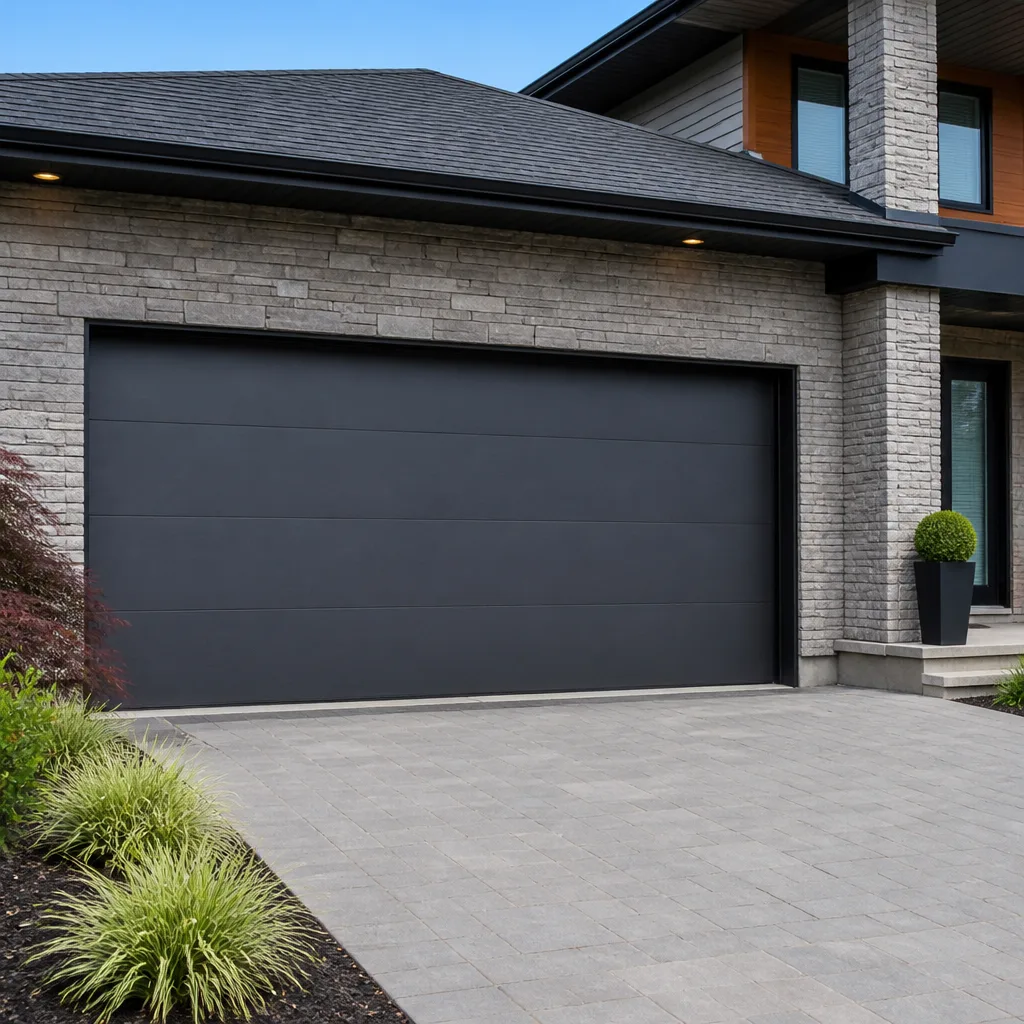 Modern flush
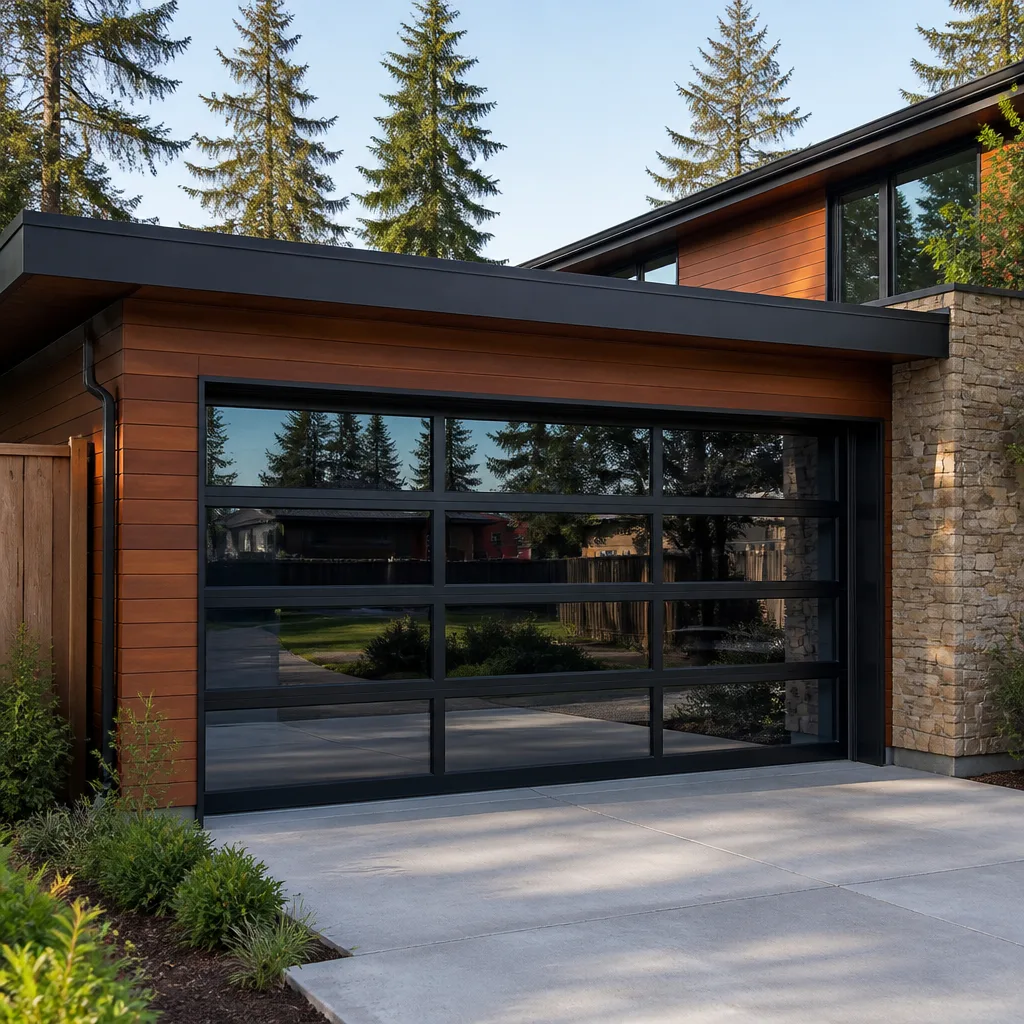 Full-view glass
 LiftMaster openers
 Chamberlain openers
Full 25-point door and opener safety check with every visit - springs, cables, rollers, tracks, and your LiftMaster or Chamberlain opener included
You get a price before we start. It does not change when the truck arrives.
Get your free estimateThe Complete Garage Door Repair Guide for Fort Lauderdale Homeowners
Here’s a number that should get your attention: the average garage door in Fort Lauderdale absorbs more corrosion in twelve months than the same door installed in Phoenix or Denver would see in five years. Salt-laden Atlantic air, 75% average humidity, and summer afternoon thunderstorms create a uniquely punishing environment for steel springs, galvanized tracks, and opener circuit boards. Most homeowners don’t realize this until the morning the door refuses to open and the repair truck is still two hours out. This guide covers what actually fails on garage doors in Southeast Florida, what it costs to fix in the local market, when a repair is a legal DIY job versus a licensed-contractor requirement, and how to evaluate whether a repair or replacement makes financial sense. We’re Gateway Garage Door Repair home and we’ve rebuilt more salt-corroded tracks and humidity-stressed springs than we can count.
Styles & brands we work with
Quick Answer
The complete garage door picture in Fort Lauderdale comes down to two questions: what failed and what caused it. Most Garage Door Repair services fall into five categories: broken torsion springs, frayed cables, off-track rollers, dead opener logic boards, or rusted track sections. In the Fort Lauderdale market, a spring replacement typically runs $180 to $340 per spring, a cable replacement $150 to $250, and a full opener replacement $425 to $675 including labor, depending on brand and motor type. Because of salt air and humidity, local repair volumes skew toward cable and track issues at roughly twice the rate seen in inland Florida cities.
Table of Contents
- Why Fort Lauderdale Kills Garage Doors Faster
- A Garage Door Is Two Systems: Understand Both
- The Seven Most Common Repairs in Fort Lauderdale
- What Repairs Actually Cost in Southeast Florida
- DIY vs. Licensed Contractor: Florida Rules
- Hurricane Readiness: Repair or Wind-Rated Replacement?
- Brand-Specific Quirks Among Broward County Doors
- A Fort Lauderdale-Specific Maintenance Schedule
- Common Mistakes to Avoid
- When to Call a Professional
- Frequently Asked Questions
- The Bottom Line
Why Fort Lauderdale Kills Garage Doors Faster
Florida is not one climate. Fort Lauderdale sits in a band where three specific environmental factors converge to accelerate garage door wear. First, prevailing easterly winds carry salt spray inland from the Atlantic, as detailed in The Complete Guide to Garage Door in Fort Lauderdale. This means a good thirty percent of residential garage doors in Broward County get more airborne salt year-round than any property twelve miles west. Second, South Florida humidity stays at or above 70% for nearly the entire calendar year. That moisture works its way into torsion springs at a microscopic level, creating the conditions for the oxidation pitting that eventually becomes a stress-fracture break. Third, the summer thunderstorm cycle combines intense UV exposure from noon through 3 p.m., followed by heavy rain. That cycle drives a thermal expansion-contraction rhythm that pulls hardware fasteners loose and warps poorly-adjusted aluminum frames.
The result: a Fort Lauderdale torsion spring that would last ten years in Colorado might fail in year six or seven here. A galvanized steel track that would rust only at the cut ends elsewhere can show visible surface rust across flat sections within three years near the water. In our experience across neighborhoods from Rio Vista to Victoria Park, coastal-adjacent doors need their first cable replacement by year four and spring replacement by year six, while doors west of I-95 often stretch those numbers by two to three years.
The local repair math is simple and unglamorous: a homeowner who inspects and lubricates on a regular schedule will pay less over a ten-year stretch than one who ignores the door until failure. The salt and humidity will come for the hardware regardless. Inspection is what catches a $65 cable before it breaks and turns into a $400 door-off-track repair.
A Garage Door Is Two Systems: Understand Both
Most homeowners call the “garage door” a single thing. It’s not. It’s two distinct mechanical systems that happen to sit in the same 7-foot-by-8-foot opening. The first is the door system: the panels, hinges, rollers, tracks, springs, cables, and bottom weather seal. The second is the opener system: the motor, the drive mechanism (chain, belt, or screw), the traveler/carriage assembly, the safety sensors, and the logic board. Understanding the split matters because the diagnostic path for each is different, and so is the repair cost.
Here’s the tension point: when one system fails, it can damage the other. A broken spring puts the full weight of the door on the opener, which can strip the plastic gears inside a Craftsman, Genie, or Chamberlain motor in under a month if you keep pressing the button. A door that binds on a salt-corroded track forces the opener to work harder and can overheat the motor windings. This is exactly why we diagnose the full system on every visit. We’ve seen too many homeowners spend $300 replacing an opener that failed, only to have the new one burn out six weeks later because the original problem was a rusted track the first tech never touched. The phrase we tell customers is simple: one call covers the door and the opener. It’s true, and it’s the cheapest way to fix a garage door on a long timeline.
The Seven Most Common Repairs in Fort Lauderdale
These are the repair calls we make most often in Fort Lauderdale. They’re ordered roughly by frequency. If your garage door is making a noise or acting wrong, the odds are it’s one of these.
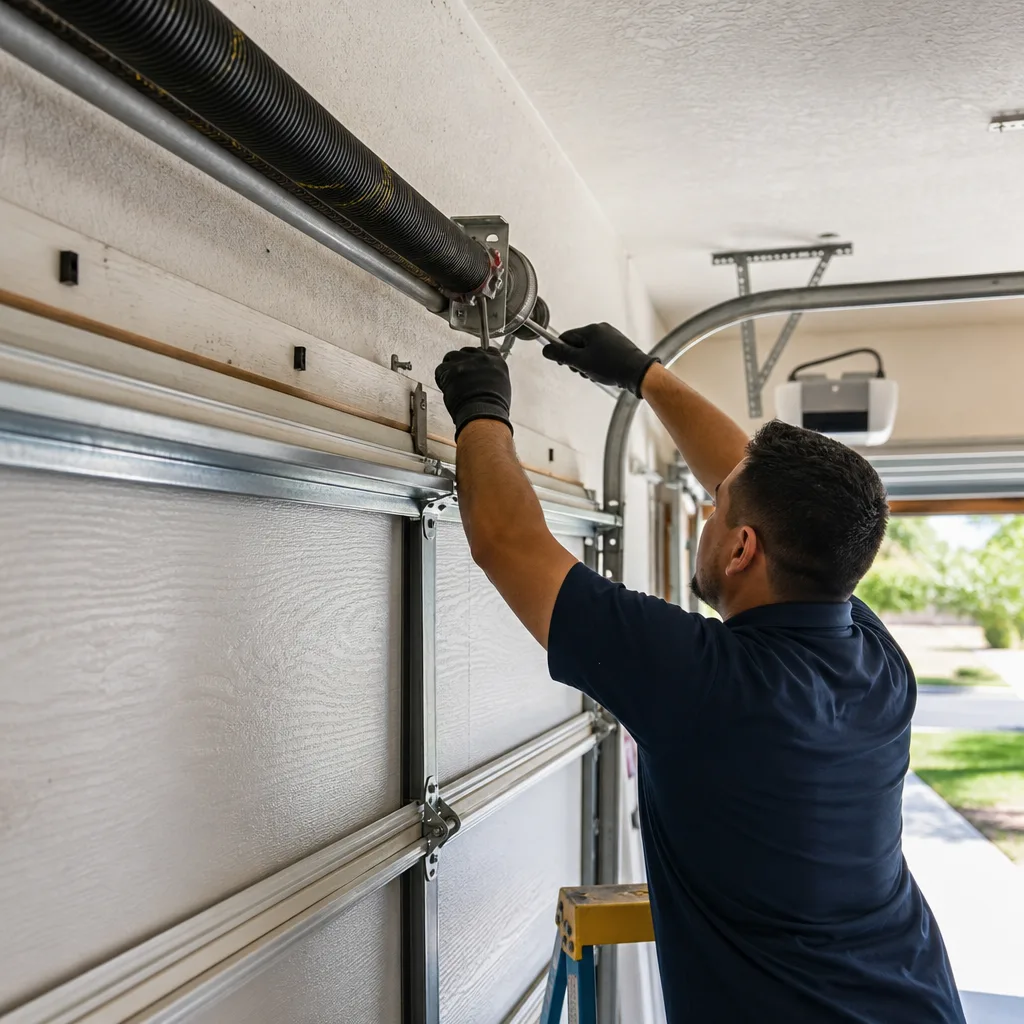
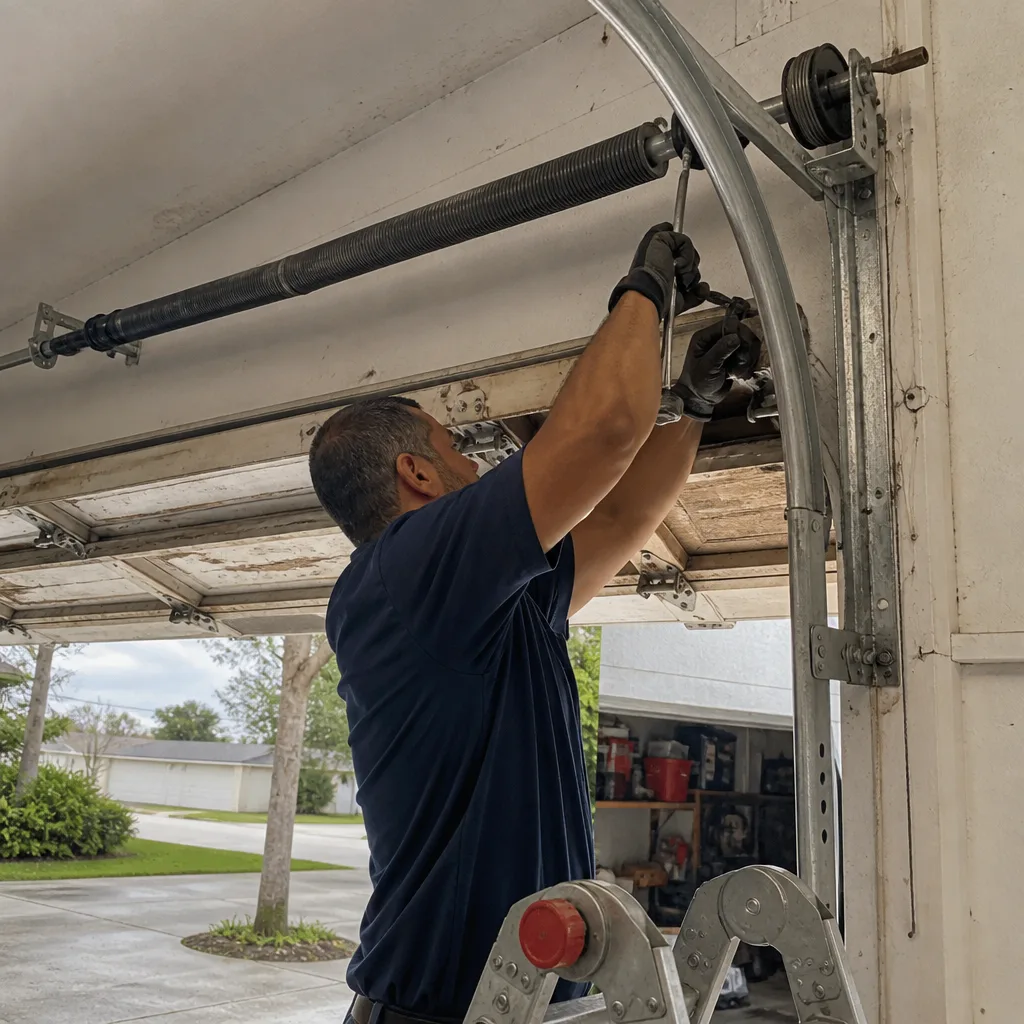
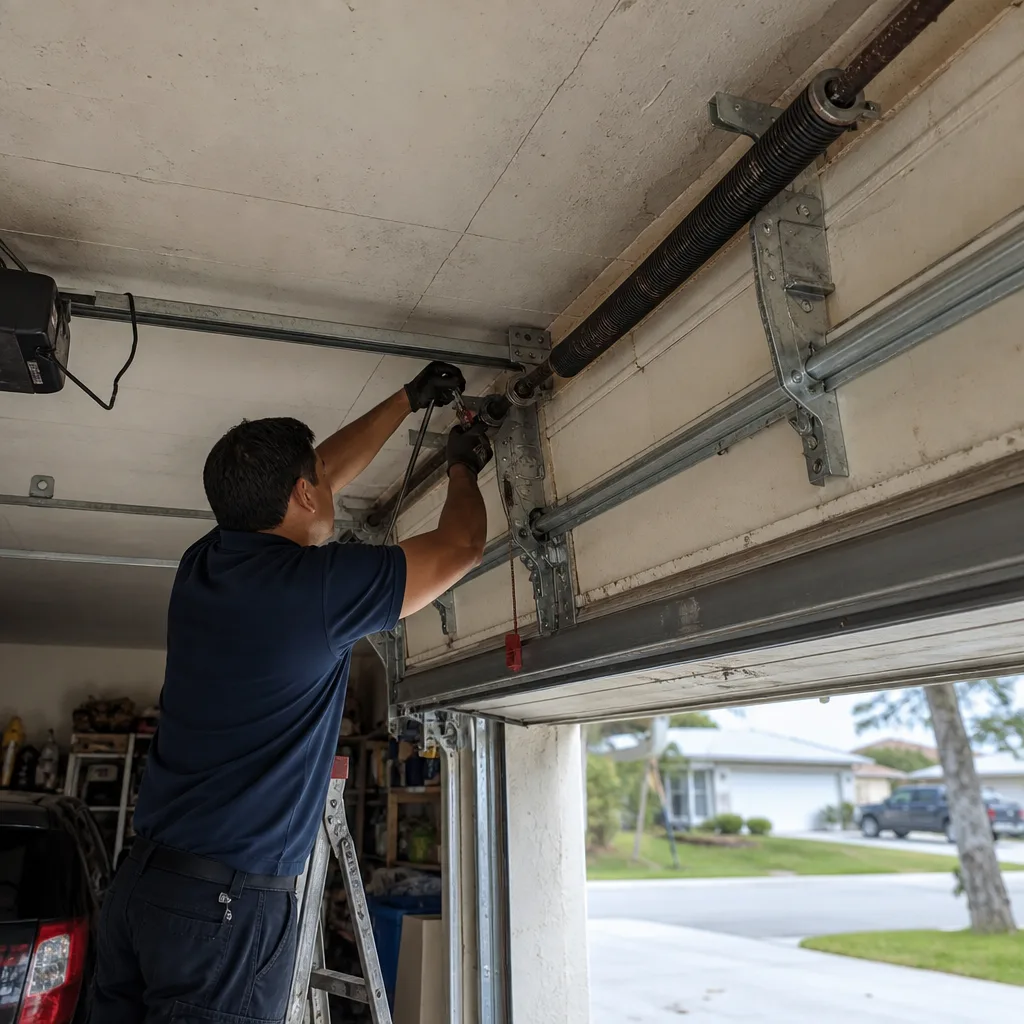
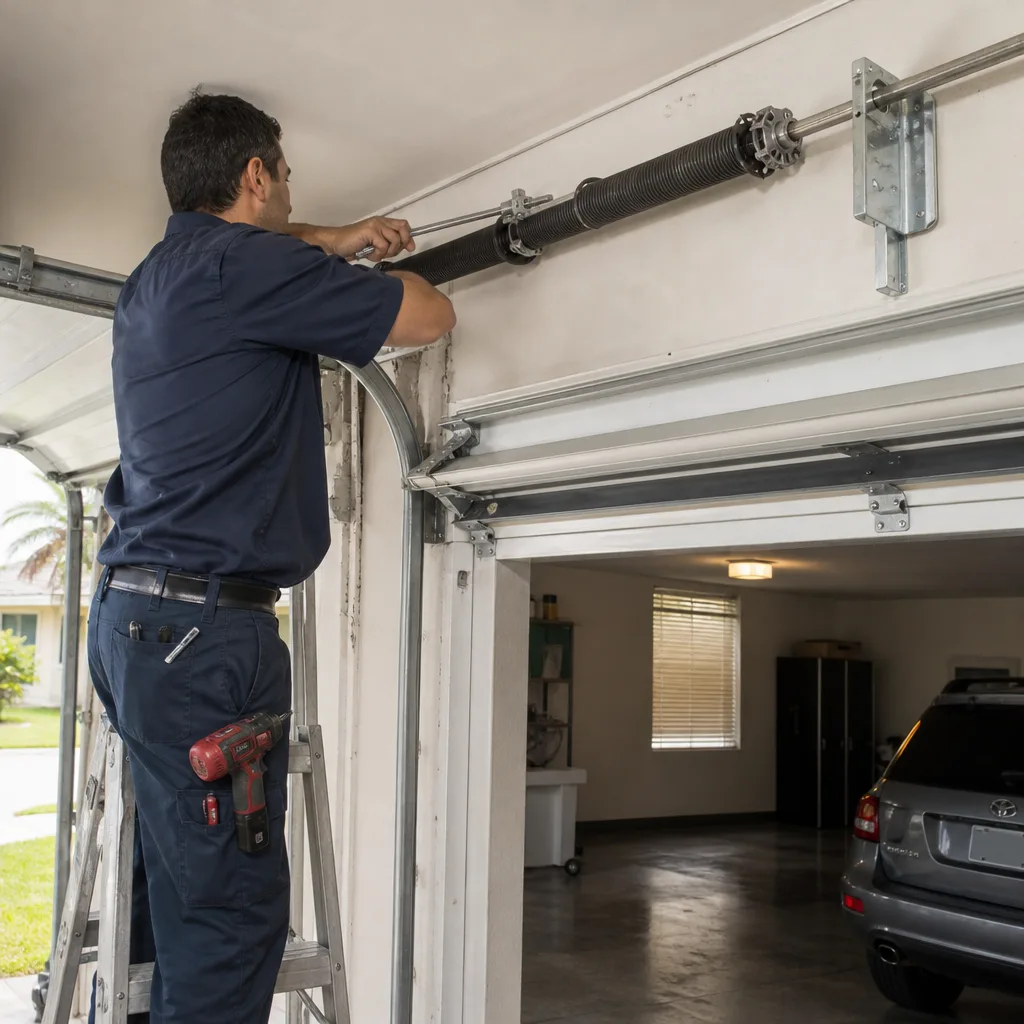
- Broken torsion spring. You’ll know this one immediately: the door won’t open more than a few inches, the opener strains or trips itself, and you can see a visible separation in the spring above the door. These fail from fatigue, and the salt-humidity combo accelerates the metal’s fatigue cycle. It’s the defining morning call of Fort Lauderdale residential life.
- Frayed or snapped lift cable. Cables rust and abrade where they wrap around the bottom fixtures. When one snaps, the door hangs with a violent lurch and usually comes off its track. We see this in northwest Fort Lauderdale neighborhoods and the Himmarshee district alike.
- Rusted track or seized rollers. Rollers and tracks in Southeast Florida collect salt crust at an alarming rate. The door starts to grind or hang, and the open cycle sounds like metal being dragged across concrete. Left unaddressed, this bends the track to a replacement-level repair.
- Dead opener logic board. Modern openers from LiftMaster, Chamberlain, and Genie have circuit boards that are sensitive to humidity. Over time, corrugated metal panel corrosion migrates into the board, or a passing thunderstorm brings a power surge. The motor is fine, but the brain is gone.
- Stripped opener drive gear. This is the classic companion failure to a broken spring. The motor runs, but the gear teeth inside the drive unit are rounded off. We see it most on older Craftsman and Genie screw-drive units that have been forced to lift a door with no spring assist.
- Photo-eye sensor misalignment. The door goes down six inches, reverses, and the lights flash. In a humid environment, sensor brackets collect condensation and shift slightly out of alignment with every thermal cycle. It’s a ten-minute fix with a level and a screwdriver.
- Bottom seal failure and water intrusion. The Thunderstorm Cycle of South Florida will eventually force water under any bottom seal. When the seal gets brittle from salt and UV, water pools inside, then wicks into the metal track and accelerates rust. We replace more bottom seals in August than in any other month.
What Repairs Actually Cost in Southeast Florida
Repair pricing in Fort Lauderdale runs slightly higher than the Florida state average, driven by two factors: higher labor rates across the Miami-Fort Lauderdale metro and faster-than-average corrosion-related labor time. When a tech needs to cut out rusted track bolts before replacement, that adds twenty minutes to the job, and twenty minutes are billable. Here’s a straight breakdown of what we quote most often in the Fort Lauderdale market, as of this writing.
Typical Fort Lauderdale Garage Door Repair Costs
- Broken torsion spring (single spring): $180 to $280 for the common oil-tempered steel. $260 to $340 for a high-cycle spring rated for salt-air environments. Includes labor.
- Lift cable replacement (per cable): $150 to $210. We recommend replacing both cables even when only one snapped. The other one is the same age and has seen the same salt.
- Roller replacement (all rollers): $120 to $180. Nylon rollers with sealed bearings are the smart upgrade for this climate. They resist salt crust and quiet the door.
- Track straightening or replacement (single side): $140 to $260 depending on damage. Full track replacement on a single-car door runs $350 to $500.
- Opener logic board replacement: $120 to $180 for the board plus labor. On a 15-year-old opener, this is where we ask the replace-or-repair question, because new entry-level openers run $260 to $350 installed.
- Full opener replacement: $425 to $675 including a chain or belt-drive unit and labor. The salt air doesn’t care about the brand, but it does care about sealed motor housing. Belt-drive openers, especially from LiftMaster and Chamberlain, have sealed gear cases that stand up better to humidity than open screw-drive units.
- Bottom seal replacement: $110 to $180. Cheap insurance against Rust and the Water Wicking Track Death Spiral.
- Complete spring-and-cable package (both springs, both cables, all rollers, full adjustment): $400 to $600. This is the “reset the entire lift system” move. If the door is more than ten years old and has never had this done, it’s usually the right call.
Every quote we provide in Fort Lauderdale is stated up front and agreed to before any work starts. You’ll know the number before the first tool touches the door. If a tech shows up and the job is smaller than expected, the quote goes down. It never quietly goes up.
DIY vs. Licensed Contractor: Florida Rules
Florida Building Code draws a real line between what a homeowner can legally and safely do on a garage door, and what requires a licensed contractor. The distinction is not advice; it’s law. Since Daytona Beach to Key West operate under the Florida Building Code 8th Edition, this applies to all of Broward County.
What a homeowner can generally handle without a license or permit: lubrication of moving parts, tightening of visible hinge and track bolts, sensor realignment, bottom seal replacement, remote battery replacement, and visual inspection. All of these are maintenance, not structural repair. No permit is required, and no speciality contractor license is required.
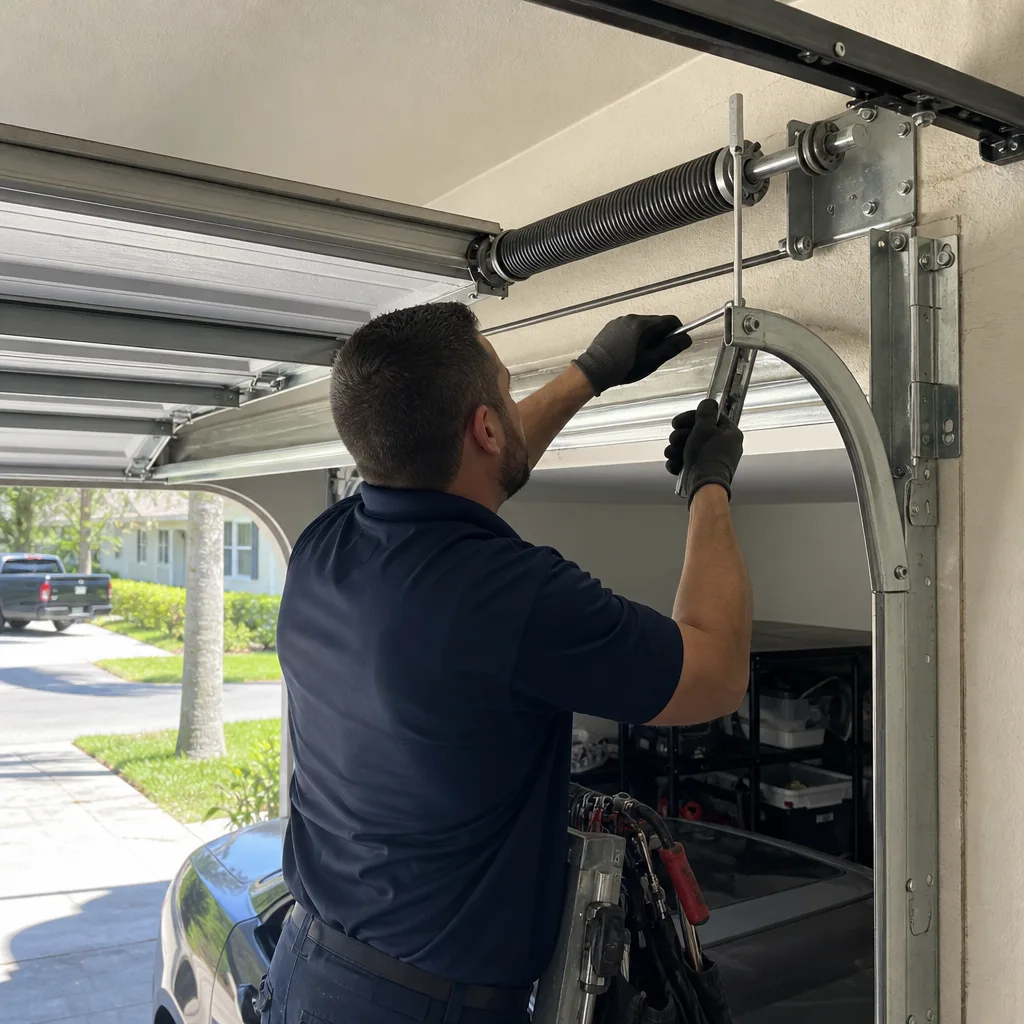
What requires a licensed contractor or at minimum a permitted repair, depending on scope: any work involving the removal, replacement, or adjustment of torsion springs, and any replacement of the lift cables that attach to the bottom corner brackets. Those parts are under constant tension: the spring holds roughly the entire weight of the door in stored mechanical energy, and the cable is the only thing that transfers that force safely. Cutting or unbolting these components without the correct winding bars and the correct sequence results in the most common serious injury in home-improvement work. It’s not a badge of courage to try it, it’s a hospital trip waiting to happen. The Fort Lauderdale Building Department also requires wind-load documentation for any full door replacement in a High-Velocity Hurricane Zone, which means a new door panel itself will need a contractor to pull the product approval paperwork.
Our recommendation to any Fort Lauderdale homeowner is this: do the inspection, do the lubrication, do the sensor checks. Leave the spring, cable, and track work to someone with the license, the right winding bars, and the daily experience of handling South Florida-corroded hardware under tension.
Hurricane Readiness: Repair or Wind-Rated Replacement?
Fort Lauderdale sits inside the High-Velocity Hurricane Zone (HVHZ), which runs south from the northern end of Palm Beach County through the Keys. That means any garage door installed new from about 2002 forward had to meet Miami-Dade County or Florida Building Code wind-load standards. But if your home was built in the 1990s, or the door was replaced before the code took full effect, you may be living with a door that is not wind-rated to protect your home’s envelope.
Here’s the practical decision tree we walk Fort Lauderdale customers through:
- Door is under 15 years old and was permitted: It’s almost certainly wind-rated. A proper spring, cable, and track maintenance schedule is the best long-term play. You don’t need to replace it.
- Door is 15 to 25 years old and shows significant panel corrosion: Repair the hardware if the door still opens, but start saving for a replacement. The question is not if it gets damaged in a storm, but whether the damage is a minor dent or a full breach that lets wind pressurize your attic and lift the roof deck.
- Door is over 25 years old, unpermitted, or shows visible panel separation at the joints: A wind-rated replacement is the smarter financial move, even if a repair could be technically completed. You’re not fixing a door. You’re protecting the entire structure.
- Any door with a gap at the header or side jambs larger than a pencil width: This is not a repair; this is a wind-mitigation issue. A door that doesn’t seal properly will let the storm inside, and no amount of spring replacement changes that.
For replacement doors in the Fort Lauderdale market, two of the most commonly installed wind-rated brands are Clopay and Amarr. Clopay’s WindCode portfolio is well suited to contemporary Fort Lauderdale architecture, and Amarr’s Class 5500 and Class 3000 doors have a long track record of meeting HVHZ specifications. Both are brands we install and service regularly. Garage Door Installation in Fort Lauderdale is a more detailed guide if you’re already leaning that direction.
Brand-Specific Quirks Among Broward County Doors
Each of the major garage door and opener manufacturers that turns up in Broward County neighborhoods has its own failure signature, and these get amplified by the local climate. We work across eight of the most widely installed brands, and that cross-brand exposure is what makes differential diagnosis possible on the first visit. It’s the difference between a tech who only knows one product line, and a tech who can tell you in thirty seconds that the issue is a LiftMaster logic board rather than a Chamberlain RPM sensor, or a Clopay panel delamination rather than an Amarr hinge failure.
A few things we consistently see in Fort Lauderdale specifically:
- Craftsman: These older chain and screw-drive openers are extremely common in Fort Lauderdale homes built in the 1980s and 1990s. The motor castings are durable, but the plastic drive gears degrade in humidity. A Craftsman opener with a working motor and a stripped gear is the classic Fort Lauderdale repair scenario.
- Wayne Dalton: The TorqueMaster spring system that Wayne Dalton uses sits inside a metal tube instead of across a standard torsion bar. It’s quieter, but when the spring breaks, the entire tube often needs replacement. We regularly see Wayne Dalton doors where the homeowner has been told the spring is fine, when actually the internal spring has fractured and the tube is just masking the loss of lift.
- Clopay: In high-humidity panel applications, the paint-film adhesion on Clopay doors is generally strong, but the bottom panel’s interior steel skin can show early rust if the bottom seal was allowed to fail. Diagnosed early, it’s managed with the seal replacement. Diagnosed late, that bottom panel needs replacing.
- Amarr: The hinge and roller carrier design on Amarr doors is efficient, but the hinge screws have a narrower head. In salt-air environments, the screw seats can oval out if they’re not periodically tightened. A quick torquing pass every two years prevents a loose hinge from tearing out the panel.
If you know your door’s brand but not its model, take a photo of the label on the interior side panel and we can usually pinpoint the the model’s failure profile before sending a truck. That’s the brand-specific knowledge part. The full-system knowledge part is that we’ll diagnose the door and the opener in the same visit.
For a deeper look at the opener side of the equation, see our Garage Door Opener Repair in Fort Lauderdale guide, which walks through motor-drive types, circuit board failure, and what a replacement actually involves. And for the full repair scope, including what happens on a service call, Garage Door Repair in Fort Lauderdale covers the process start to finish.
A Fort Lauderdale-Specific Maintenance Schedule
Generic garage door maintenance checklists say “lubricate annually.” That’s probably fine for a house in Kansas. In Fort Lauderdale, the salt crust accumulation cycle runs on a faster clock, especially if you live east of US-1. Here’s the schedule we give customers in the Fort Lauderdale area, adjusted for what actually happens to doors in this climate.
Every Three Months
- Check the torsion springs for rust blooms or any visible separation in the coil. If you see a gap, call us the same day. A fragmented spring can shatter while the door is cycling.
- Wipe the interior track faces with a dry cloth and spray a thin film of white lithium grease on the track only where the rollers make contact. Do not use WD-40 as a lubricant; it’s a water displacer that leaves a residue that attracts salt.
- Test the auto-reverse safety feature by placing a 2×4 flat on the floor under the door opening and closing the door. It should reverse within four seconds of contact. If not, the opener needs adjustment.
- Look at the photo-eye sensors. Fort Lauderdale’s condensation cycle coats the lenses. Wipe them clean with a dry microfiber.
Every Six Months
- Apply a spray-on rust inhibitor to the torsion spring coils and the cable drums. Even a light coat of Boeshield or Fluid Film significantly slows the salt corrosion cycle.
- Check all hinge and track bolts for tightness. The daily thermal expansion from that Fort Lauderdale sun-then-thunderstorm pattern works bolts loose faster than in stable climates.
- Inspect the bottom weather seal for brittleness. If it’s cracking or curling at the corners, replace it before the rainy season peaks in August and September.
Every Twelve Months
- Have the door balance tested: disconnect the opener (pull the release cord) and lift the door manually. It should stay put at half-height without effort. If it drops or rises, the spring tension is wrong and the opener is carrying the load.
- Check the panel insulation. If you have an insulated door and the polyurethane core is exposed at any joint (visible through a cracked edge), moisture has entered. That panel is now a sponge, not an insulator.
- Run a full cycle while standing outside the garage and listen. Grinding, squeaking, or a “pop” on the up-cycle is a pre-failure symptom. In our experience across Fort Lauderdale service calls, the pop is the #1 sound preceding a spring break by two to six weeks.
If this list feels like more work than you want to do, that’s fine. It’s the same list we use on every maintenance visit. The entire annual inspection takes about 45 minutes. The repairs it prevents take two to four hours each, and they cost real money.
Common Mistakes to Avoid
- Spraying WD-40 on hinges and rollers as annual “maintenance.” WD-40 is a solvent and displaces the existing grease. In a salt environment, it leaves bare metal even more exposed. Use a real garage-door lubricant on rollers and hinges, and a rust inhibitor on springs.
- Replacing only the broken spring. When one torsion spring breaks, the other is the same age, same metal quality, and has absorbed the same Fort Lauderdale salt. Replacing a single spring means you’ll be back for the second one in six to eighteen months, and you’ll pay two service call fees instead of one.
- Adjusting a torsion spring with two screwdrivers, or following a YouTube tutorial. Torsion springs are the most dangerous component in residential hardware. The correct tools are proprietary winding bars rated for the spring diameter. The correct process is a winding sequence a licensed tech has done hundreds of times. The incorrect process sends a steel bar through a skull. This is not a DIY project.
- Ignoring a garage door that reverses on the way down “because it still closes eventually.” That’s usually the photo-eye sensors, but it can also be a failing logic board. In a Fort Lauderdale humidity environment, what starts as a sensor issue becomes a board issue within a season. Fix it early.
- Painting over rusted track sections with regular spray paint. Rust is not a paint problem; it’s a structural integrity problem. In a salt environment, the track continues to rust underneath the paint, and the track fails when the door derails during a cycle. Clean and treat the track, or replace it. Don’t hide it.
- Assuming a wind-rated door means “hurricane-proof, never needs maintenance.” Wind-rated means the door passed a structural load test at installation. It does not mean the springs, cables, and tracks are immune to salt and humidity. Wind-rated doors still need the same Fort Lauderdale schedule as any other door.
When to Call a Professional
The short answer: if the door won’t open or the issue involves a spring, cable, track, or opener logic board, call a professional. The practical local answer: there are three situations a Fort Lauderdale homeowner should not attempt, ever. A spring that’s visibly separated or making a winding noise while the door moves. A door that has come off its track and is hanging by the cables under tension. Or an opener that trips its circuit breaker repeatedly even after a reset, which often means a failing motor winding or a short in the board. In each case, the repair involves stored mechanical energy or electrical fire risk, and the correct tools plus the right diagnostic sequence are the difference between a one-visit fix and a multi-visit cascade. Gateway Garage Door Repair offers free estimates in Fort Lauderdale. Call (844) 713-7316, and we’ll diagnose the system over the phone for free before a truck ever rolls.
Frequently Asked Questions
Garage door repair in Fort Lauderdale typically costs between $150 and $600, depending on the repair type. A single broken torsion spring runs $180 to $340, a lift cable replacement $150 to $250, and a full opener replacement $425 to $675. The salt-air environment drives slightly higher part costs for corrosion-resistant hardware, and labor rates in the Fort Lauderdale metro are higher than the Florida average. Call (844) 713-7316 for a free, exact quote on your specific door and opener. Estimates are free and there’s no obligation.
The salt and humidity in Fort Lauderdale’s coastal air accelerate the metal fatigue cycle in torsion springs. Salt spray creates oxidation pitting on the spring’s surface, and each microscopic pit becomes a stress concentration point. Add the daily thermal cycling from hot sun to heavy afternoon rain, and the spring’s fatigue life drops by 30 to 40 percent compared with the same spring in a dry inland climate. It’s not that Fort Lauderdale springs are lower quality, it’s that the environment is harder on them.
Yes, in most cases we can complete a common repair like a broken spring or a snapped cable on the same day we diagnose it, provided the correct parts are on the truck. For opener replacement or track replacement, the job may require a return visit if a specific board or track section isn’t standard inventory. The best move is to call (844) 713-7316 first and describe the failure in detail. We stock the most common springs, cables, rollers, and opener boards for the leading brands, which means most Fort Lauderdale repair calls are single-visit completions.
Florida Building Code does not technically prohibit a homeowner from performing work on their own residence, but torsion spring work on a garage door carries legal and practical risks that make it a poor DIY project. The spring is under enough stored tension to cause life-threatening injury if released incorrectly, and the correct winding bars and process are not the kind of thing a tutorial can safely convey. If the repair is part of a larger permitted door replacement, a licensed contractor is required for the wind-load documentation. For spring work specifically, we recommend a licensed tech.
Lubricate rollers and hinges every three months in Fort Lauderdale, not annually as most generic guides advise. The coastal salt and humidity accelerate the breakdown of the original grease and create a crust that needs to be cleaned and refreshed. Every quarter, wipe the track surfaces dry, apply a white lithium grease to hinges and roller bearings, and coat the torsion spring with a spray-on rust inhibitor. This is the single highest-return maintenance action for extending the life of a Fort Lauderdale garage door.
For a 20-year-old door in the Fort Lauderdale HVHZ, replacement is usually the better financial decision if the door shows panel corrosion, visible joint gap, or previous storm damage. Repairing hardware on a door that old doesn’t change the fact that the panel itself is nearing the end of its service life, and a non-wind-rated older door is a structural weak point in a hurricane. If the door is in good condition and was a wind-rated install, repair remains the right call. We’ll tell you which direction makes sense after seeing the door, and the estimate is free.
The Bottom Line
Fort Lauderdale’s garage doors don’t fail because of bad luck. They fail because salt air, relentless humidity, and thermal cycling work on every metal component 365 days a year. The owners who get ahead of it do three things: they follow a quarterly lubrication and inspection schedule, they replace springs and cables in matched pairs rather than one at a time, and they call a specialist who diagnoses the entire door-and-opener system in one visit. For more guides & resources on maintaining your door, visit our blog. The owners who get caught off-guard wait for the 7 a.m. spring break and then pay the emergency premium. The repair vs. replacement math in a High-Velocity Hurricane Zone changes as a door approaches its twentieth year, and wind-rated replacement starts to win. If your door is making noise, moving slowly, or showing rust at the springs, the free estimate is a phone call away: (844) 713-7316.
Written by the team at Gateway Garage Door Repair, serving Fort Lauderdale since 2014.
See the difference
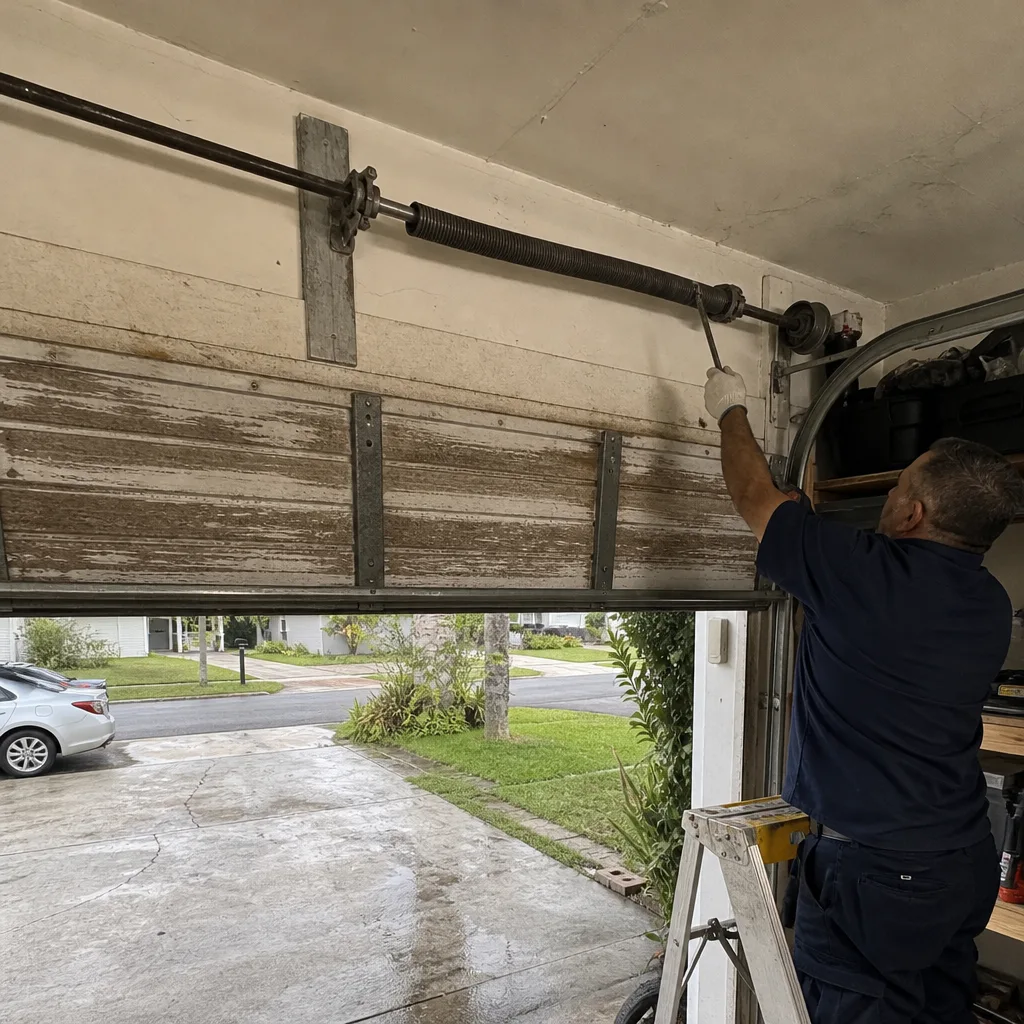 Before
 After
 Before
 After
 Before
 After