Last updated October 30, 2026
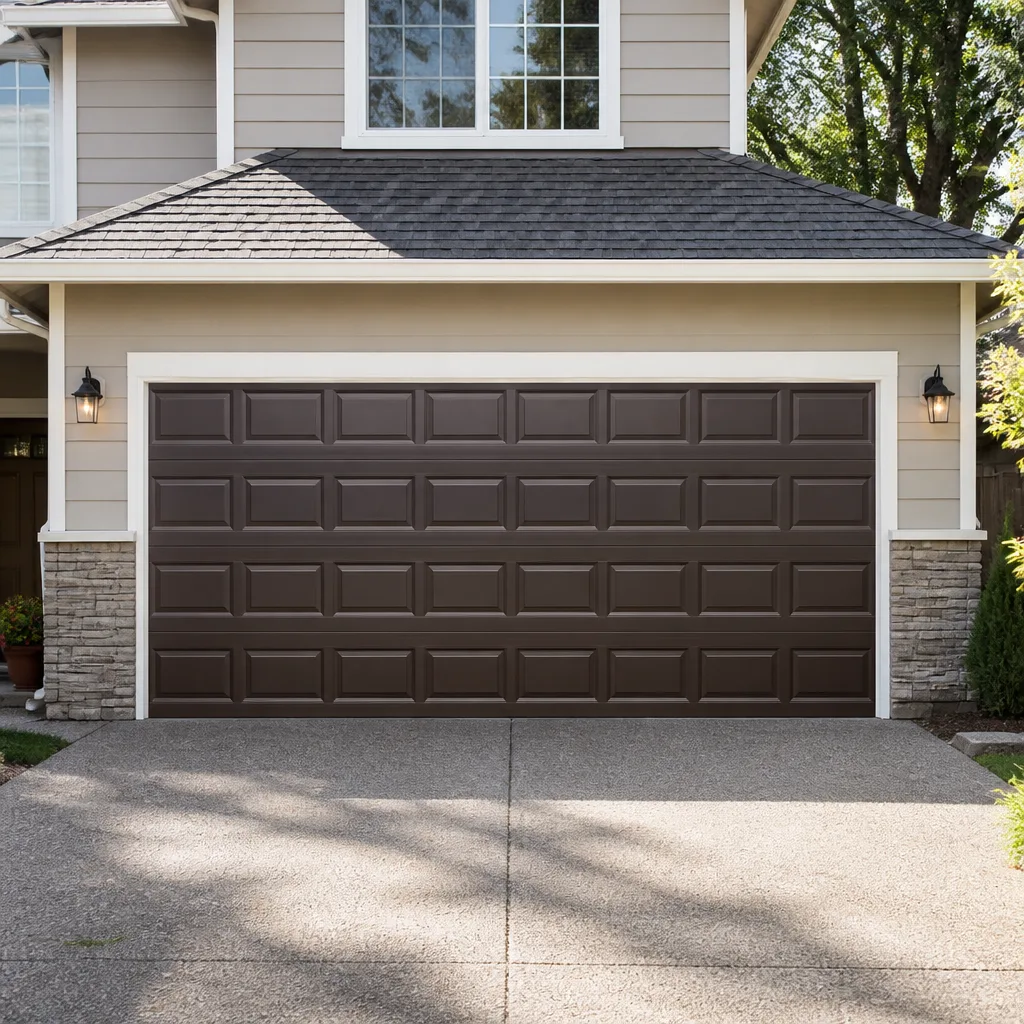 Raised-panel steel
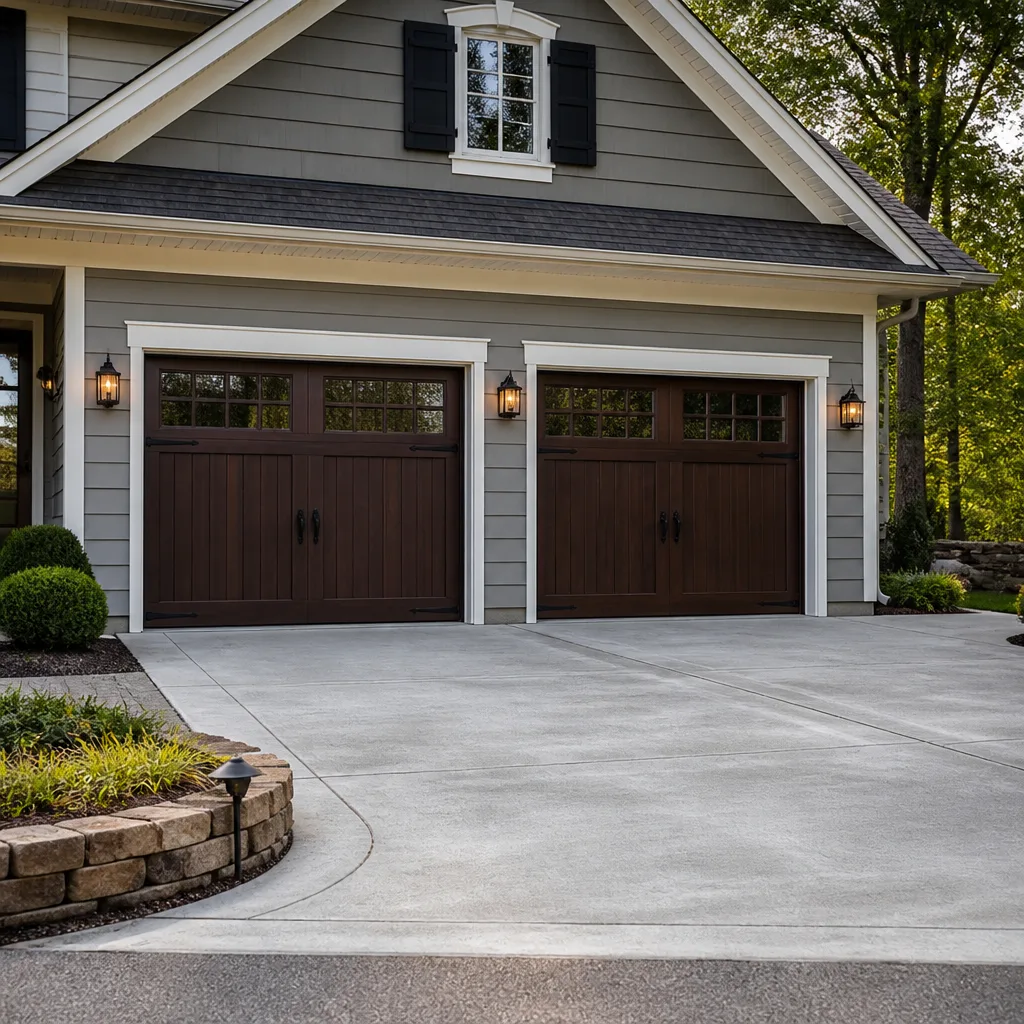 Carriage house
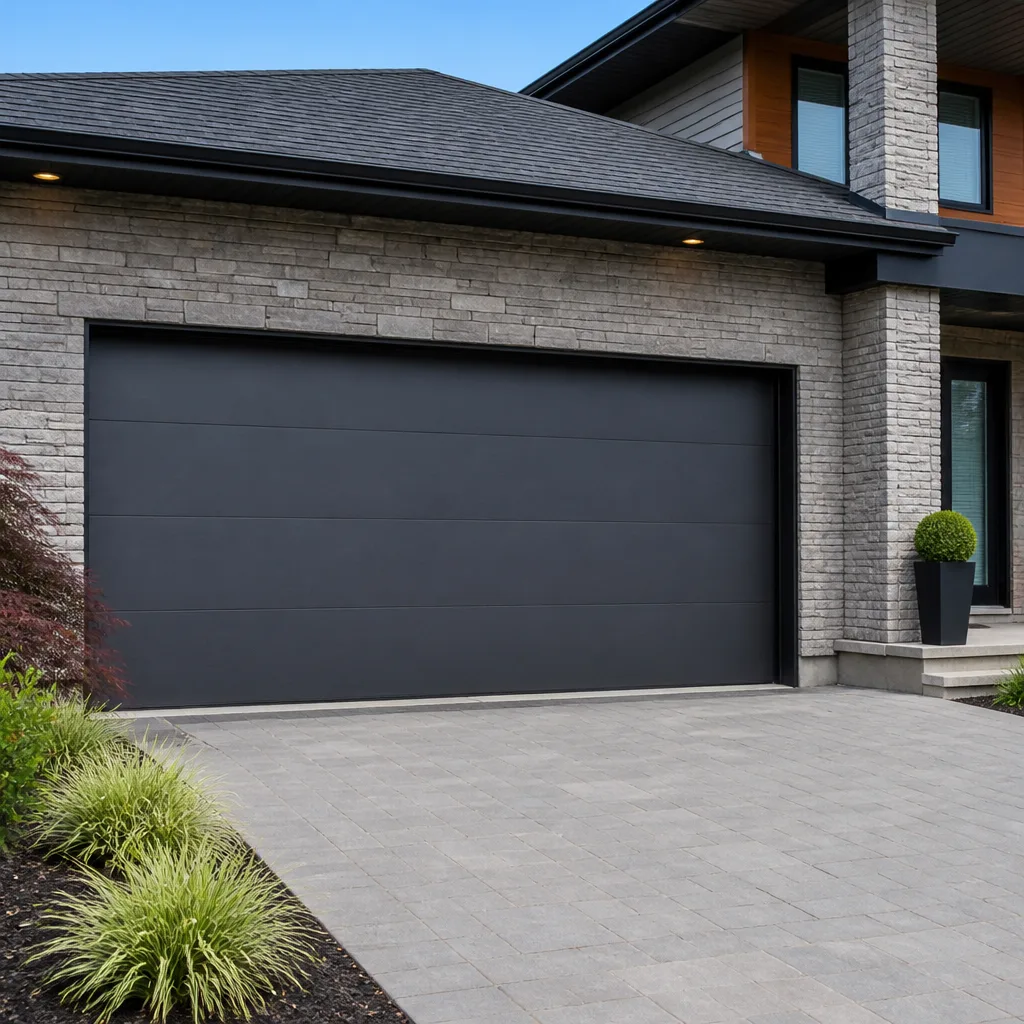 Modern flush
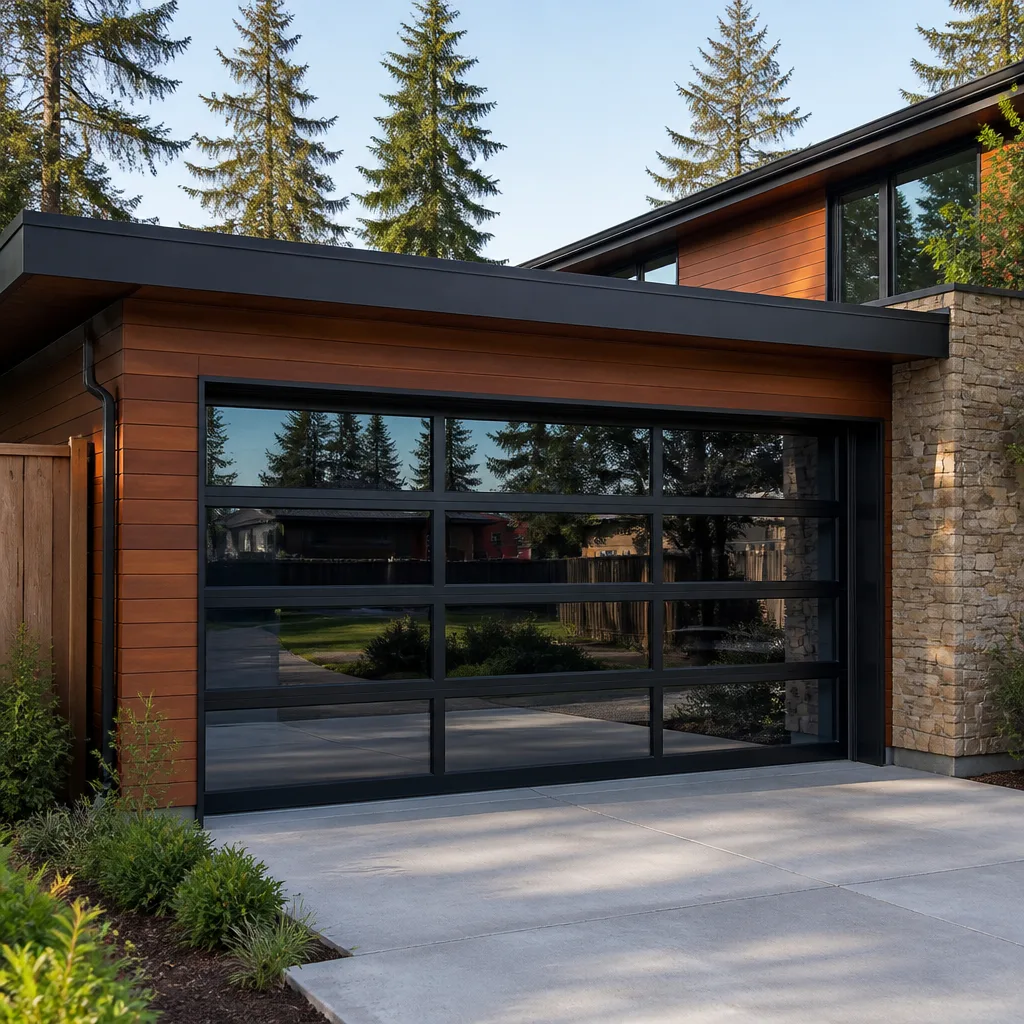 Full-view glass
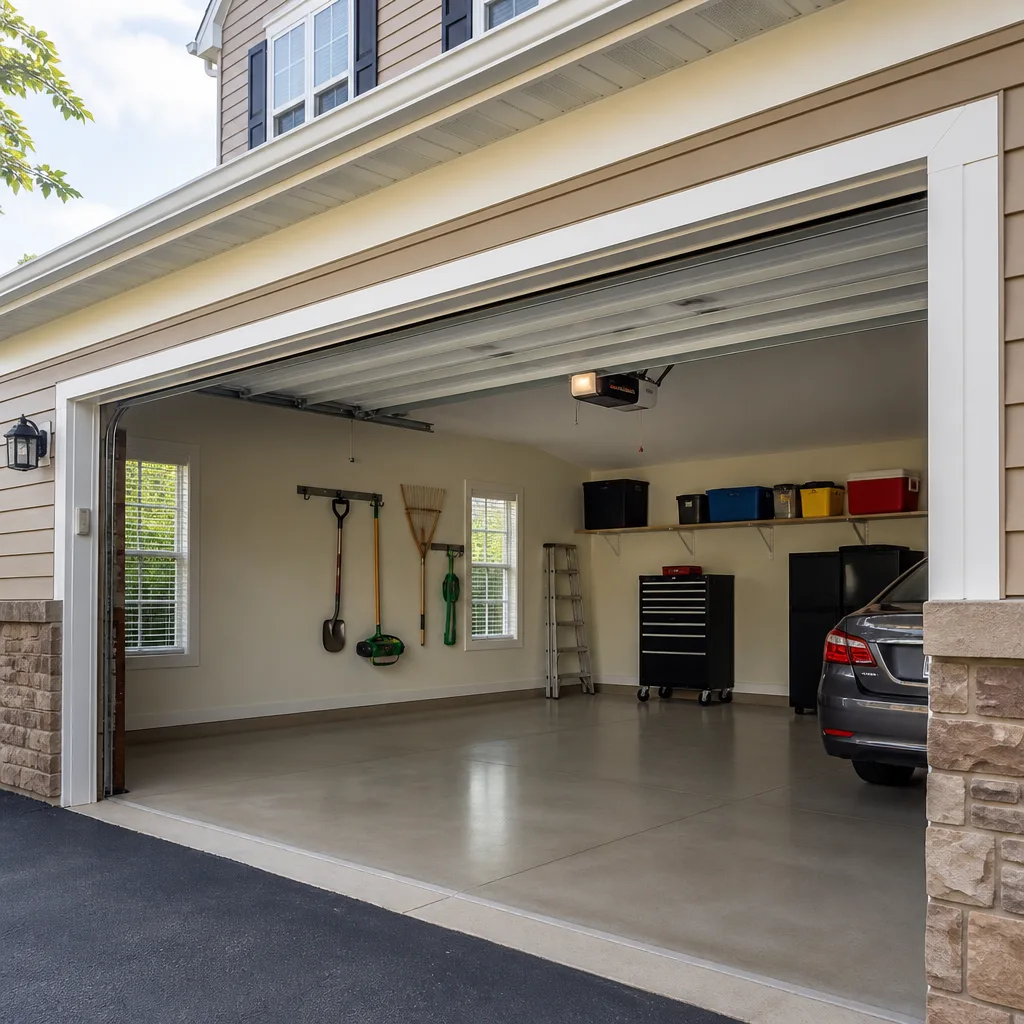 LiftMaster openers
 Chamberlain openers
Full 25-point door and opener safety check with every visit - springs, cables, rollers, tracks, and your LiftMaster or Chamberlain opener included
You get a price before we start. It does not change when the truck arrives.
Get your free estimateThe Complete Guide to Garage Door in Fort Lauderdale
The average Fort Lauderdale homeowner replaces garage door springs 18 to 24 months earlier than the national median. It’s not bad luck. It’s not a faulty install. It’s salt-laden coastal air working its way into every coil of that spring from the day it’s mounted, accelerating corrosion in ways that most repair guides, written for drier inland climates, never mention. This guide was built specifically for what South Florida conditions actually do to garage doors, openers, and finishes over time. We’ll cover what fails first, why it fails faster here, what the building code requires, and how to make smart repair-versus-replace decisions in a Fort Lauderdale context.
Styles & brands we work with
Quick Answer
A garage door in Fort Lauderdale demands more from its materials than a garage door in most of the country. Salt air corrodes springs and hardware, humidity degrades lubrication, and hurricane codes set strict limits on what you can legally install. This guide explains how to evaluate your door’s condition, which materials and brands hold up best in coastal South Florida, what repairs cost, when replacement makes financial sense, and how to avoid the costly mistakes we see most often. For a deeper look at the trade-offs, see our DIY vs Professional Garage Door: The Fort Lauderdale Homeowner’s Decision Guide.
Table of Contents
- How the Fort Lauderdale Climate Affects Your Garage Door
- Garage Door Springs in a Coastal Environment
- Track Lubrication and Humidity: What Works in South Florida
- Panel Materials: What Holds Up to UV and Salt
- Fort Lauderdale Hurricane Code Requirements
- How to Test Your Garage Door Balance
- Repair or Replace: A 5-Year Cost Comparison
- Choosing an Opener for a Fort Lauderdale Home
- Common Mistakes to Avoid
- When to Call a Professional
- Frequently Asked Questions
- The Bottom Line
How the Fort Lauderdale Climate Affects Your Garage Door
Fort Lauderdale sits in a subtropical climate zone where three environmental factors converge on your garage door every single day: salt aerosol from the Atlantic, relative humidity that rarely drops below 70 percent, and UV exposure that peaks higher than almost anywhere in the continental U.S. Each factor attacks a different component of your door system.
Salt air is the most destructive of the three, and it doesn’t need you to live on the beach to do its damage. Salt aerosol travels inland for miles, particularly during the afternoon sea breeze that pushes off the ocean and across the city. Neighborhoods as far west as Plantation and Sunrise still see measurable salt deposition on exterior metal surfaces. That salt settles into springs, hinges, roller bearings, and cable anchor points, where it creates a galvanic reaction that accelerates rust formation.
Humidity compounds the problem. When metal stays damp, corrosion doesn’t pause. In Fort Lauderdale, a garage door spring that would last 7 to 9 years in a dry climate often shows significant rust by year 4 and fails between year 5 and 7. We’ve pulled springs from homes in Victoria Park and Rio Vista that were so corroded the coils had begun to separate before the break even happened.
UV exposure is the silent killer of door finishes and synthetic components. The same sun that fades your car’s paint breaks down the polymer coatings on steel panels, dries out weatherstripping until it cracks, and makes nylon rollers brittle. A door that faces east and catches morning sun while also collecting afternoon sea breeze gets hit from two directions at once.
Understanding this baseline matters because it changes your maintenance calendar. A Fort Lauderdale garage door should be inspected more often and lubricated with different products than one in, say, Atlanta or Dallas. The advice in most national guides assumes you’re fighting gravity and friction. Here, you’re also fighting chemistry.
Garage Door Springs in a Coastal Environment
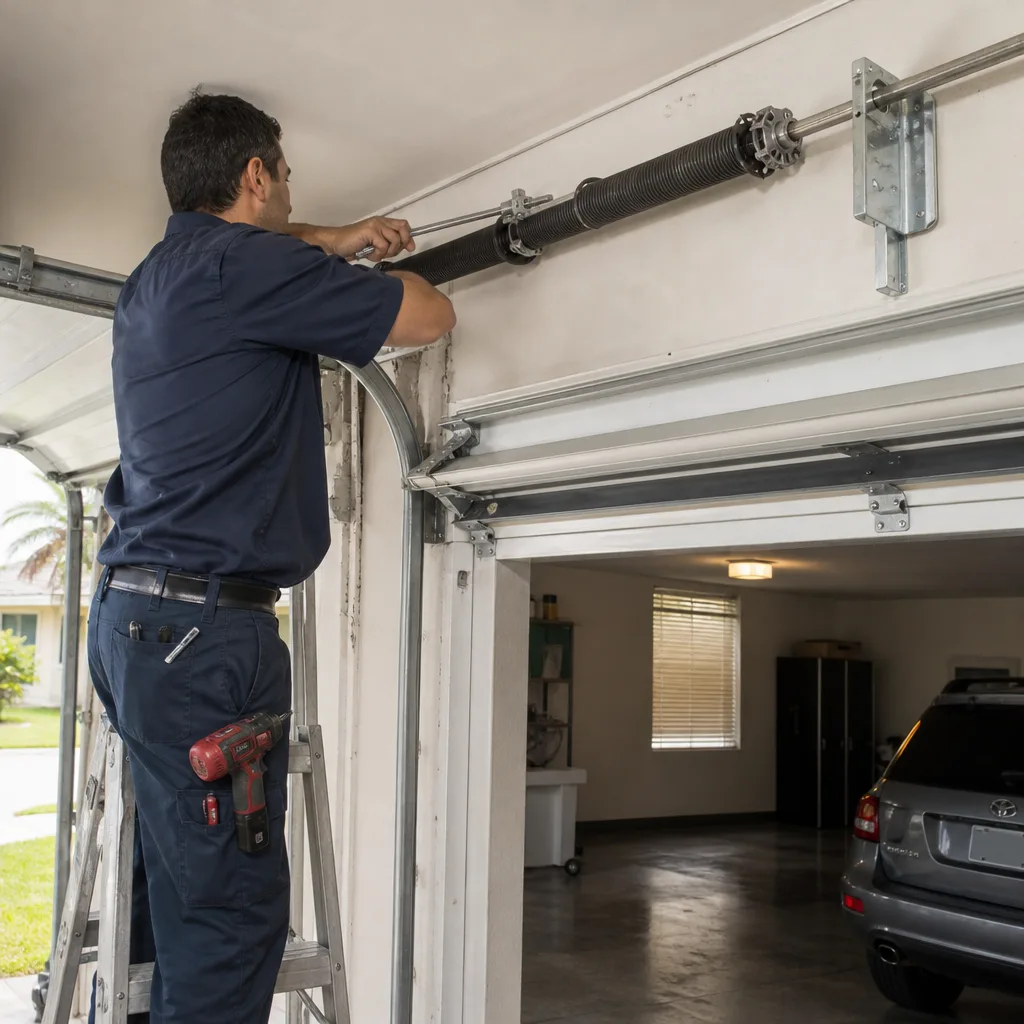
Springs do the heavy lifting on any garage door. They counterbalance the weight of the door, which on a typical two-car steel door in Fort Lauderdale runs 250 to 350 pounds. The spring stores tension and releases it smoothly as the door cycles up and down. When a spring fails, the door becomes dead weight on the opener, and that’s when you get the loud bang and a door that won’t move halfway up the track.
Two spring types dominate the Fort Lauderdale market: torsion springs, mounted on a shaft above the door opening, and extension springs, mounted on the sides. Torsion springs are the standard on nearly all doors installed in the last 20 years. They last longer, fail more predictably, and are safer when they break because they stay on the shaft. Extension springs, found on older homes in neighborhoods like Sailboat Bend and Croissant Park, can send broken coils flying across the garage when they snap.
Here’s what the coastal environment does to each:
- Torsion springs: The coil wire develops surface rust within 18 to 24 months of installation if the spring isn’t coated. Rust creates pitting, which concentrates stress at specific points along the coil. The spring breaks at the pit, not at the ends where stress is highest in a dry climate.
- Extension springs: These are even more vulnerable because they stretch and contract with every cycle, constantly flexing rust-weakened metal. The safety cable threaded through them, required by code, is often the only thing that keeps a broken section from becoming airborne.
- Galvanized vs. oil-tempered springs: Oil-tempered springs are the industry standard and perform acceptably in Fort Lauderdale, but they rely on a thin oil coating that salt air strips away. Galvanized springs add a zinc layer that sacrifices itself before the steel underneath corrodes. In coastal installs, galvanized springs typically add 12 to 18 months of service life.
A spring cycle rating tells you how many times the spring can open and close before metal fatigue sets in. Most residential doors in Fort Lauderdale cycle 4 to 6 times per day. A 10,000-cycle spring should last roughly 5 to 7 years, but corrosion reduces that to 4 to 5 in coastal conditions. If your door is used as the primary entry point, a habit common in Fort Lauderdale’s older neighborhoods where driveways serve as a second front door, expect to replace springs more frequently.
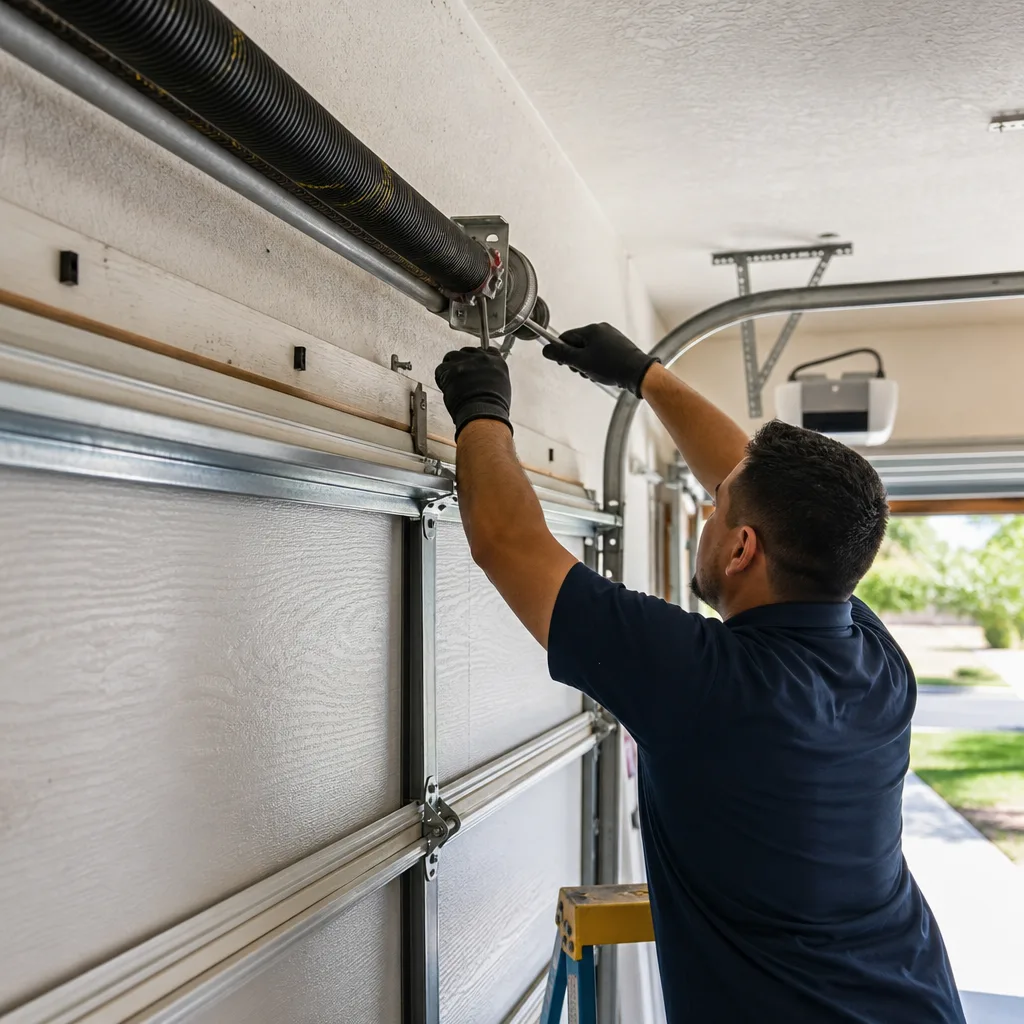
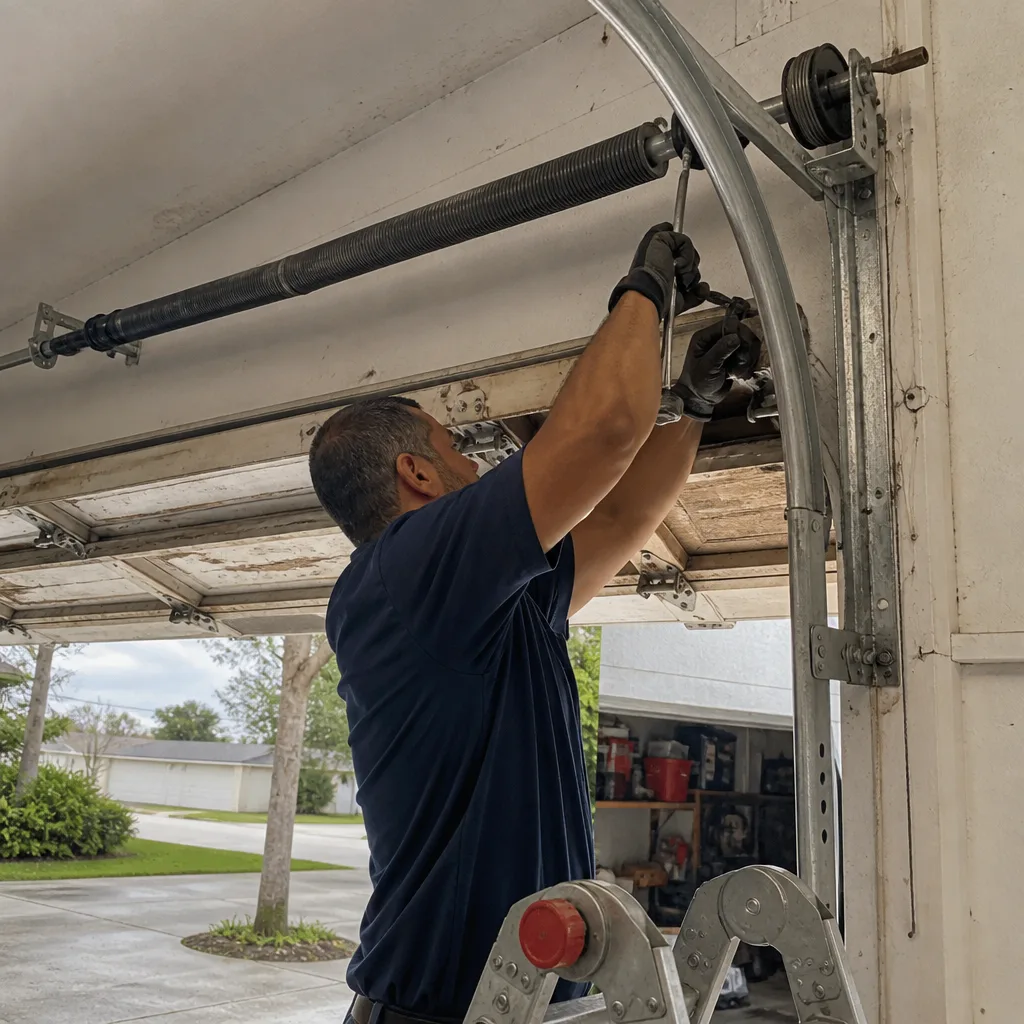
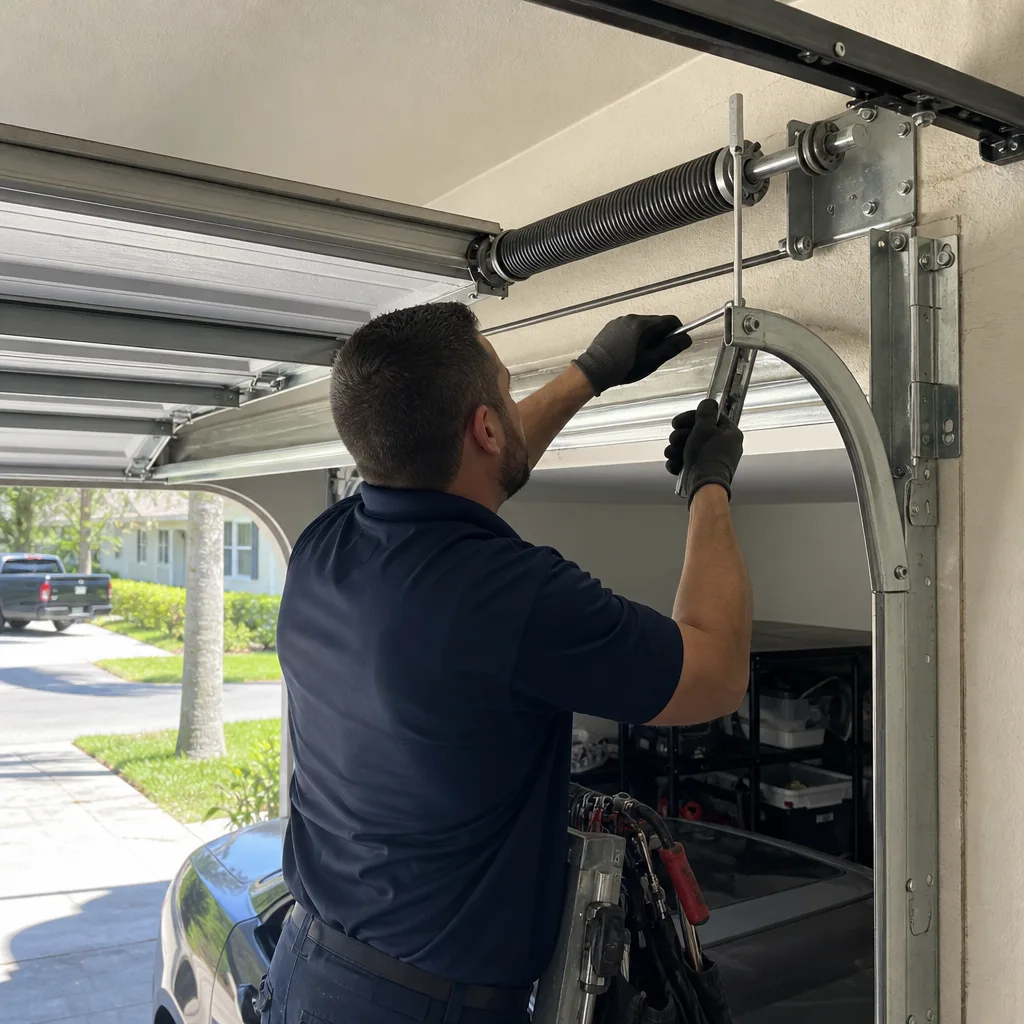
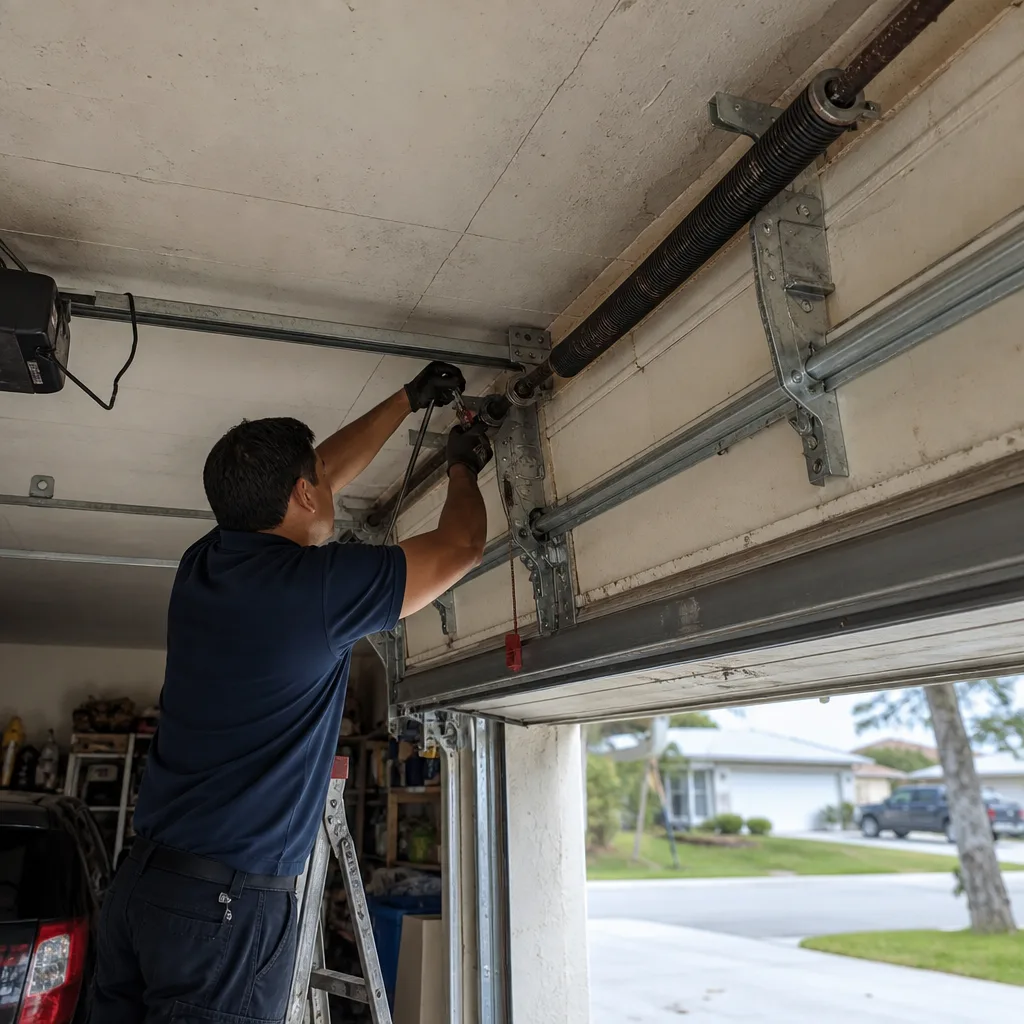
Safety note: a garage door spring under tension stores enough energy to cause serious injury or death if mishandled. We do not recommend replacing a spring yourself. The winding process on a torsion spring requires specialized bars and a precise winding sequence. The team at Garage Door Repair in Fort Lauderdale handles spring replacement daily, and the cost in the Fort Lauderdale market usually runs $180 to $340 for a standard torsion spring pair replacement, with galvanized springs priced at the higher end.
Track Lubrication and Humidity: What Works in South Florida
Humidity changes how you maintain your tracks and moving parts. The standard advice found in most garage door guides recommends spraying lithium grease on the track and hinges once a year. That advice is insufficient for Fort Lauderdale, and in some cases it’s actively harmful.
Here’s what humidity does: when air stays above 70 percent relative humidity, exposed grease attracts and holds moisture rather than shedding it. That moisture mixes with salt and dust to create a corrosive paste that accelerates wear on hinges and roller bearings. A grease-lubricated hinge in Fort Lauderdale often develops more rust than an unlubricated one, because the grease is holding salt water against the metal.
The correct approach in a coastal climate is more nuanced:
- Use a dry silicone lubricant on tracks: Silicone doesn’t attract moisture the way lithium grease does. It coats the track, reduces friction, and creates a barrier against humid air. Apply it sparingly every 4 to 6 months.
- Use white lithium grease on hinges and springs, but not on tracks: Hinges and springs need the heavier lubrication, but you must wipe away old grease and reapply rather than layering more on top. Layered grease in humid air traps salt and accelerates the corrosion cycle.
- Never lubricate nylon rollers: Nylon rollers are self-lubricating. Adding grease attracts dirt and humidity, shortening their life. If a nylon roller squeaks, it’s worn and needs replacement, not lubrication.
- Check weatherstripping every spring: The rubber seal at the bottom of the door and the trim seals around the perimeter dry out and crack under UV exposure. In Fort Lauderdale, weatherstripping usually needs replacement every 3 to 4 years, and failing seals let humid air pour into the garage, accelerating corrosion on everything inside.
A visual inspection in April, before the rainy season starts, catches most lubrication and seal problems before summer storms force the issue. We’ve seen doors in Coral Ridge and Imperial Point go from quiet to screeching in a single season because the spring inspection was skipped.
Panel Materials: What Holds Up to UV and Salt
Four panel materials dominate the Fort Lauderdale residential market, and they perform differently under South Florida conditions. Choosing the wrong material for your specific exposure means shortening the door’s service life by years.
Steel: The most common and the most vulnerable. Steel panels are galvanized and painted at the factory, but any scratch or edge exposure opens the door to salt corrosion. Steel doors face west in Fort Lauderdale collect afternoon sun and develop panel warping if the door is dark-colored. A steel door with a properly maintained factory finish can last 15 to 20 years here, but one that’s been scratched or painted over with non-factory paint often shows rust along the bottom panels within 5 years. Clopay and Amarr both manufacture steel doors with factory-applied coastal finishes that outperform repainted standard panels.
Aluminum: An increasingly common choice in Fort Lauderdale because aluminum doesn’t rust. The tradeoff is denting. Aluminum panels are softer than steel and show impact damage more easily, but they resist the salt-air corrosion cycle that kills steel doors. Aluminum doors with a powder-coated finish hold up well in neighborhoods east of US-1, where salt exposure is highest. They’re lighter, which means less wear on springs and openers, an often-overlooked advantage.
Fiberglass: UV-resistant by nature and impervious to rust. Fiberglass panels hold up well to direct sun and salt air, but they can become brittle after 15-plus years of constant UV exposure, especially on west-facing doors. Fiberglass is less common in Fort Lauderdale than steel or aluminum, but it’s a solid choice for homes within a mile of the beach where steel would be fighting a losing battle.
Composite: Compressed wood fibers with resin binders, often manufactured to look like traditional wood. Composite panels resist moisture better than actual wood, which is why they exist, but they’re heavier than steel or aluminum and that extra weight shortens spring and opener life. Composite doors work in Fort Lauderdale, but only when paired with a properly sized spring and an opener rated for the door weight.
When we install doors in Fort Lauderdale’s coastal neighborhoods, we steer most homeowners toward aluminum or finished steel, depending on their budget and how much they value dent resistance. The material decision drives everything downstream: spring size, opener horsepower, and how long the door will last before needing panels replaced.
Fort Lauderdale Hurricane Code Requirements
Florida’s building code doesn’t allow you to install just any garage door. Broward County falls within the High Velocity Hurricane Zone (HVHZ), which applies to the entire Fort Lauderdale metro area. The code provisions that matter for garage doors are stricter here than in most of the country, and for good reason: a garage door that fails under storm pressure turns the garage into a wind tunnel that can blow the roof off the house.
The key code requirements for garage doors in Fort Lauderdale:
- Wind load rating: Doors must be rated to withstand positive and negative wind pressures determined by the home’s location and exposure category. Fort Lauderdale’s coastal exposure means higher required ratings. A door rated for inland Broward may not meet code east of Federal Highway.
- Impact resistance: Doors must either be impact-rated (tested to withstand flying debris) or protected by a code-approved shutter system. This applies to any new installation and often to retrofits as well.
- Reinforcement: Impact-rated doors use heavier-gauge steel, reinforced bracing, and stronger hardware. The bracing adds weight, which means the springs and opener must be matched to the reinforced door, not the standard version of the same model.
- Documentation: A professional installation must include documentation showing the door’s wind load rating and product approval number. If you sell a home in Fort Lauderdale, the inspector will check for this.
What this means in practice: you cannot install a bargain-priced door from a national chain without checking the product approval against Broward County’s accepted products list. We’ve had homeowners in neighborhoods like Riverside Park and Tarpon River call us after a DIY door purchase was rejected by their inspector because the door lacked the required HVHZ approval.
For a full breakdown of what’s involved in a code-compliant installation in the Fort Lauderdale market, see our Garage Door Installation in Fort Lauderdale page.
How to Test Your Garage Door Balance
A balanced garage door is one where the springs are doing their job. An unbalanced door makes the opener work harder, which burns out opener motors years early and puts uneven stress on hinges and panels. You can test your door’s balance in under two minutes with no tools.
Here’s the manual balance test anyone can perform:
- Close the door and pull the emergency release cord. This disconnects the opener from the door. The release cord is usually red and hangs from the opener trolley.
- Lift the door manually to waist height. The door should feel heavy but manageable. A two-car door might require 20 to 30 pounds of lift effort. If it takes dramatically more, the springs are weak or the door is binding in the tracks.
- Release the door at waist height. A balanced door will stay roughly where you release it. It might drift slowly up or down, but it should not drop. A door that falls is a dangerous door.
- Repeat the test at shoulder height and again about 2 feet off the ground. The door should hold at each position. If it holds at one height but drops at another, the tracks may be misaligned or the springs are failing unevenly.
- Reconnect the opener. Pull the release cord toward the door and run the opener until the trolley re-engages.
In our experience working in Fort Lauderdale homes, doors that fail this test are almost always either running on springs past their useful life or carrying the extra weight of hurricane bracing without a matching spring upgrade. The balance test tells you there’s a problem before it becomes a broken spring or a burned-out opener motor.
Repair or Replace: A 5-Year Cost Comparison
Fort Lauderdale homeowners face a specific version of the repair-or-replace question: do you keep patching an aging door that’s fighting the climate, or invest in a new door built for it? The answer depends on the door’s age, material, and condition. Here’s a practical 5-year cost framework.
Consider a typical Fort Lauderdale scenario: an 18-year-old steel door on an east-facing home in a neighborhood like Middle River Terrace or Edgewood. The door has surface rust, weatherstripping needs replacement, the opener is 12 years old, and the springs were last replaced 6 years ago. You’re looking at the following costs over the next 5 years:
- Spring replacement: $180 to $340 for a galvanized torsion spring pair. Given coastal wear, you should budget for another spring replacement within 5 years.
- Opener replacement: $350 to $650 for a Wi-Fi-enabled LiftMaster or Chamberlain unit with installation, if the current one fails.
- Roller and hinge replacement: $120 to $200 for a full roller and hinge refresh on a two-car door.
- Weatherstripping replacement: $80 to $150 every 3 to 4 years.
- Panel repair or replacement: $200 to $600 for bottom panel rust repair, or more if multiple panels are involved.
Total repair investment over 5 years: $930 to $1,940, assuming nothing catastrophic happens. A new code-compliant, hurricane-rated aluminum or finished steel door in Fort Lauderdale, including installation, typically runs between $1,800 and $4,500 depending on size, material, and features. For detailed pricing breakdowns, see our Garage Door Cost Breakdown: The Fort Lauderdale Homeowner’s Reference for 2026. The new door resets the clock on every component: new springs matched to the door weight, new hardware, new weatherstripping, and fresh factory finish.
The financial logic shifts toward replacement when the door is 15-plus years old and showing multiple failure points. It shifts strongly toward replacement when the door predates current hurricane code requirements, because that old door is not just costing you money, it’s a compliance and insurance liability. In our experience, a new door paired with a properly sized spring and a modern opener delivers 12 to 15 years of low-maintenance service in Fort Lauderdale, which over two 5-year windows costs less than nursing an aging door along.
Choosing an Opener for a Fort Lauderdale Home
The opener is the part of the system most homeowners think about least, until it fails. Fort Lauderdale’s humidity and heat put specific demands on opener electronics and drive mechanisms that show up in two ways: condensation on circuit boards and accelerated gear wear in humid environments. For steps to protect your system before storms hit, read our Garage Door Emergency Preparedness Guide for Fort Lauderdale Homes.
Three drive types dominate the market:
- Belt drive: A reinforced rubber belt moves the trolley. Quietest option. Belt drives from Chamberlain and LiftMaster dominate the Fort Lauderdale market because they’re quiet enough for homes where the garage is under a bedroom, common in the city’s older two-story homes.
- Chain drive: A metal chain, louder but cheaper. Chain drives hold up in Fort Lauderdale but rust on the chain is a real issue if the garage isn’t climate-controlled. A rusted chain creates noise and increases drag on the motor.
- Screw drive: A threaded rod moves the trolley. Fast and durable, but sensitive to heat expansion. Screw drives perform acceptably in Fort Lauderdale but can bind on hot summer days if they weren’t installed with the right clearance.
For most Fort Lauderdale homes, a belt drive opener from LiftMaster or Chamberlain with a DC motor is the right balance of durability, noise level, and smart-home compatibility. Genie’s Aladdin Connect platform and Chamberlain’s myQ both let you monitor and operate the door from a phone, which matters more than most people realize in a city where opening the garage from the airport while you’re boarding a flight is genuinely useful.
Horsepower matters too, especially on hurricane-rated doors. A reinforced steel door with bracing can weigh 50 to 80 pounds more than a standard door. An opener rated for a standard door will burn out its motor early when asked to lift a reinforced door. A 1/2-horsepower opener is the minimum for a reinforced single door, and a 3/4-horsepower unit is the smart choice for most two-car hurricane doors.
See our Garage Door Opener Repair in Fort Lauderdale page for more on diagnosing opener failures specific to this climate.
Common Mistakes to Avoid
- Using interior-grade paint on exterior door panels. Interior paint lacks the UV inhibitors and corrosion resistance of factory finishes. We’ve seen doors in Fort Lauderdale repainted with interior paint look great for 6 months and then peel in sheets once the summer sun hits.
- Ignoring rust on the bottom panel because it’s cosmetic. Bottom-panel rust in a coastal climate is never cosmetic. It’s structural corrosion that spreads upward and eventually requires panel replacement, which costs more than addressing the finish damage early.
- Spraying WD-40 on everything. WD-40 is a water displacer, not a lubricant. In Fort Lauderdale’s humidity, it actually strips protective coatings and leaves metal more exposed. Use dry silicone on tracks and white lithium grease on hinges and springs.
- Replacing a spring with a mismatched cycle rating. If your original spring was rated for 20,000 cycles and you install a 10,000-cycle spring to save $40, you’ll be replacing it again in half the time. In Fort Lauderdale’s coastal environment, that means 3 years instead of 6.
- Testing an unbalanced door without disconnecting the opener. Never test a garage door’s balance while the opener is attached. The opener will obscure the door’s true weight and behavior, and you risk damage to the trolley mechanism.
- Installing a non-HVHZ-approved door in Broward County. Fort Lauderdale’s building code doesn’t care what the door cost or where you bought it. If it lacks the product approval for Broward County’s wind load requirements, it won’t pass inspection, and your insurance company may deny a claim if the door fails in a storm.
When to Call a Professional
Some garage door problems are visual and obvious: a broken spring, a detached cable, a panel that’s rusted through. Others are subtle: a door that shudders on the way up, an opener that strains but still works, a balance that feels wrong but not dangerous yet. The subtle problems are the ones that turn expensive when ignored.
Call a professional when a spring or cable breaks, when the door won’t open or close on its own, when you hear grinding or banging sounds from the opener, or when the door fails the balance test described above. These are not minor nuisances in a city where the garage door often serves as the daily entry and exit point for the whole family. A door that works halfway is a door that will fail completely at the worst possible time. We’re happy to walk through Gateway Garage Door Repair home services with you for any of these situations.
Gateway Garage Door Repair offers free estimates in Fort Lauderdale. Call (844) 713-7316 and we’ll diagnose the issue over the phone and give you a straight answer on what it costs to fix.
Frequently Asked Questions
Lubricate the tracks with a dry silicone spray every 4 to 6 months, and reapply white lithium grease to hinges and springs twice a year, ideally in April and October. Fort Lauderdale’s humidity breaks down lubrication faster than drier climates, so the national advice of once-a-year lubrication is inadequate here. Call (844) 713-7316 if you’re not sure which products to use on your specific door.
A standard torsion spring pair in Fort Lauderdale typically lasts 5 to 7 years, compared to 7 to 9 years in drier inland climates. Galvanized springs can extend that to 7 to 8 years in coastal conditions. If your springs are more than 5 years old and showing rust, start budgeting for replacement. We quote exact spring replacement costs over the phone, so call (844) 713-7316 for a number specific to your door.
No. Broward County falls within Florida’s High Velocity Hurricane Zone, and any new garage door installation must meet HVHZ wind load and impact requirements. Doors without the proper product approval won’t pass inspection and may void your insurance coverage in a storm claim. A professional installer can confirm that the door you’re buying meets Fort Lauderdale’s specific code requirements.
At Gateway Garage Door Repair, the price we quote is the price you pay. We give you a firm quote before any work starts, and that number doesn’t change unless you ask us to do additional work beyond the original scope, in which case we quote that separately. Call (844) 713-7316 for a free estimate on any garage door repair or installation in Fort Lauderdale.
Yes. Our technicians carry an extensive inventory of springs, cables, rollers, hinges, and opener parts, covering all eight major brands we service, including LiftMaster, Chamberlain, Genie, and Clopay. In most cases, we can complete a standard spring or cable repair on the first visit, even for older models. Call (844) 713-7316 and we’ll tell you before we dispatch whether we have the part your door needs.
In most cases, a 15-year-old garage door in Fort Lauderdale that’s showing rust, failing weatherstripping, and an aging opener is a better candidate for replacement. Over a 5-year window, the cumulative repair costs on an aging coastal door often approach 50 to 70 percent of a new door’s price, without the new door’s code compliance, fresh springs, and factory finish. Get a written comparison from a professional and look at the numbers side by side before you decide.
The Bottom Line
Your garage door in Fort Lauderdale is your home’s hardest-working entry point, and it’s working in the harshest environment any garage door faces in the U.S. Salt air shortens spring life by 18 to 24 months. Humidity turns routine lubrication into a twice-yearly task. Hurricane codes set requirements that generic advice ignores. The solution isn’t a national guide. It’s a maintenance approach calibrated to South Florida conditions, paired with an honest assessment of whether repair or replacement makes financial sense over a 5-year window. Explore more guides & resources for Fort Lauderdale homeowners. One call covers the door and the opener, diagnosed right the first visit. Call (844) 713-7316 and we’ll walk you through it.
Written by the team at Gateway Garage Door Repair, serving Fort Lauderdale since 2014.
See the difference
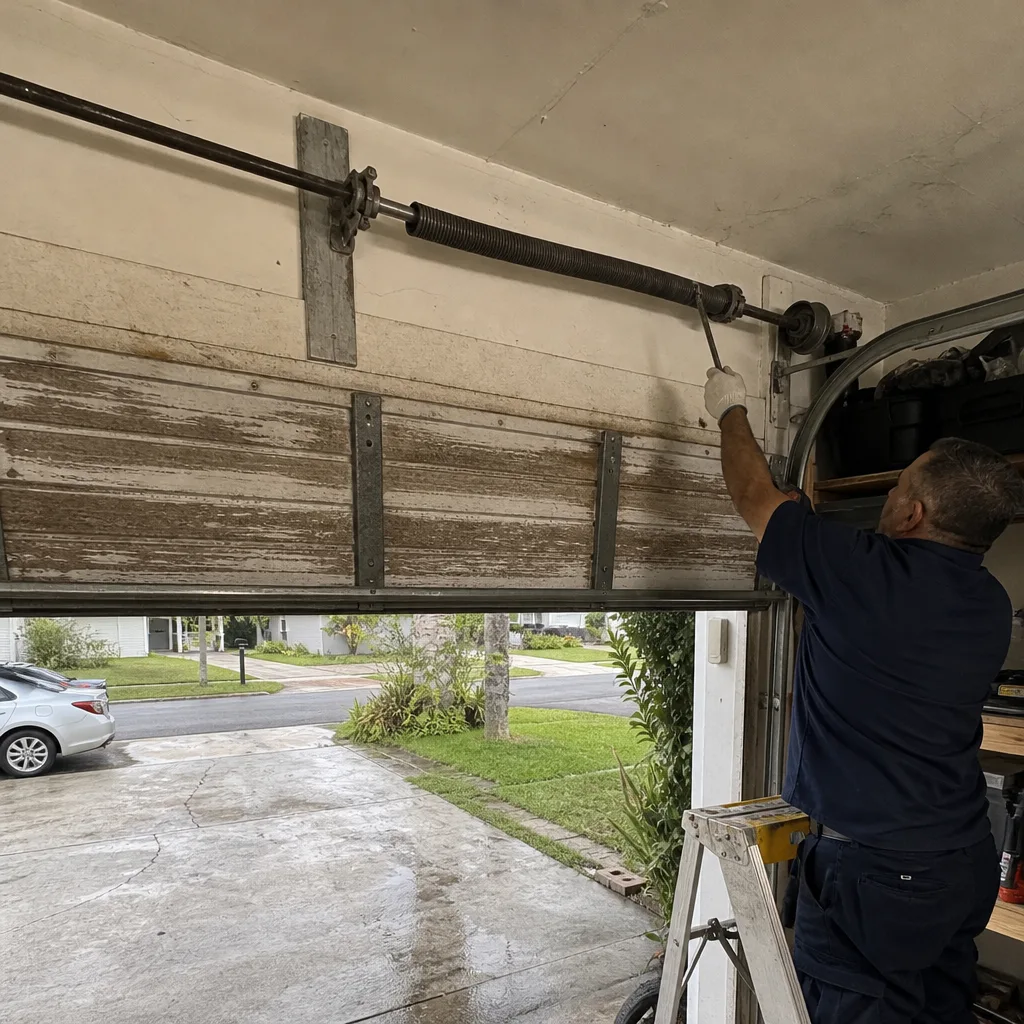 Before
 After
 Before
 After
 Before
 After