
Last updated October 30, 2026
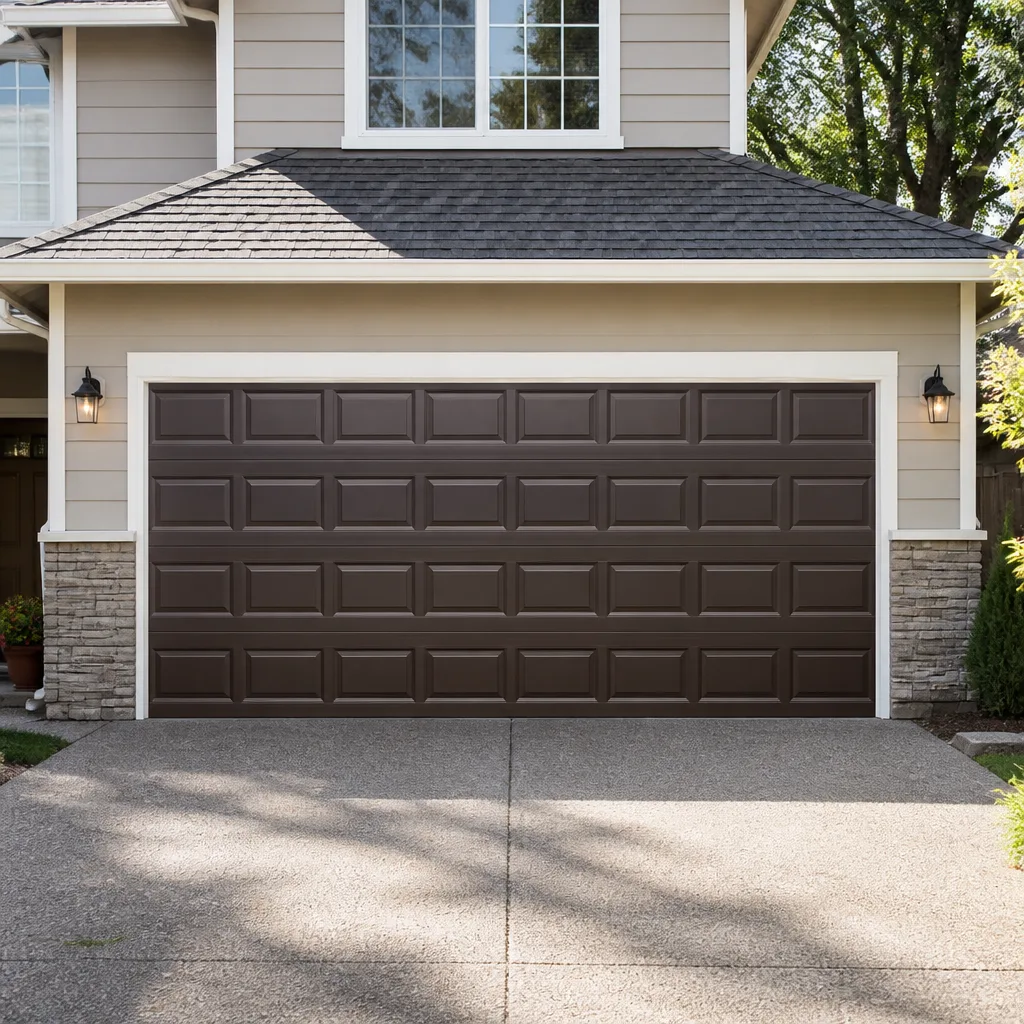 Raised-panel steel
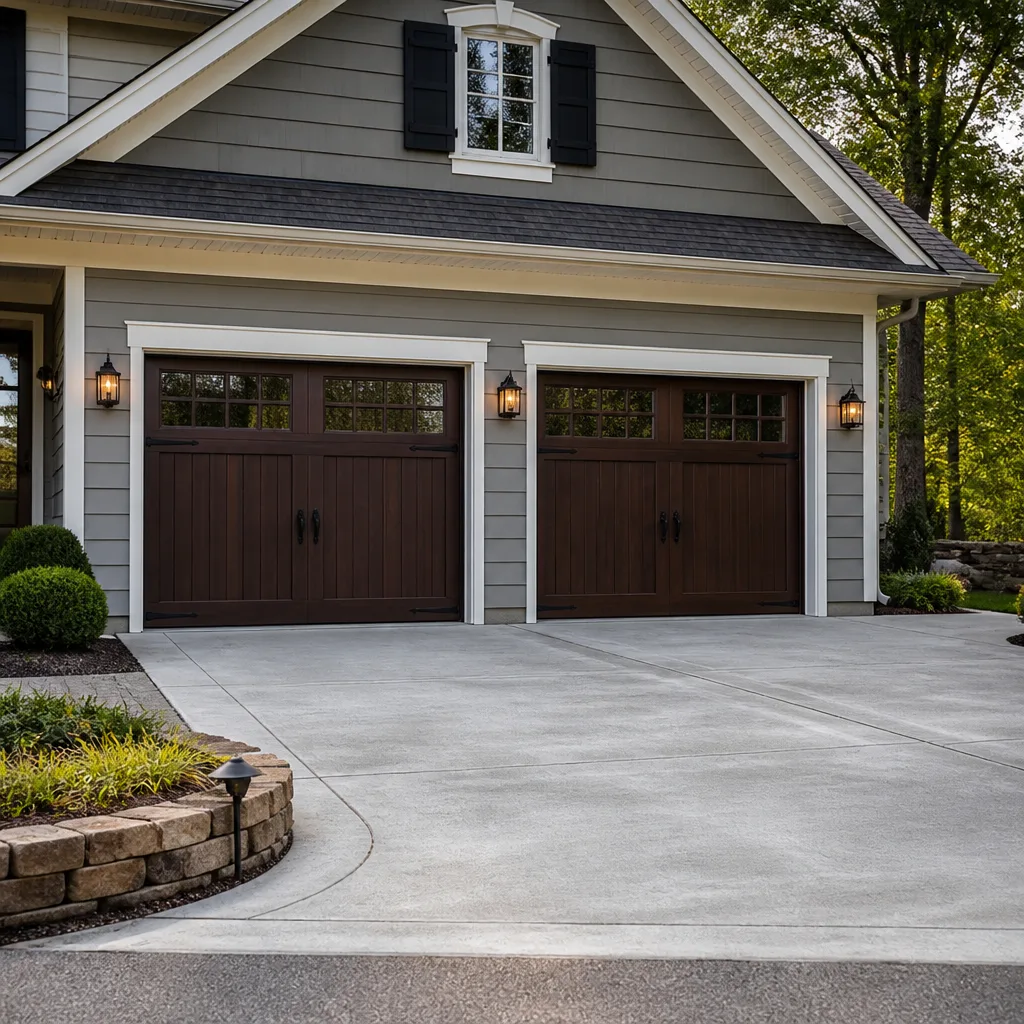 Carriage house
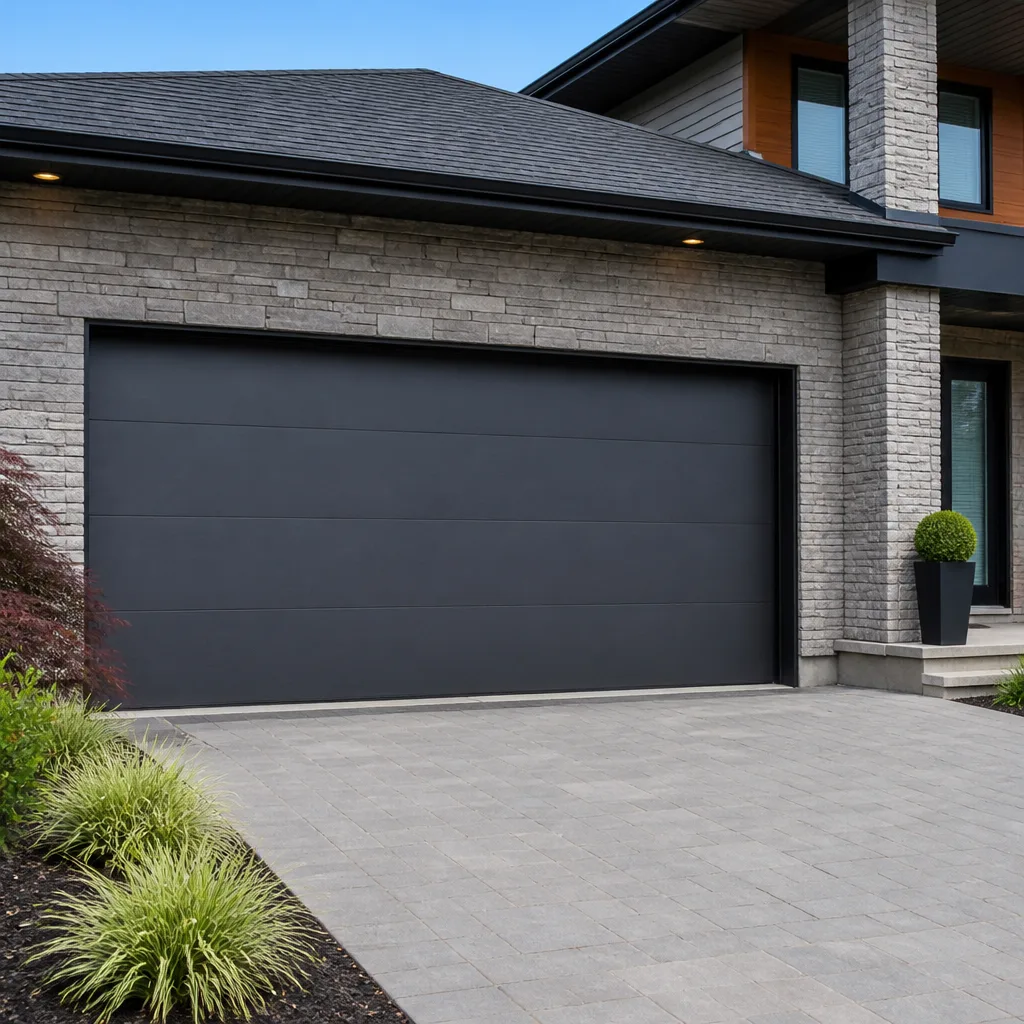 Modern flush
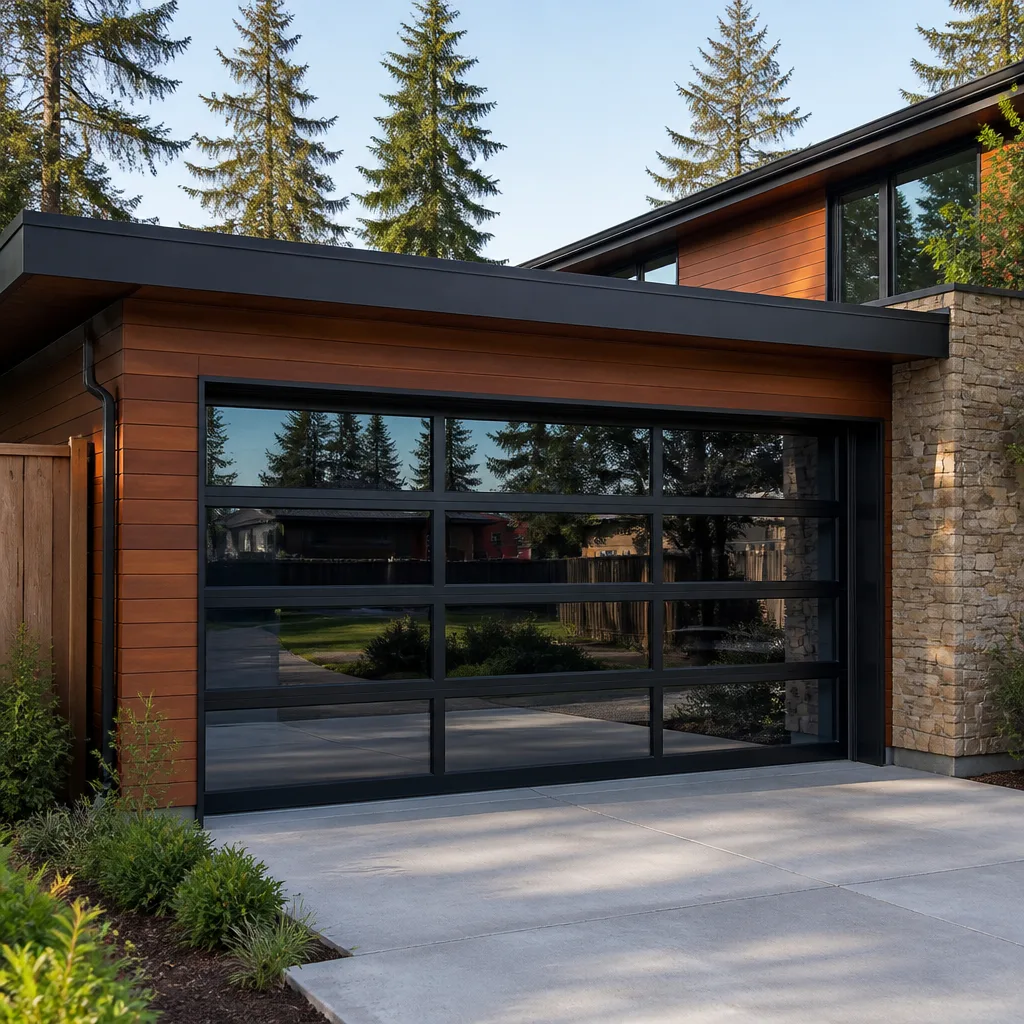 Full-view glass
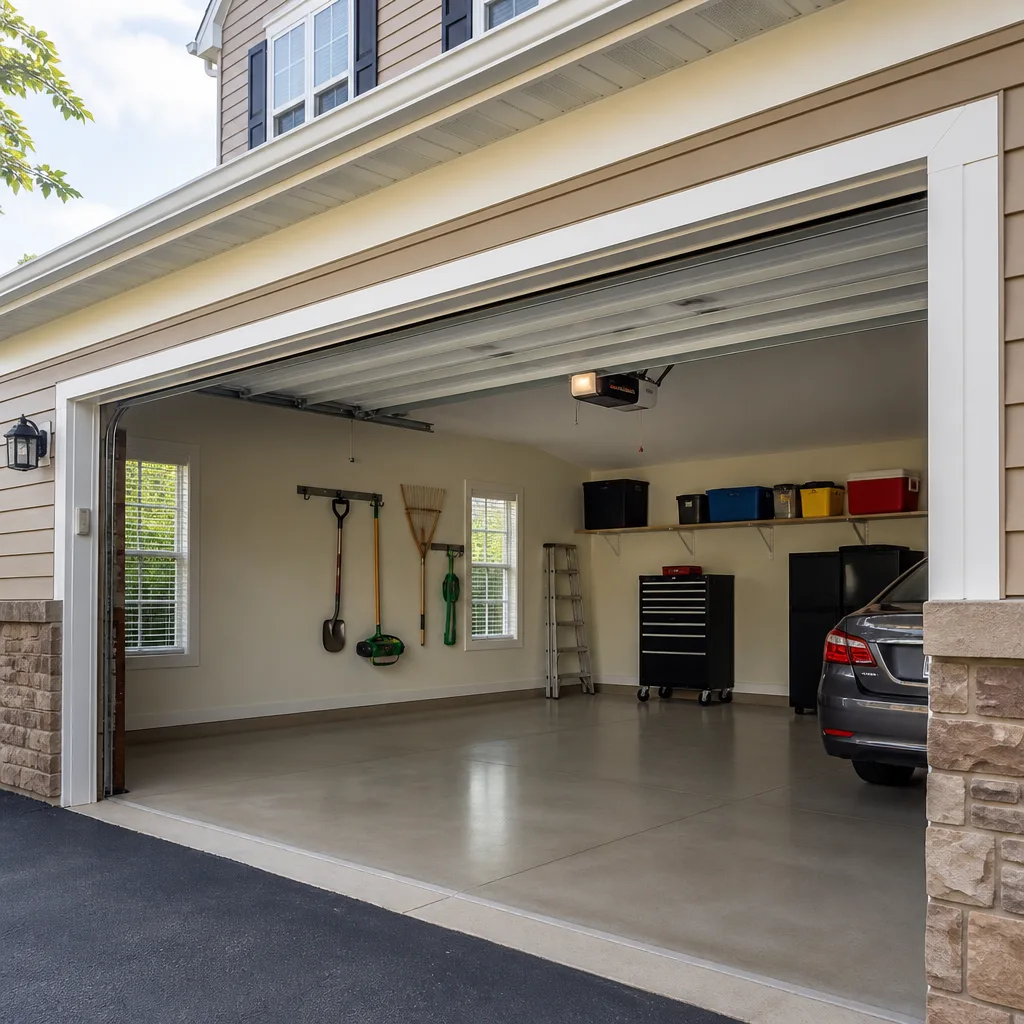 LiftMaster openers
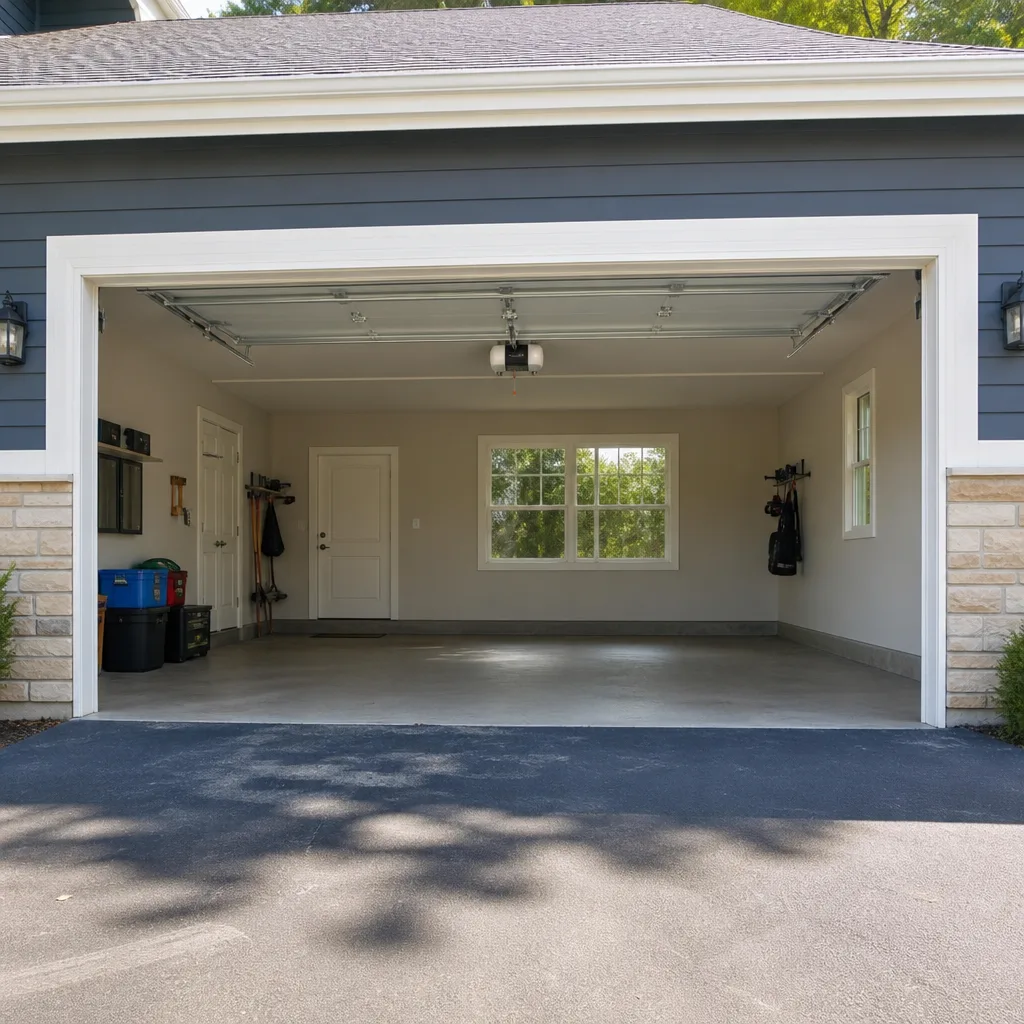 Chamberlain openers
Full 25-point door and opener safety check with every visit - springs, cables, rollers, tracks, and your LiftMaster or Chamberlain opener included
You get a price before we start. It does not change when the truck arrives.
Get your free estimateGarage Door Repair Maintenance Checklist for Fort Lauderdale Homeowners
Lubricating your garage door hinges with WD-40 is one of the most common maintenance moves a Fort Lauderdale homeowner makes, and it’s also one of the fastest ways to accelerate wear on rollers and tracks. In a humid coastal climate, WD-40 breaks down within days, leaves behind a sticky film, and attracts the very sand and grit it’s supposed to protect against. This guide replaces generic, one-size-fits-all checklists with one built specifically for South Florida: sequenced by what actually fails first here, backed by what we see on real doors in this city, and organized so you know exactly what to check, when to check it, and when to put the tools down and call a garage door repair specialist.
Styles & brands we work with
Quick Answer
The most effective garage door maintenance routine for Fort Lauderdale homeowners is a monthly 10-minute visual and operational check, with two deeper inspections per year. Prioritize corrosion on springs, cables, and brackets; bottom seal tearing from the seasonal rain and heat; and opener photo-eye drift caused by metal track expansion during afternoon sun. Use silicone-based lubricant on rollers and hinges, and schedule a garage door repair troubleshooting inspection if any spring shows rust deposits or a cable shows fraying.
Table of Contents
- Why Fort Lauderdale Weather Dictates a Different Maintenance Schedule
- The Correct Lubrication Protocol for a Humid Coastal Climate
- The Visual Corrosion Audit: Springs, Cables, and Brackets
- Bottom Seals and Weather Stripping: Your First Line of Defense
- Opener-Specific Checks: Photo-Eyes, Force Settings, and Drive Components
- The Month-by-Month Maintenance Calendar for Fort Lauderdale
- Common Mistakes to Avoid
- When to Call a Professional
- Frequently Asked Questions
- The Bottom Line
Why Fort Lauderdale Weather Dictates a Different Maintenance Schedule
A garage door maintenance checklist written for Minneapolis or Phoenix has little relevance to a homeowner in Victoria Park or Rio Vista. Fort Lauderdale’s environment attacks garage door components through three distinct mechanisms that most generic checklists ignore entirely. The first is salt-laden humidity. Even homes miles inland get measurable salt exposure from the Atlantic’s onshore breezes, and salt accelerates oxidation on galvanized and bare steel components. The second is the wet season, which runs roughly from June through October. During this window, the bottom seal sits in standing water after afternoon thunderstorms, and the repeated soak-and-dry cycle breaks down rubber compounds faster than anywhere else in the country except other coastal South Florida cities. The third is thermal cycling. A metal garage door track facing west in Fort Lauderdale can reach 140 degrees on a July afternoon, then cool to 75 degrees at night. That 65-degree daily swing causes the track brackets to expand and contract at a different rate than the door panels, loosening bolts and shifting alignment over time.
The practical consequence is this: a door that lasted 15 years in Ohio without a single cable replacement might need its first cable set replaced at 7 or 8 years in Fort Lauderdale. Spring life is similarly compressed. This is not a reason to panic. It’s a reason to check the right things on a schedule that matches the actual failure curve in this climate. The Garage Door Repair in Fort Lauderdale work we handle monthly follows a predictable pattern: spring failures cluster in the first month of the dry season, when the end of daily rain signals the first dry-air corrosion cycle on tensioned steel. Understanding this pattern is what turns reacting to a failure into preventing one.
The Correct Lubrication Protocol for a Humid Coastal Climate
Most garage door lubrication advice on the internet is wrong for South Florida. The two most common mistakes are using the wrong product and lubricating too often. In Fort Lauderdale’s humidity, both cause more harm than running a dry door.
The dividing line is simple. Anything that rolls gets a silicone-based spray lubricant. Anything that slides gets a lithium-based white grease. Here is the specific breakdown:
- Rollers (metal or nylon): Silicone spray only. Fort Lauderdale’s air carries fine sand and salt. Lithium grease on rollers turns into a grinding paste within weeks. Spray the roller bearing, not the roller face that contacts the track.
- Hinges: Silicone spray. One short burst on the pivot pin, once every four months. More is not better, and excess lubricant is exactly what attracts debris and gummed-up residue in coastal air.
- Track (the vertical and horizontal metal rails): Nothing at all. Tracks are not lubricated on residential doors. Spraying the track is the single most common maintenance error we see in Fort Lauderdale, and it causes the door to slip, bounce, or bind.
- Springs (torsion or extension): A light coating of lithium grease on the coil surface, twice a year. The goal is a thin rust barrier, not a dripping coat. Never spray WD-40 on springs; it strips the existing protective film and leaves bare steel exposed to salt air.
- Opener chain or screw drive: These need manufacturer-specific guidance. A LiftMaster belt drive needs no lubrication. A Genie screw drive wants a specific screw-drive grease. A chain drive on an older Chamberlain or Craftsman unit should be checked for how-to guidance from the manufacturer rather than receiving whatever spray is on the shelf.
The right schedule in this climate is every four months for rollers and hinges, and every six months for springs. Lubricating more often than that builds up residue faster than Fort Lauderdale’s air can wash it away, and the residue accelerates wear. Our technicians carry brand-specific lubricants on every service call because a Clopay door and a Wayne Dalton door do not use identical hardware compounds, and what works on one can shorten the life of the other.
The Visual Corrosion Audit: Springs, Cables, and Brackets
Rust is the single most useful diagnostic tool a Fort Lauderdale homeowner has. The pattern, color, and location of oxidation tell you whether a component is fine, fading, or within weeks of failing. This garage door warning signs audit takes five minutes and requires no tools beyond a flashlight and your eyes.
Start with the springs, because spring failure is the most likely major component failure you will face in Fort Lauderdale. Here is what to look for, in order of severity:
- Clean, uniform gray or light surface discoloration: Normal for age. This is cosmetic oxidation and does not indicate structural weakness. Note it and move on.
- Orange-brown rust streaks running along the coil edges: Active corrosion has begun. The spring still has service life, but you should plan for replacement within 12 to 18 months and inspect it again at the six-month mark.
- Deep pitting or flaking rust deposits: This is the danger zone. Pitting creates stress concentrations that make the spring significantly more likely to snap under tension. A garage door spring under pitting corrosion in Fort Lauderdale’s salt air can fail on the next full open-and-close cycle.
- A visible gap in the coil or a spring hanging loose at one end: The spring has already failed or partially failed. Do not operate the door. Call a professional immediately.
Cables are the second priority. Look at the full length of each cable where it runs along the side of the door. In Fort Lauderdale, cable corrosion typically starts at the point where the cable exits the drum assembly, because that section sits close to the door opening and catches the most salt-laden air and rain splash. Surface rust on a cable is acceptable if the cable strands are still tightly wound and smooth to the touch. Any flat spots, loose strands, or a visible kink means the cable has lost structural integrity and is at risk of snapping, which will drop one side of the door unless the door is equipped with safety containment cables.
Finally, check the brackets and bolts that hold the track, springs, and opener arm to the structure. Loose or rusted brackets are a Fort Lauderdale specialty because the humidity accelerates bolt corrosion exactly where the bracket meets the concrete or metal jamb. Give each bracket a firm push. It should not move. Any movement at all, or any bolt that shows heavy rust at the threads, should be addressed before the next heavy rain.
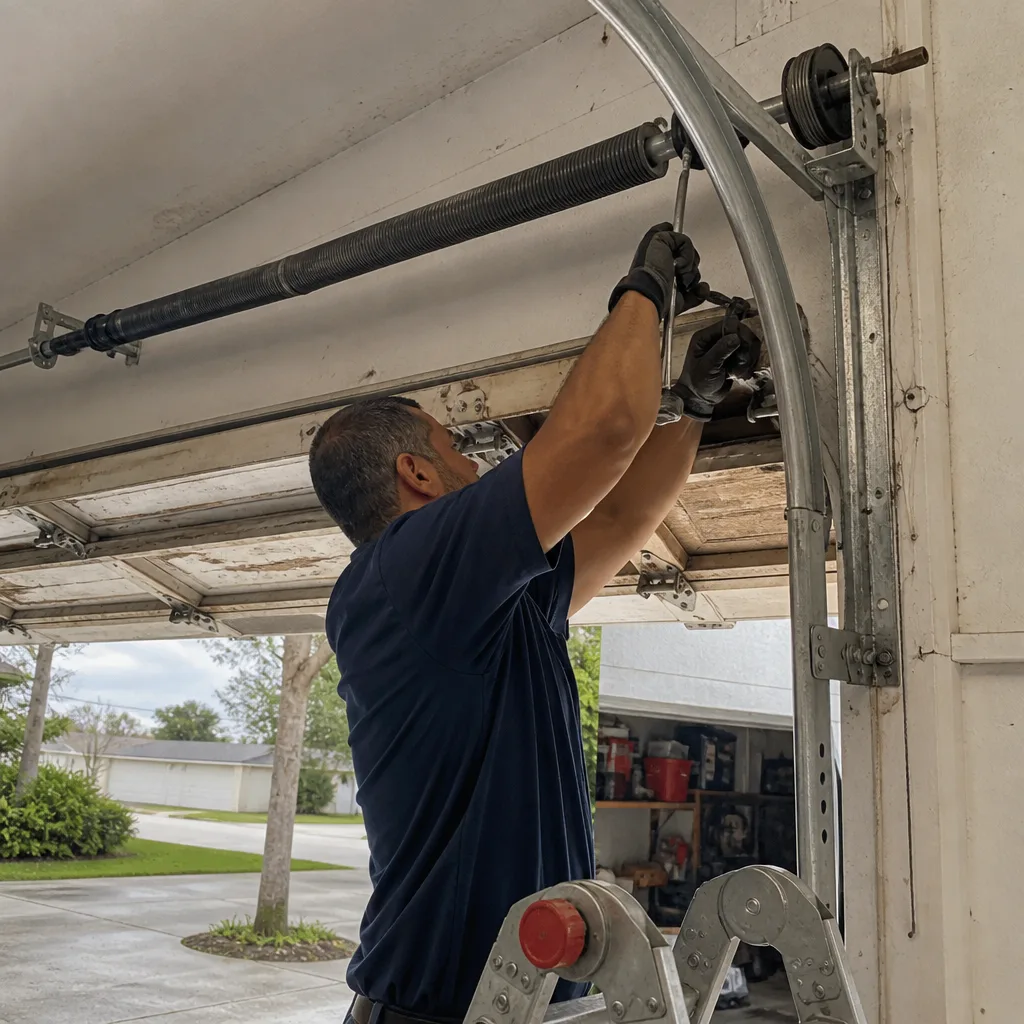
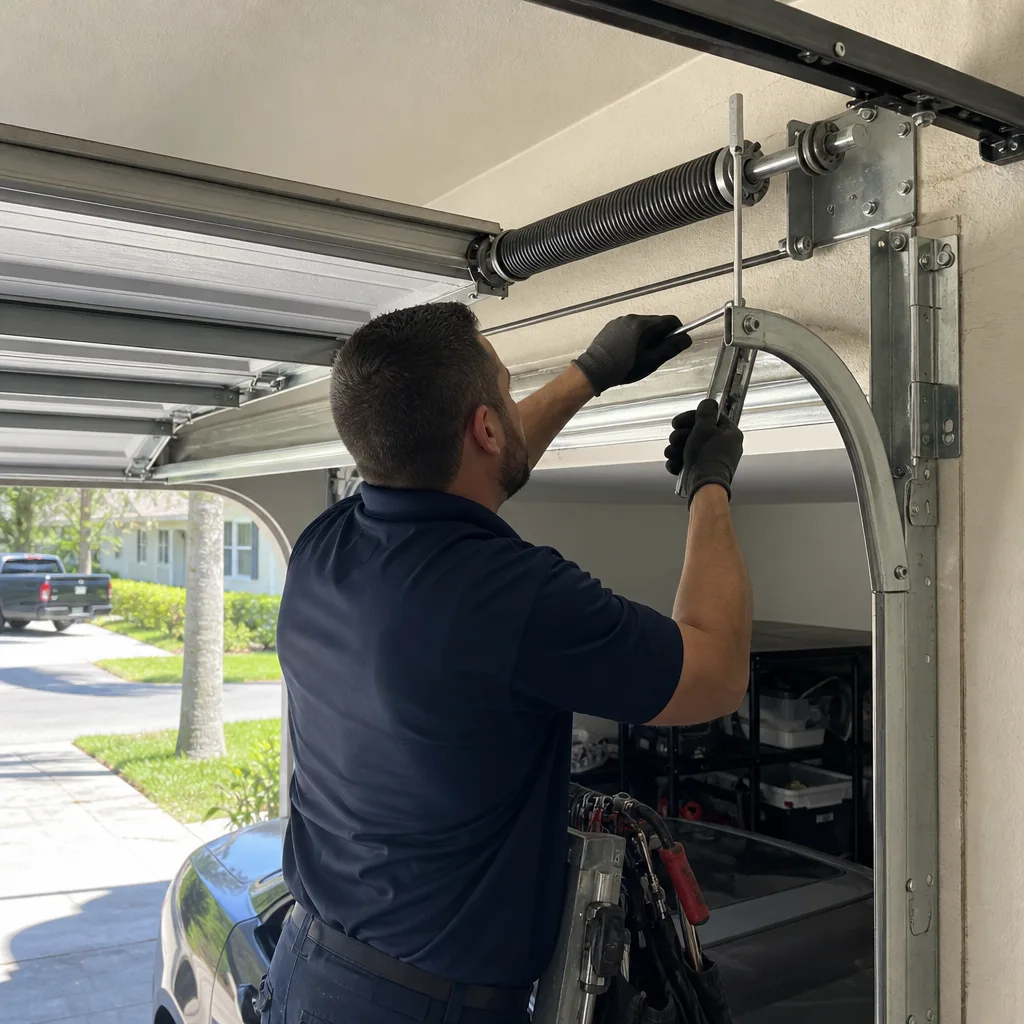
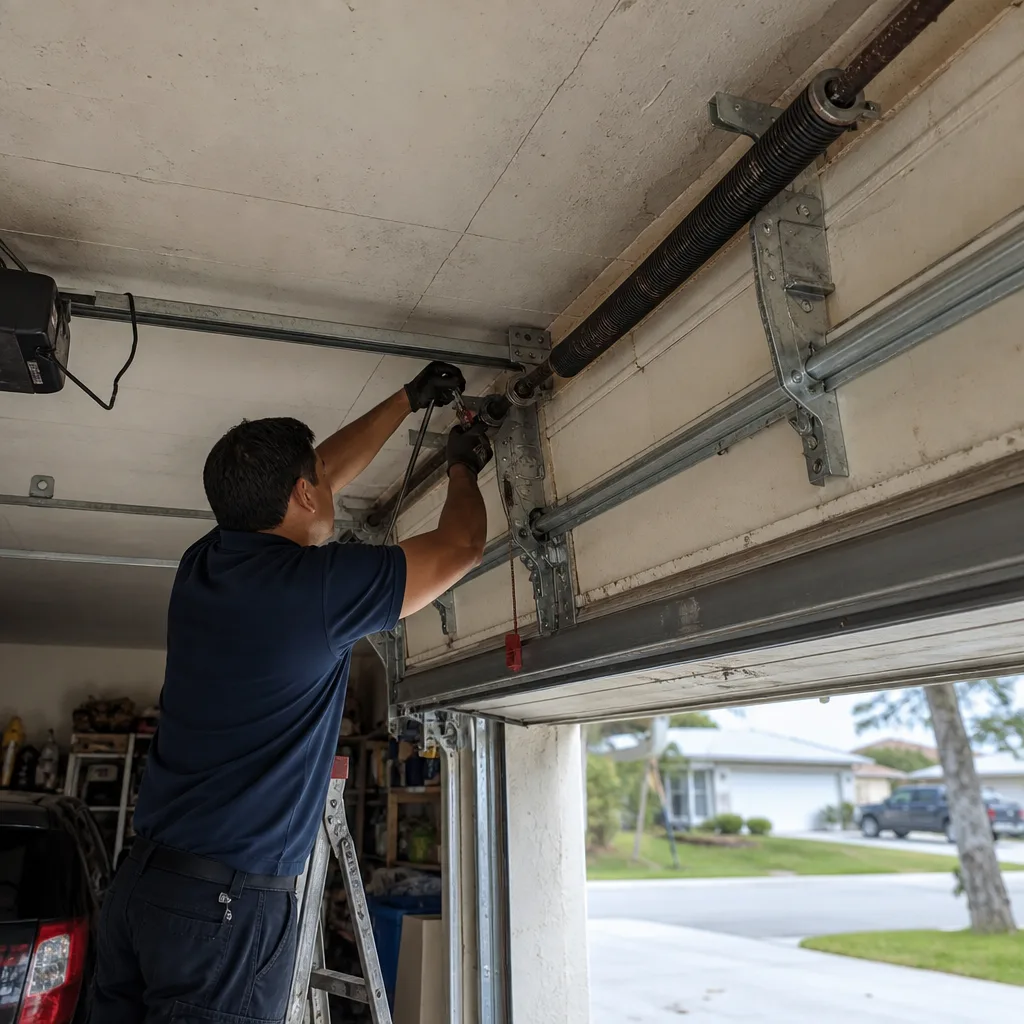
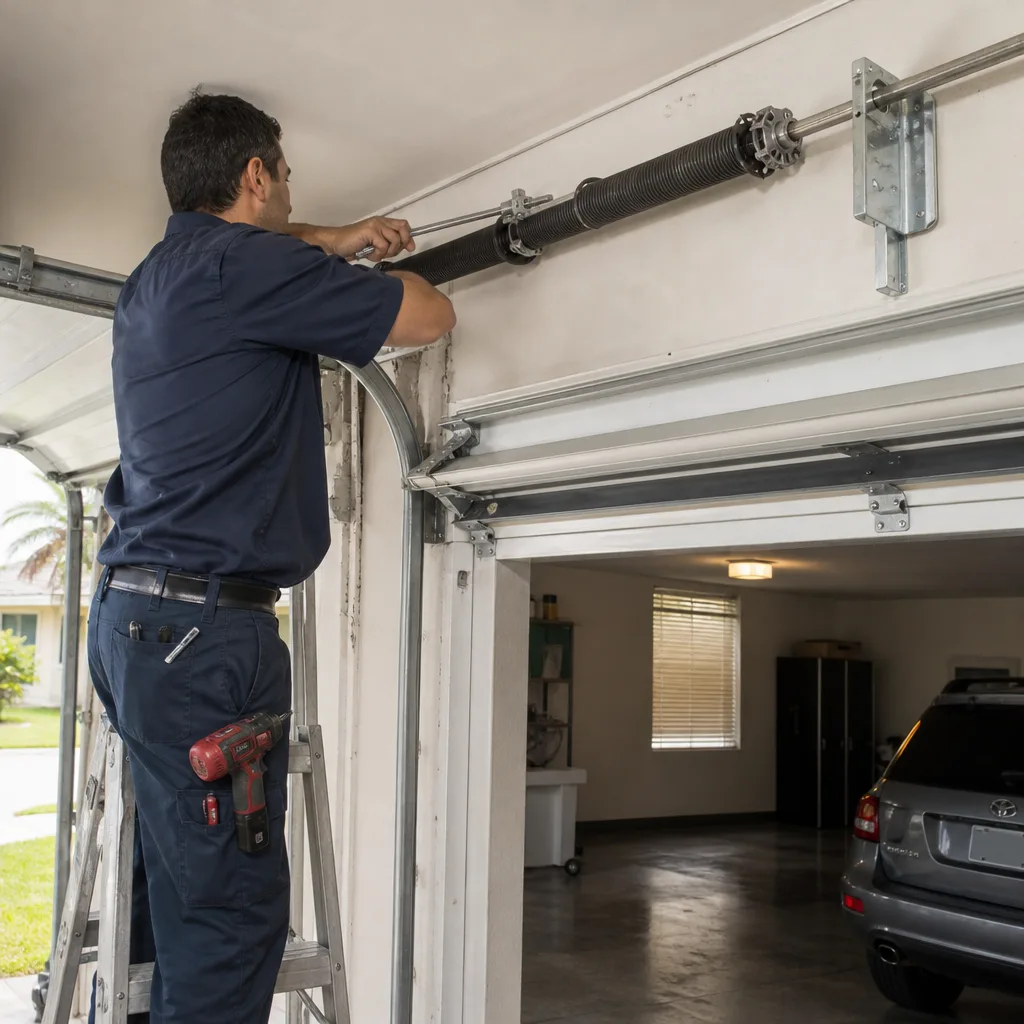
A note on safety: garage door springs and cables are under high tension. Even a visual inspection should be done without placing your face, hands, or body directly in the path of a potential spring or cable release. Do not attempt to tighten, loosen, or adjust any spring or cable component yourself. A trained professional has the tools and controlled procedure for this work.
Bottom Seals and Weather Stripping: Your First Line of Defense
In Fort Lauderdale, the garage door bottom seal is not a comfort feature. It is the barrier between your garage floor and the afternoon thunderstorm that dumps two inches of water in forty minutes. It is also the primary entry point for insects, which are a year-round pressure in South Florida, and for fine sand that blows in constantly from the beach.
The bottom seal on a residential garage door is a rubber or vinyl strip attached to a retainer along the bottom edge of the door panel. In Fort Lauderdale’s wet-dry cycle, seals fail in a predictable way. The rubber first loses flexibility, which makes the seal sit slightly proud of the concrete on one side. Then the repeated compression from the door closing on a hard surface causes cracking at the flex points. Finally, a section of seal tears away entirely, leaving a gap anywhere from a quarter inch to a full inch wide. That is when the water and bugs come in.
Check the bottom seal every month during the wet season, and every other month during the dry season. Here is the inspection sequence:
- Close the garage door fully.
- Walk along the inside of the door and look for daylight showing under the bottom edge. Any daylight means the seal is not contacting the floor.
- Run your hand along the seal. It should feel pliable, not stiff or brittle.
- Look at the ends of the seal, where it terminates at each side of the door. These corners crack first.
- Check the retainer channel for rust or bent sections. A bent retainer causes the seal to sit unevenly even when the seal itself is fine.
Weather stripping on the sides and top of the door opening follows the same general pattern, but it degrades more slowly because it is not compressed on every cycle. Look for gaps, sagging, or dried-out sections that no longer press against the door surface. Side weather stripping is particularly important in Fort Lauderdale because the wind-driven rain from a summer squall does not fall straight down; it comes in at an angle and finds any side gap that exists.
Replacement seals are not a universal part. Clopay and Amarr doors, which you see all over Fort Lauderdale new construction, use different seal profiles and retainers than older Wayne Dalton or Raynor doors. Installing the wrong seal profile gives you a door that looks sealed but leaks anyway. If you are unsure, a Garage Door Installation in Fort Lauderdale specialist can identify the correct seal by the door brand and panel design.
Opener-Specific Checks: Photo-Eyes, Force Settings, and Drive Components
Garage door openers fail in Fort Lauderdale for reasons that are specific to this climate, and most homeowners never see the problem coming because they are looking at the wrong component. The door is fine. The opener is the part that breaks first.
The most climate-specific check on this entire checklist is the photo-eye alignment. The photo-eyes are the pair of small sensor units mounted about six inches above the floor on each side of the door opening. They project an invisible beam across the doorway, and the opener refuses to close the door if that beam is interrupted. In Fort Lauderdale, the metal track brackets and the door itself expand in the afternoon heat, which shifts the mounting point of one or both sensors by a fraction of an inch. That is all it takes for the beam to miss the receiver, and the failure shows up as a door that refuses to close, or reverses immediately after touching the floor, on hot afternoons but works fine in the morning or evening.
Check the photo-eyes once a month. The visual check is simple: both sensors should have a solid green or amber light, depending on the brand, and both should sit at the same height and point directly at each other. If one light is blinking, the alignment has drifted. The fix in most cases is a gentle adjustment of the mounting bracket, but we recommend against trying to bend or re-angle the bracket yourself if the sensor is firmly mounted to a metal track that is under thermal stress. A technician who understands the expansion pattern on Fort Lauderdale afternoon-heated track can make the adjustment once and have it stay adjusted.
The other opener checks are less climate-specific but just as important:
- Force setting test: Close the door while watching it carefully. If the bottom edge hits the floor and the door does not immediately reverse, the force setting is too high, and the door is closing with more pressure than it should. This is a safety issue and also causes premature wear on the door and seals.
- Manual release test: Pull the red emergency release handle. The door should move freely by hand with no significant resistance. If it is heavy or binds, the door balance is off, and the opener is working harder than it should.
- Drive component inspection: For a chain drive, look for sag or rust on the chain. For a belt drive, look for cracks, fraying, or debris embedded in the belt. For a screw drive, look for dry, dirty grease accumulation along the screw shaft.
- Opener light and safety reverse test: Place a solid object like a small box or brick in the path of the closing door. The door should reverse when it contacts the object. This is the single most important safety test on any opener, and it should be done monthly.
LiftMaster and Chamberlain units dominate the Fort Lauderdale market, and both use the same myQ platform for smart-home integration. If your opener is a myQ-enabled model, check that the Wi-Fi connection is stable and that the app still shows the door status correctly. A door that shows “open” in the app when it is actually closed, or vice versa, is a common source of security anxiety. This is a software and sensor issue, not a mechanical one, and it falls squarely under Garage Door Opener Repair in Fort Lauderdale.
The Month-by-Month Maintenance Calendar for Fort Lauderdale
Generic maintenance calendars say the same thing every month: inspect this, test that, lubricate the other. That approach ignores the fact that Fort Lauderdale has two distinct seasons with completely different risk profiles. This calendar is sequenced by what actually fails first in each month of this city’s climate cycle.
- January (dry season, lowest humidity): Do the full visual corrosion audit on springs, cables, and brackets. The dry air makes rust patterns most visible. Lubricate rollers and hinges with silicone. Test the safety reverse on the opener.
- February: Inspect the bottom seal and side weather stripping carefully after the dry season’s first ten weeks. Check the photo-eye alignment. Test the manual release.
- March (spring break traffic, door used constantly): Listen to the door throughout a full open-and-close cycle. Grinding, popping, or scraping sounds indicate a problem that is developing. Lubricate the torsion spring with lithium grease.
- April (transition month): Check all bolts on track brackets and opener arm mounts. The temperature swing between cool nights and hot afternoons is at its annual widest, and loose hardware shows up most visibly now.
- May (pre-wet-season preparation): This is the most important maintenance month in Fort Lauderdale. Replace the bottom seal if it shows any cracking or stiffness. Check side weather stripping along the full height of the door. Lubricate springs one more time before the humidity arrives.
- June through October (wet season): Monthly checks only, and keep them short. Inspect the bottom seal after every major storm. Check for water intrusion points around the door frame. Do not lubricate during the wettest months because the humidity prevents lubricant from curing properly. Test the safety reverse every month without fail.
- November (first dry month): This is when we see the largest cluster of spring failures in Fort Lauderdale, because the first month of dry air after months of humidity triggers the first active rust bloom on tensioned steel. Do the corrosion audit immediately, and look extra carefully at the springs.
- December: Lubricate rollers and hinges with silicone. Test the photo-eye alignment, which tends to be most stable during the dry season. Inspect the opener drive component for any signs of wear or rust.
The total time commitment is about ten minutes per month, plus about thirty minutes each for the May and November deep inspections. That is roughly two hours per year. The alternative is an emergency spring replacement at 7 a.m. on a workday, which costs more in money and in lost time than every minute of prevention combined.
Common Mistakes to Avoid
- Using WD-40 as a general-purpose garage door lubricant. In Fort Lauderdale’s humid air, WD-40 breaks down within days and attracts sand and salt, turning a lubricant into an abrasive. Silicone spray on rollers and hinges, lithium grease on springs, and nothing else is the correct protocol for this climate.
- Lubricating the track. Residential garage door tracks are not designed to be lubricated. Adding any lubricant to the track creates a sticky surface that collects debris and causes the door to jump or bind, and the problem gets worse in coastal air that carries fine sand.
- Ignoring a door that opens and closes but sounds different. A change in sound is the earliest warning sign of a developing mechanical problem. A door that develops a popping sound during travel has something shifting in the track or hinge system, and that problem is cheaper to fix before it causes a failure.
- Assuming the bottom seal is fine because it looks intact from the inside. The damage is often on the underside, where the seal contacts the concrete, and it is invisible unless you feel for it or look for daylight from inside the closed garage. Fort Lauderdale homeowners consistently miss this.
- Delaying photo-eye realignment because the door works in the morning. If your door refuses to close on a hot afternoon but works fine at night, that is not an intermittent gremlin. It is thermal expansion of the track shifting the photo-eye beam, and it will get worse until it fails permanently.
- Attempting DIY spring or cable repair after watching a video. Torsion springs carry enough stored energy to cause serious injury if they release while you are working on them. This is the one area where professional training and the right tools are non-negotiable.
- Replacing a bottom seal with a universal part from a big-box store. Clopay, Amarr, Wayne Dalton, and Raynor doors each use different seal profiles. A universal seal that does not seat correctly in the retainer will leak on the first heavy rain and waste the entire effort.
When to Call a Professional
Some maintenance tasks are homeowner work. Some are professional territory, and knowing the line is what keeps your door working for decades instead of failing in a cascade. Call a professional if you see any of these: a spring with pitting or flaking rust, any cable with loose strands or a kink, any bracket that moves when you push it, a door that binds or stops mid-travel, or a photo-eye that will not stay aligned. Call immediately if the door falls faster than a controlled descent when you pull the manual release. Do not attempt spring, cable, or track adjustment yourself. The tension in these components is not intuitive and the failure mode is not forgiving. Gateway Garage Door Repair home serves all of Fort Lauderdale with brand-specific diagnostics across LiftMaster, Chamberlain, Genie, Clopay, Amarr, Wayne Dalton, Craftsman, and Raynor. We offer free estimates in Fort Lauderdale. Call (844) 713-7316 to schedule an inspection before the wet season or immediately if you see any of the warning signs above.
Frequently Asked Questions
Every four months for rollers and hinges using silicone-based spray, and every six months for the torsion spring using lithium grease. Fort Lauderdale’s humidity and salt air break down lubricant faster than inland climates, but over-lubricating is worse than under-lubricating here because excess product attracts sand and debris. Skip the wet season months for lubrication and focus on the dry season. For a full service including brand-correct lubricant, call (844) 713-7316.
Spring failure, and it clusters in November. The first month of dry air after the wet season triggers rapid oxidation on tensioned spring steel, and springs that have been quietly corroding all summer let go. The second most common failure is bottom seal tearing during the wet season. Both are preventable with the inspection schedule above.
You can slow it down significantly with a light lithium grease coating applied twice a year, but you cannot prevent rust entirely in Fort Lauderdale’s salt-laden air. The real protection is catching rust before it becomes pitting. Surface discoloration is cosmetic. Pitting is structural. If your springs show pitting or flaking, replacement is the right call before they fail under tension.
Thermal expansion. The metal track and brackets heat up in the afternoon sun, expand slightly, and shift the photo-eye sensors out of alignment. The opener sees an interrupted beam and refuses to close as a safety response. This is the most climate-specific garage door problem in Fort Lauderdale, and the fix is a stable photo-eye realignment, not a new opener.
Yes. June through October is the wet season, and the priority shifts to water management. Check the bottom seal after every major storm, watch for water intrusion around the side weather stripping, and test the safety reverse monthly. Skip lubrication during these months. The door itself does not need hurricane bracing for ordinary storms, but a water-compromised seal can cause floor damage and interior moisture problems.
DIY maintenance costs about $20 to $30 per year for silicone spray and lithium grease, plus a bottom seal replacement every two to three years at $15 to $40 for the part. A professional inspection typically runs $75 to $150, and many Fort Lauderdale companies including Gateway Garage Door Repair offer free estimates for repair work. The cost of skipped maintenance is a spring replacement at $180 to $340, plus the cost of being unable to use your garage door until it’s fixed. For an exact maintenance or repair quote, call (844) 713-7316.
The Bottom Line
Fort Lauderdale is one of the hardest environments in the country on garage door components, but the failure pattern is predictable. Springs fail in November. Bottom seals tear in September. Photo-eyes drift in July. If you check the right component in the right month, you catch every one of these problems before it becomes an emergency. The maintenance routine is ten minutes a month, two deep inspections a year, and the discipline to use the correct lubricant and leave high-tension components to a professional. Your garage door is your home’s hardest-working entry point, and in this climate it needs more than a generic checklist. It needs one built for Fort Lauderdale, and now you have it. For more guides & resources, visit our blog.
Written by the team at Gateway Garage Door Repair, serving Fort Lauderdale since 2014.
See the difference
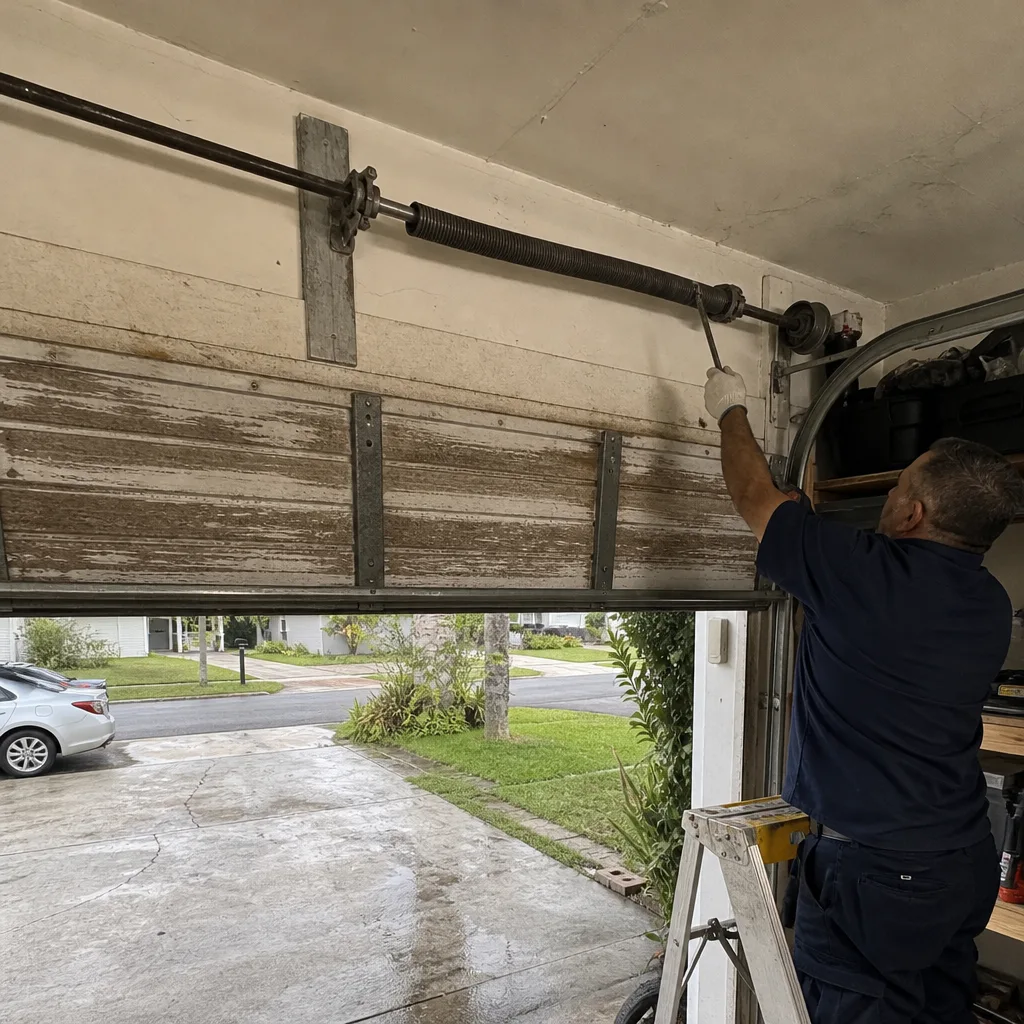 Before
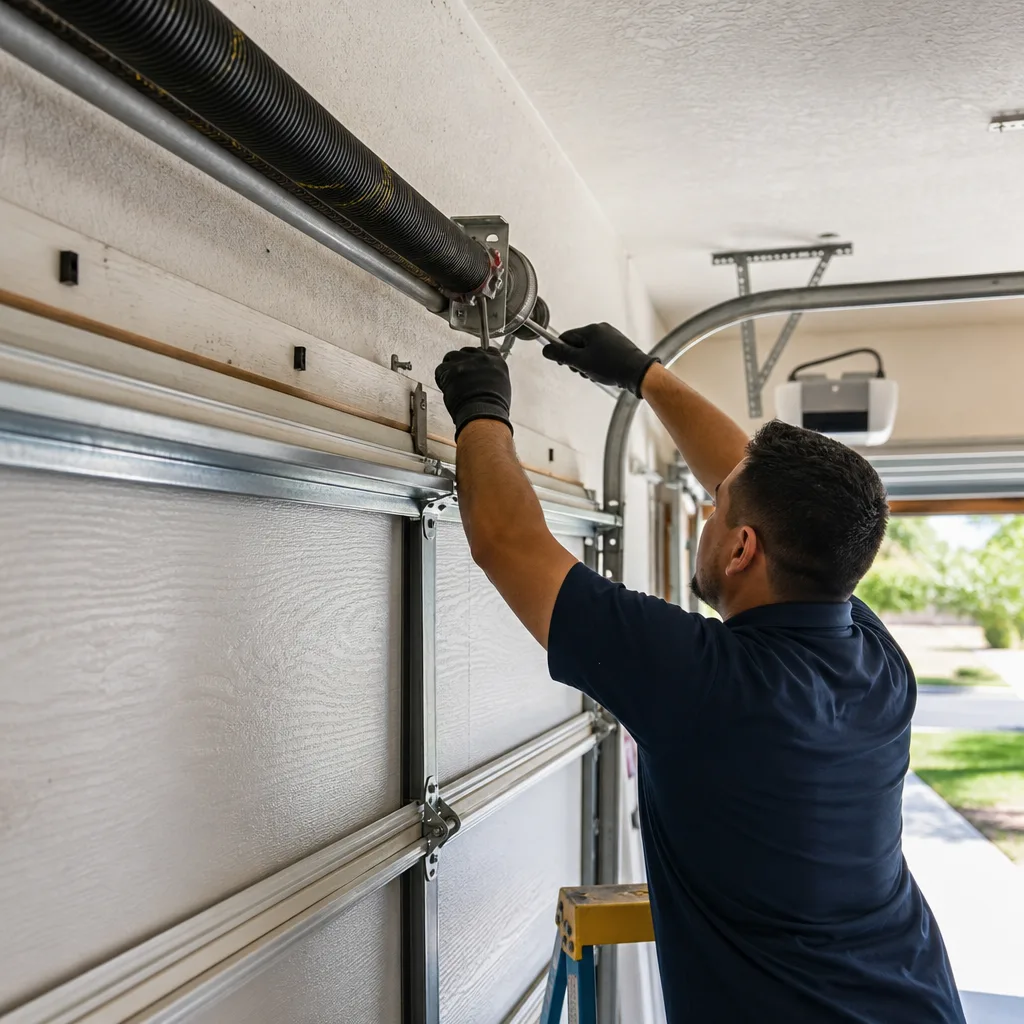 After
 Before
 After
 Before
 After